Lookout Newspaper Logo

Tag: Fitness

HMCS Ville de Québec Honours the Fallen of HMCS Skeena in Iceland

Capt Alain Fahe, HMCS Ville de Québec  Sailors from HMCS Ville de Québec and Standing NATO Maritime Group One gathered on Videy Island, Iceland, on Aug. 20 to honour the 15 sailors who died when HMCS Skeena ran aground during a storm in 1944. The visit connected today’s RCN sailors with generations who served before them, reaffirming the importance of remembrance, courage, service, and sacrifice. - On August 20, sailors from the company of HMCS Ville de Québec and personnel from Standing NATO Maritime Group One (SNMG1) gathered on Videy Island, Iceland, for a commemorative ceremony honouring the sailors of River-class destroyer HMCS Skeena who lost their lives in service to Canada during the Second World War.  Gathered at the HMCS Skeena memorial, participants observed a moment of silence and laid a commemorative tribute in memory of the fifteen sailors who perished when HMCS Skeena ran aground during a violent storm off Reykjavík on the night of Oct 24, 1944. While seeking shelter from exceptionally severe weather, the ship was driven onto the rocky shores of Videy Island.  [caption id="attachment_366266" align="aligncenter" width="600"] PO2 Gaudette lays a poppy wreath at the HMCS Skeena memorial plaque. Photo: Capt Alain Fahé, HMCS Ville de Québec[/caption] For the crew of HMCS Ville de Québec, the visit provided a meaningful opportunity to strengthen the connection between today’s sailors and the generations who served before them. Standing at the site of one of the most significant chapters in Canada’s naval history in Iceland, crew members reflected on past sacrifices made in the service of their country.  HMCS Skeena holds a special place in the history of the Royal Canadian Navy (RCN). Commissioned in 1931, Skeena was among the first destroyers built specifically for the Canadian navy. During the Second World War, the ship escorted convoys across...

Canadian Veterans on Remembrance

Lookout Newspaper and the Broadmead Care Society - remembrance; /rəˈmembrən(t)s/  Remembrance is a noun that means the act of remembering, honoring, or keeping someone or something in mind from the past. However, it is important to note that remembrance is not a single experience; it does not hold the same meaning for everyone. For Canadian veterans, remembrance can hold deeply personal meaning, shaped by their own experiences in service to our country and the people they have come to know along the course of their lives.   Below are a series of responses to the question, “What does remembrance mean to you?” answered by Canadian war veterans enrolled with the Veterans Health Centre, Broadmead Care Society.  Lest we forget.     “What I think about remembrance: Remembrance Day means courage and commitment of military personnel to the cause of the war. I admire their attitude of loyalty and sacrifice. I served as a Personnel Selection Officer and finished my service as a Platoon Commander for the ill and injured.” - Captain J.J. Haisel  “A time to remember those who have gone before me, to realize and recognize what we have, so much to be thankful for, their legacy.” - Claude Mury, Chaplain   “Remembering grandfather, father, three brothers, one uncle and two cousins, veterans of 1st World War and 2nd World War.” - Victor Flett, Royal Canadian Navy  “I remember both WWI & WWII because as my dad served in the British Army in WWI and in the Canadian Army in WWII.” - Stan Gill, Royal Canadian Navy and Royal Canadian Naval Reserves   “The walking in Nijmegen in Holland, serving two times in Germany, being in a few parades on Nov 11, veterans that sacrifice their lives.” - Master Corporal Yvon LaBonte   “Remembrance Day these days is the annual celebration and memorial of...

CANSUBFOR Hosts Philippine Navy for Inaugural Strategic Requirements Conference

Archana Cini, Lookout Newspaper. With files from CANSUBFOR and MARPAC Public Affairs The Canadian Submarine Force hosted Philippine Navy representatives at CFB Esquimalt from Oct 13 to 16 for its inaugural Submarine Force Strategic Requirements Conference. Discussions covered Canada's submarine policies, operations and support systems, including recruitment, training, maintenance, readiness, safety and logistics. Delegates also toured key submarine-support organizations, participated in practical pool training, and observed an escape tower demonstration. - The Canadian Submarine Force (CANSUBFOR) hosted members of the Philippine Navy (PN) in Canadian Forces Base (CFB) Esquimalt from Oct 13 to 16 for the first Submarine Force Strategic Requirements Conference (SFSRC), an opportunity to share the policies, capabilities and support systems required to operate and sustain a submarine force.  [caption id="attachment_366258" align="alignleft" width="600"] Members of the Philipine Navy learn from Canadian subject matter experts during the Submarine Force Strategic Requirements Conference from Oct 13 to 16. Photo supplied.[/caption] The conference brought together Canadian submarine subject matter experts from Maritime Forces Pacific (MARPAC) and PN representatives to discuss how the Royal Canadian Navy (RCN) manages submarine operations, including recruitment, training, fleet maintenance, operational readiness, and safety. The engagement also highlighted Canada's bi-coastal submarine model, and the organizations that support the force.   Over four days, PN representatives received presentations and participated in discussions covering submarine operations, readiness, sustainment, and logistics. Topics included: submarine safety (SUBSAFE) policy; submarine licensing; weapons certification; operational authority; global water-space management; and submarine search and rescue (SUBSAR). Presentations also addressed submarine recruitment, crewing, and medical screening.  The SFSRC program extended beyond the conference room, with tours of several organizations supporting Canada's submarine capability, including: Fleet Maintenance Facility (FMF) Cape Breton, Fleet Diving Unit (Pacific) (FDU(P)), and a visit to His Majesty’s Canadian Submarine (HMCS) Chicoutimi. Delegates also visited the Naden Athletic Centre, where Canadian personnel demonstrated...

Remembrance from the Archives 02

This November, Remembrance from the Archives revisits stories published in The Lookout that explore reflection, military service, war, and the people behind the uniform from the perspective of years long past. By returning to these accounts, we reflect on the experiences and sacrifices of serving members that continue to shape our understanding of remembrance today.  Remembrance from the Archives 02 was published on Thursday, Nov 7, 1974.   - "If You Can't Remember, Think!" by the Royal Canadian Legion  On November 11th, Canadians all across the country will stop and remember the 114,000 men and women killed in wars. That is why November 11th is called Remembrance Day. But what about those who can’t remember Canada’s wars? Well, let’s look at our theme: “IF YOU CAN’T REMEMBER... THINK!” What does it really mean?  In the first place, there are more Canadians today who cannot remember war than at any time in this century. Since 1945, we have enjoyed a longer period of peace and freedom from a major war than any other period in this century. Imperfect though the peace has been, it is much better than war. So when we think about the poppy, we might be reminded that Canadians who died liberating Europe created a world a little better than the one they knew.   We might also think of where Canadians first found poppies. In the First World War, the soldiers noticed that the red poppies often grew over the graves of their friends. And they remembered this later when peace came.   Today, we normally associate flowers with peace. The poppy is the first peace flower, because it is the flower which won the peace.   Another thing to think about is that by the time thousands of young Canadians went to war, Europe was in slavery. They died liberating...

Local Defence Community Mourns Loss at CFB Wainwright

Archana Cini, Lookout Newspaper. With files from the Government of Canada The loss of four Canadian Armed Forces (CAF) members in a fire at Canadian Forces Base (CFB) Wainwright, Alta, has sent waves of grief through the Canadian Defence community. As Canadians mourn those who lost their lives and support those recovering from injuries, the focus remains on caring for the people affected by the tragedy.   The incident began when a grass fire ignited at approximately 4 p.m. at CFB Wainwright on Oct 17 during a training exercise.   “[The exercise is] to prepare for two roles, to become what’s called our global response task force, ready to move within hours to any hotspot around the world,” said Major General (MGen) Liam Wade Rutland, adding that the intent behind the training was to prepare for an upcoming deployment in Latvia in 2027. “This was high intensity combat training with live munitions.”  “During the conduct of the training, a grass fire ignited in the training area,” continued MGen Rutland. “Uncommonly strong winds caused the fire to spread rapidly and shift direction towards the range administrative area.”  Following the sudden directional change of the grass fire, emergency responders, military personnel, and civilian partners worked to control the fire and assist those affected. Ultimately, the incident led to the fatality of four CAF members and 39 others injured, with 19 of those injured in critical condition. (As of Oct 22, 27 members remained hospitalized and 12 had been released from the hospital.) Earlier in the day, Environment Canada had issued a warning of high winds, with a windstorm hitting large areas of the province and gusts reaching up to 100 kilometres per hour.  In response to the incident, Minister of National Defence David J. McGuinty made a formal address, stating, “My thoughts are with...

Welcome to the Month of Remembrance

Archana Cini, Lookout Newspaper As November begins to unfold, so does our collective duty to remember.  Welcome to the month of remembrance, a time to express gratitude to those who have served and sacrificed for Canada, honour those who never returned home, and recognize the lasting impact of service and conflict on Canadian families, communities, and generations.  For the Defence community, remembrance is personal. Behind every name on a memorial is a life, a family, friends and colleagues, a community, fulfilled dreams, and unfulfilled hopes. In November, we remember the Canadians who served in the First and Second World Wars, the Korean War, and all other conflicts. We remember those who served in peacekeeping missions and operations around the world, as well as current members of the Canadian Armed Forces (CAF) who continue to serve at home and abroad. We also remember those who lost their lives during peacetime, and the veterans with us today who returned home carrying both physical and invisible wounds. A wider circle of remembrance includes Defence families, whose lives are shaped by deployments, separation, and loss; Defence communities who support each other during times of both tragedy and peace; and civilians whose lives are changed by conflict.   [caption id="attachment_366124" align="aligncenter" width="600"] A member of the CAF stands during a Remembrance Day Ceremony at Grand Parade Sqaure, Halifax, on Nov 11, 2025. Photo: Cpl Mitchell Paquette, CAF Imagery[/caption] While Nov 11 continues to provide a shared moment of national reflection, it is important that the responsibility to remember extends beyond this single day. As such, choose to engage with concepts of remembrance throughout the month of November, and well past.   The first observance of Canadian Remembrance Day marked the anniversary of the armistice that brought an end to fighting in the First World War on Nov...

Indigenous Beaded Poppy Workshops Bringing Cultural Learning to Remembrance at CFB Esquimalt

Archana Cini, Lookout Newspaper Three Indigenous-led workshops at CFB Esquimalt invited Defence Team members to learn beadwork, create beaded poppies and honour Indigenous Veterans. Facilitators MJ Bailey and Sgt Nathan Spence shared how beadwork connects Indigenous cultural expression, storytelling, identity and generations. Participants explored the meaning of the spirit bead and learned about the significance of Indigenous-crafted poppies as symbols of remembrance. - For some Defence Team members at Canadian Forces Base (CFB) Esquimalt, preparing for the month of remembrance meant learning a new skill to honour those who served.   Three Indigenous-led beaded poppy workshops hosted by the Maritime Forces Pacific (MARPAC) Defence Indigenous Advisory Group (DIAG) invited uniformed and civilian Defence Team members to learn Indigenous beadwork; create their own beaded poppies; explore the significance of Indigenous-crafted symbols of remembrance; and honour the service, contributions, and sacrifices of Indigenous veterans. The workshops were facilitated by Emjay Bailey, civilian co-chair of the MARPAC DIAG, and Sergeant (Sgt) Nathan Spence, military co-chair of the Pacific Region DIAG.   For Bailey, her beading journey began last year through a project connected to poppies. Bailey said she had previously been unsure how to approach the craft in a way that was respectful.  “I wanted to learn and experience things, but also not appropriate,” she said during the workshop. “Learning the craft of beading as a way to honour Indigenous Veterans seemed like an absolutely perfect opportunity for me to get started.”   The red poppy is a widely recognized symbol of remembrance used to honour those who served and passed away in military service. The poppy is associated with John McCrae’s First World War poem, In Flanders Fields. Building on this meaning, the beaded poppy carries particular significance in recognizing First Nations, Inuit, and Métis contributions to military service, including the experiences of Indigenous Veterans...

HMCS Ottawa Returns Home from Indo-Pacific and Arctic Deployment

Archana Cini, Lookout Newspaper. With files from the Government of Canada HMCS Ottawa returned to Esquimalt on Oct 9 after a four-month, 25,000-nautical-mile deployment under Operations HORIZON and LATITUDE. The ship participated in RIMPAC 2026, supported multinational operations in the Indo-Pacific and conducted simulated maritime strikes in the Bering Sea. Approximately 245 sailors, soldiers and aviators returned home after strengthening allied partnerships, interoperability and continental defence. - His Majesty’s Canadian Ship (HMCS) Ottawa returned to its home port of Esquimalt on Oct 9 following a four-month deployment to the Indo-Pacific and northern waters under Operations (Op) HORIZON and LATITUDE.  The Halifax-class frigate departed Esquimalt on June 1, sailing approximately 25,000 nautical miles during its deployment. Approximately 245 sailors, soldiers, and aviators were deployed aboard the ship, operating alongside allies and partners to strengthen military cooperation and support continental defence before returning home to reunite with friends and family just in time for Thanksgiving.  The deployment began with Exercise Rim of the Pacific (RIMPAC) 2026, one of the world’s largest multinational military exercises. During RIMPAC, Ottawa operated alongside allied forces and successfully fired two Mark 46 torpedoes in support of anti-submarine warfare training. The ship also embarked a Royal Canadian Navy (RCN)-led team that commanded Task Group 170.1, and served as Sea Combat Commander for 14 ships. In this role, the team fulfilled a key leadership role by coordinating multinational assets to screen United States Ship Theodore Roosevelt against surface and subsurface threats.    [caption id="attachment_366116" align="aligncenter" width="600"] HMCS Ottawa Sails past Duntz Head on Oct 9. Photo: S1 Kyle Maguire, MARPAC Imaging[/caption] Following RIMPAC, Ottawa supported Op HORIZON, sailing alongside HMCS Regina and Motor Vessel (MV) Asterix as part of an all-Canadian task group. The deployment then transitioned north under Op LATITUDE, where Ottawa conducted simulated maritime strikes in the Bering...

Testing Tomorrow’s Technology to Protect Canada’s Harbours: Exercise PHANTOM LINK

SLt Mana Vostakolaee, MARPAC Public Affairs  More than 40 CAF members participated in Ex PHANTOM LINK at CFB Esquimalt from Sept 14 to 18. The exercise integrated autonomous and uncrewed systems to enhance situational awareness during a harbour security scenario. Outcomes included a mobile tactical operations centre, beyond-line-of-sight communications and a unified common operating picture for the RCN and CAF. - Exercise (Ex) PHANTOM LINK, led by Joint Task Force(Pacific) (JTF(P)) at Canadian Forces Base (CFB) Esquimalt from Sept 14 to 18, brought together Canadian Armed Forces (CAF) members to test emerging technologies, modernize communications systems, and enhance harbor security capabilities.   More than 40 participants from JTF(P) headquarters (HQ), including Advanced Naval Capabilities (ANC), Fleet Diving Unit(Pacific) (FDU(P)), 4th Canadian Ranger Patrol Group (4CRPG) and 39 Canadian Brigade Group (39CBG), took part in the exercise. Conducted over five days, the exercise emphasized innovation and capability development rather than traditional training objectives.  The exercise focused on digitalizing and modernizing communications across the Navy element within JTF(P) while supporting collaboration between sailors, soldiers, aviators, Rangers, and industry partners.  Major (Maj) Saajan Sarai, JTF(P) J6 Signal Officer and Exercise Director, said: “The most challenging aspect of the exercise was the time constraint. Participants were required to identify technical issues, test solutions, and gather feedback at a rapid pace and during a short period of time.” Maj Sarai also compared the network to a bridge, where continuous testing and refinement are essential to achieving success.   Ex PHANTOM LINK was conducted in support of future ANC taskings, and provided an opportunity to test, integrate, and evaluate new technologies in realistic operational conditions.   A key highlight of the exercise was the integration of autonomous and uncrewed systems. These technologies were employed to enhance situational awareness during a harbour security scenario designed to detect and deter potential...

Remembrance from the Archives 01

This November, Remembrance from the Archives revisits stories published in The Lookout that explore reflection, military service, war, and the people behind the uniform from the perspective of years long past. By returning to these accounts, we reflect on the experiences and sacrifices of serving members that continue to shape our understanding of remembrance today.  This edition of Remembrance from the Archives was published on Thursday, Oct 24, 1968.  - Reverend W. J. Boland, CFB Esquimalt Base Chaplain (Roman Catholic)  “Remember” according to the Oxford Dictionary means “retain in the memory, not forget, recall to mind.” Traditionally, the month of November is the month to remember, as we recall to mind those who have died. The Nation too pauses to remember. Remembrance Day is set aside each year so that we do not forget those who laid down their lives for us: “Lest we forget.”  The practice of praying and offering sacrifice to and for the dead has come to us from antiquity. A handful of food by a grave in the wilderness, a massive pyramid, a majestic cathedral, all bear witness to this practice. The Book of Maccabees relates to how Judas offered sacrifice for the dead. “... sent about two thousand drachmas of silver to Jerusalem to offer an expiatory sacrifice, acting properly and appropriately considering the resurrection... Hence on behalf of the dead, he offered this expiation.” (2 Mach 12). Apart from any discussion on the biblical authenticity of this book, the incident does point out historically the existence of this practice among God’s Chosen People.   The Church begins November with the Feast of All Saints. She recalls to our minds those who have attained victory and now are enjoying their eternal reward. She wants us to remember that they and we are made of the same...

Humans of CFB Esquimalt 04: S2 Paul Paduch

Archana Cini, Lookout Newspaper. Humans of CFB Esquimalt is a series dedicated to the people who form the West Coast Defence community. It captures unique stories of service, identity, learning, and living from both civilians and military members who work and move through the base. If interested in sharing your story, please email archana.cini@forces.gc.ca. – “I have a fear of deep open water,” said S2 Paduch. “I’m fine in a big lake. But you put me in the ocean with nothing but the sea for kilometres all around, and I’m sweating.” Today, S2 Paduch comfortably looks back on this fear as one of the many ways the Royal Canadian Navy (RCN) has pushed him beyond his comfort zone and built a better version of himself. S2 Paduch was six months old when his Polish family immigrated to Canada in March 1991. They initially settled in Toronto, Ont., before moving to Brampton, Ont., in 1998. Here, he spent much of his childhood playing street hockey, soccer, and cricket, and riding his bike through the forests surrounding the newly developing residential neighborhood his family lived in. At home, his parents spoke Polish, and S2 Paduch entered Kindergarten without knowing English. He did not even recognize his own name at first, having only ever heard his family call him Paweł, the Polish form of Paul. “My parents got a call that their son was unresponsive to his own name,” said S2 Paduch, laughing. “I learned English in school very quickly after that.” Growing up between cultures, S2 Paduch noted that he never quite found his place. Polish children would tell him that he was not Polish enough, while Canadian children questioned whether he was Canadian enough. Throughout his childhood, S2 Paduch’s parents worked long hours, and his two older sisters often helped care...

HMCS Max Bernays Returns Home to Esquimalt After Arctic Deployment

Archana Cini, Lookout Newspaper, with files from the Government of Canada HMCS Max Bernays returned to Esquimalt on Sept 28 after a three-month deployment to the Arctic and northern Pacific as part of Op LATITUDE. The ship completed 19 consecutive days of icebreaking and achieved milestones in uncrewed aerial system operations. The deployment strengthened interoperability with the United States Navy and U.S. Coast Guard, and the ship's return also brought sailors home to reunite with loved ones. - His Majesty’s Canadian Ship (HMCS) Max Bernays returned to its home port of Esquimalt on the morning of Sept 28, following a three-month deployment to the Arctic and northern Pacific where the ship’s company reached new milestones in icebreaking, surveillance and uncrewed aircraft operations. [caption id="attachment_361766" align="alignleft" width="300"] Loved ones reunite during the homecoming of HMCS Max Bernays at B Jetty, HMC Dockyard on Sept 28. Photo: S1 Jacob Saunders, MARPAC Imaging[/caption] The Harry DeWolf-class Arctic and Offshore Patrol Vessel (AOPV) was deployed as part of Operation (Op) LATITUDE, a recurring Canadian Armed Forces (CAF) operation conducted in northern waters. Through sustained military activities across those waters, the operation is focused on maintaining a presence in the Arctic and North to detect, deter, and defend against potential threats and support continental security. Conducted in alignment with NATO activities, Op LATITUDE reflects Canada’s responsibilities as an Arctic nation and a founding member of NATO. During its three-month deployment, Max Bernays worked alongside the United States Navy and United States Coast Guard, participating in combined maritime patrols, boarding exercises, air-maritime integration, and other combined activities designed to strengthen interoperability between both forces in support of continental defence. The deployment also provided opportunities to advance the ship’s capabilities in the challenging northern environment. During Op LATITUDE, HMCS Max Bernays completed 19 days of continuous icebreaking,...

Canada and RCN Hosts NATO Submarine Commanders Conference

Archana Cini, Lookout Newspaper, with files from the Government of Canada Canada and the RCN hosted the 2026 NATO Submarine Commander’s Conference in Victoria from Sept 21 to 23. Senior submarine commanders and staff from NATO’s 14 submarine-operating nations discussed undersea warfare, safety, rescue capabilities and emerging technologies. The conference strengthened opportunities for Allied cooperation and interoperability among NATO submarine forces. - Senior submarine commanders and staff from NATO’s 14 submarine-operating nations gathered in Victoria from Sept 21 to 23 for the annual NATO Submarine Commanders Conference (SCC). This year’s 2026 event was hosted by Canada and the Royal Canadian Navy’s (RCN) Maritime Forces Pacific (MARPAC). The SCC brought together Allied submarine force leaders to discuss shared challenges, exchange operational knowledge, and strengthen interoperability among NATO’s undersea forces. Held annually in a different Allied nation, the event provides a forum to address high-level issues affecting submarine operations and exercises across the Alliance. This year’s discussions covered operations and exercises; undersea warfare doctrine; safety; escape and rescue; and the integration of uncrewed and emerging technologies. Delegates from each nation also shared updates on their respective submarine capabilities and activities. “It was an honour for Canada and the Royal Canadian Navy to host this year’s NATO Submarine Commanders Conference in Victoria, home to Canada’s Submarine Force Headquarters,” said Captain(N) (Capt(N)) Alex Kooiman, Commander Canadian Submarine Force (CANSUBFOR). “Hosting our NATO submarine partners highlights both Canada’s commitment to the Alliance and the important role submarines play in maintaining maritime security around the world. Opportunities like this allow us to share lessons, strengthen interoperability, and ensure our submarine forces remain ready to meet the challenges of an evolving security environment.” NATO submarines operate throughout the Alliance’s area of operations every day, from the High North and North Atlantic to the Baltic and Mediterranean. Their...

MHWS Speakers’ Bureau: Indigenous Food Systems as Culture, Law, and Relationships

Archana Cini, Lookout Newspaper Hosted by the MHWS and DIAG, the session brought together more than 50 Defence Team members to explore Indigenous food systems and their connections to culture, community wellbeing and the natural world. Indigenous food systems encompass more than preparing and eating food; they also involve harvesting, preserving, sharing knowledge, maintaining family and community relationships, and fulfilling responsibilities to the environment. Jared Qwustenuxun Williams discussed how colonization disrupted Indigenous food systems, limiting access to traditional foods and opportunities for knowledge transfer. - Food is more than what is on the plate. It also carries community history, connects generations of people, reflects responsibilities of a group of people to the land and water around them, and helps sustain cultural identity. These concepts were at the heart of Jared Qwustenuxun Williams’ Indigenous Food Systems as Culture, Law, and Relationships, a Speakers’ Bureau Session co-hosted by the MARPAC Health and Wellness Strategy (MHWS) and the Defence Indigenous Advisory Group (DIAG). Conducted virtually on Sept 23 for civilian and military Defence Team members at Canadian Forces Base (CFB) Esquimalt, the 90-minute online session invited more than 50 participants to look beyond food as a source of nourishment, and consider its place in Indigenous culture, community wellbeing, and relationships with the natural world. “Every time we eat, we choose the world we want to live in,” said Qwustenuxun, an Indigenous chef, educator, and Hul’q’umi’num language speaker from Quw’utsun. “If we don’t eat traditional food like smoked salmon anymore, we don’t just lose the smoked salmon on the plate.” As an example of a food system, Qwustenuxun walked participants through the many elements of preparing and eating smoked salmon that is lost when it is no longer eaten by a group of people, including the proper development of tools required to catch salmon;...

Ship to Shore Industrial Tradeshow Connects Defence Team with Key Industry Partners

Archana Cini, Lookout Newspaper More than 600 military and civilian Defence Team members gathered at Naden Athletic Centre on Oct 6 for the annual Ship to Shore Industrial Tradeshow, where more than 50 vendors showcased products, services, and technologies that support work at Canadian Forces Base (CFB) Esquimalt. Presented by The Lookout Newspaper, the tradeshow welcomed attendees from across the base. The event provided an opportunity for industry representatives to meet directly with the people who use, purchase, and maintain equipment and services across the Defence Team. From industrial tools, safety equipment, and marine technologies to distribution, maintenance, and supply services, vendors filled the Naden Athletic Centre with booths and engaging displays, both demonstrating capabilities and building key relationships with Defence Team personnel. For returning exhibitors, the value of the event extends beyond displaying new products and capabilities; it is also an opportunity to create and deepen professional connections and better understand the needs of the local Defence Team. “This is our third year being here,” said Simon Fawcett of Makita Canada Power Tools. “It’s great to get such good exposure on our new tools and show how waterproof they are compared to our competitors.” He also described the value they see as a business. “The exposure and connecting to the people who actually use our products is so important,” said Fawcett. For Fastenal’s Andrew Compton, the value of the Ship to Shore Industrial Tradeshow comes down to the engagement from the local Defence Team. “The engagement from the people here is outstanding,” said Compton. “I love this community... if I could mirror this show across the country, I would do it.” Having attended previous years, Compton also shared that he appreciates the opportunity to reconnect with familiar faces while learning more about the projects currently underway across the Defence...

CFB Esquimalt Tritons Seize Commodores Cup

Archana Cini, Lookout Newspaper The CFB Esquimalt Tritons made history on Sept 16 by winning the Commodore’s Cup for the first time after defeating the 19 Wing Comox Totems 28-20 at Colville Field.  The annual flag football game brings together the Royal Canadian Navy (RCN), represented by Canadian Forces Base (CFB) Esquimalt, and the Royal Canadian Air Force (RCAF), represented by 19 Wing Comox, in a friendly but competitive showdown for the Cup.  Since the inaugural matchup in 2022, the trophy has belonged to 19 Wing Comox, a streak that is now broken. On home soil for its fifth iteration, the Tritons secured their first victory against the RCAF after months of preparation and teamwork.   [caption id="attachment_361218" align="aligncenter" width="600"] Members of the CFB Esquimalt Tritons flag football team at Colville Field on Sept 16. Photo: Pte John MacKay, MARPAC Imaging[/caption] “We came up short a couple times early in the game, but the hard work that the fellas put in throughout the summer really came through,” said Lieutenant(N) (Lt(N)) Zachary Champion. “It really was a group effort all round.”   Next year, the Commodore’s Cup will take place at 19 Wing Comox for yet another matchup the Tritons are eager to claim once more.  

The People Behind the Mission: In Conversation with Captain(N) Douglas Layton, CFB Esquimalt’s Base Commander

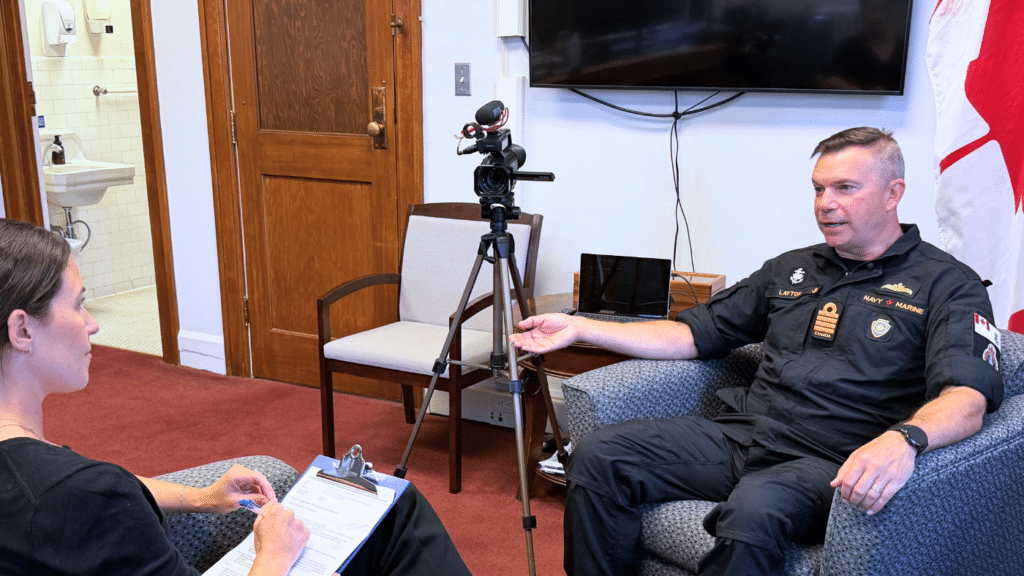
Lindsay Groves, Lookout Newspaper The conversation on leadership at Canadian Forces Base (CFB) Esquimalt continues with Captain(N) (Capt(N)) Douglas Layton, who took command of the base on July 21. While new to the appointment, his perspectives are informed by nearly 25 years of military service and the many leaders, lessons, and experiences he encountered along the way.  Together, we explored themes that shape every level of leadership: character; morale; courage; integrity; fairness; and what it means to lead in the service of others.  Leadership, Capt(N) Layton explained, can be demonstrated by anyone willing to take responsibility, look beyond their own interests, and contribute to the success of the team.  “Leaders don’t only think of themselves first,” he said. “They’re focused on a task or mission, as opposed to what they can get for themselves.”  When asked whether there is a difference between a commander and a leader, he explained that “a commander holds an appointed position of authority, whereas a leader can be anybody.”  To Capt(N) Layton, decisiveness and consistency are two of the most important qualities he admires in leaders. However, he said, good leaders must also create space for others to contribute their input.  “It’s an important quality to force yourself to listen to other people’s perspectives before jumping into a decision.”  The balance between accountability and trust is not always easy, but it is central to building strong teams – as is courage and integrity.  While physical bravery may be the most visible form of courage, he pointed to the quieter kind required in daily leadership: the everyday courage and integrity it takes to make difficult decisions, have uncomfortable conversations, and do what is right even when it is unpopular.    [caption id="attachment_361196" align="aligncenter" width="600"] Capt(N) Douglas Layton addresses guests during CFB Esquimalt’s change of command ceremony on July 21. Photo: MCpl William Gosse, MARPAC Imaging[/caption] Morale  Good leadership and buy-in helps...

The Life of Royal Canadian Navy Veteran Frank Simpson

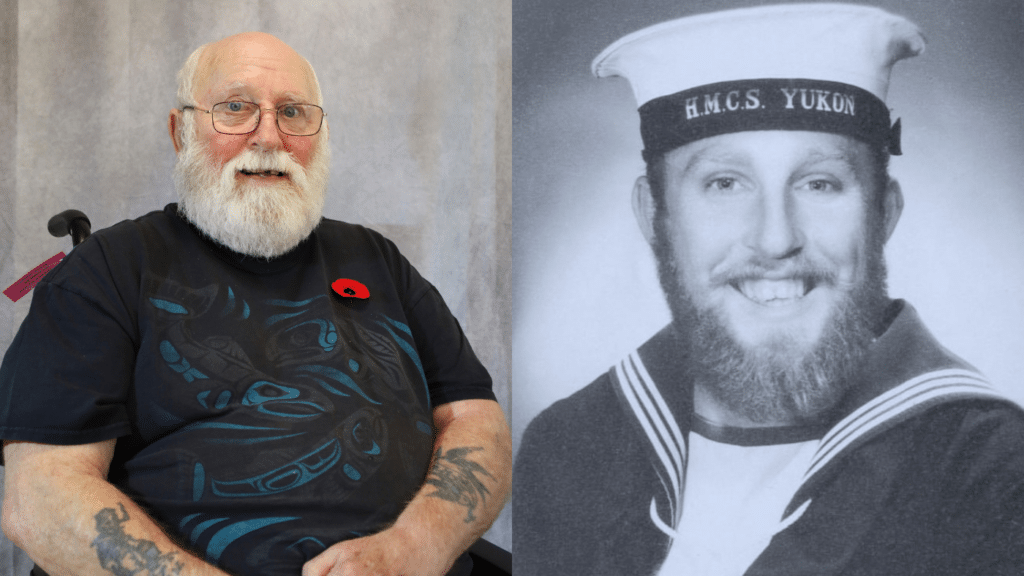
Archana Cini, Lookout Newspaper “I really, really enjoyed my time.” - Frank Simpson reflecting on memories from his time in service to Canada - To Frank Simpson, the 14 years he spent in the Royal Canadian Navy (RCN) meant everything. During his time in service, he served aboard ships, travelled across the world, and worked his way toward a promotion. Despite the career he had built for more than a decade and a promotion within reach, Simpson said he was dismissed from the RCN in 1978 because of his sexuality.  Today, Frank looks back on his service with pride, even as he remembers the discrimination that brought it to an end. After his time with the RCN, he built a new career in hospitality and later spent 25 years with the Canadian Coast Guard (CCG). At 80 years old now, Frank’s life reflects both the lasting harm of the LGBT Purge and the determination it took for him to move forward.  Frank’s early life began in Germany, where he was born before arriving in Canada with his mother and stepfather in 1954. Growing up as an only child in North Saanich with few activities for young people in the area, Frank knew he wanted to leave and find a different path. He enlisted on Dec 2, 1964, and the following day began a five-day journey across the country to Cornwallis, N.S., for basic training.  “The level of discipline that was required was very, very difficult to learn at first,” said Frank. Still, he succeeded and found his place as a steward for officers. Frank’s first posting was aboard His Majesty’s Canadian Ship (HMCS) Yukon. In 1967, he was selected to join the Canadian Armed Forces (CAF) Tattoo. One memory in particular stayed with him: a child approaching him after a performance to ask for his autograph.   [caption id="attachment_361172" align="aligncenter" width="600"] A photo of RCN veteran...

GEO Summer Program Builds Skills for Naval Reservists at CFB Esquimalt

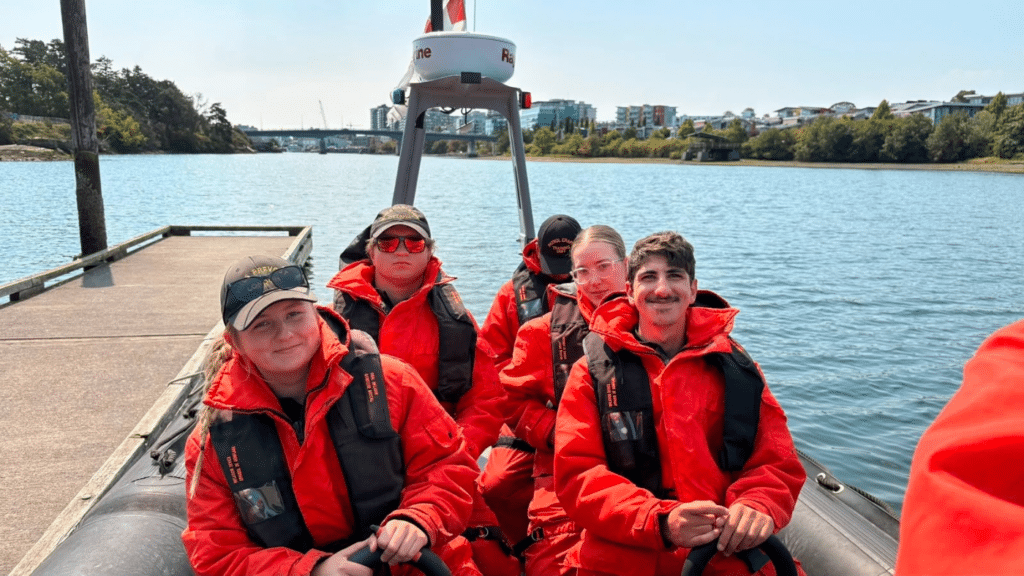
Archana Cini, Lookout Newspaper The RCN's 2026 Guaranteed Employment Opportunity (GEO) program gave naval reservists full-time summer employment and hands-on training at CFB Esquimalt. Participants developed seamanship skills through small boat exercises, day sails, operational taskings and training aboard RCN vessels. Sailors gained valuable experience, progressed toward qualifications and built connections to carry into their naval careers. - This summer at Canadian Forces Base (CFB) Esquimalt, Canadian naval reservists from across the country gained hands-on experience and advanced their training through the 2026 iteration of the Royal Canadian Navy’s (RCN) Guaranteed Employment Opportunity (GEO) program.   The GEO program provides members of the Naval Reserve (NAVRES) with guaranteed full-time summer employment during their first four years of service. Approved program participants can choose to remain at their home unit or pursue opportunities at other locations, including CFB Esquimalt and CFB Halifax. This year, CFB Esquimalt welcomed NAVRES boatswains to provide junior sailors with opportunities to progress through their training packages while actively gaining a wide variety of practical experiences.  [caption id="attachment_361146" align="aligncenter" width="600"] Participants of the 2026 GEO Program participate in naval knot identification. Photo supplied.[/caption] Throughout the summer, participants took part in a range of activities, from seamanship and naval history briefings to small boat training, sailing, and operational taskings. Practically, GEO program members developed seamanship through special operations rigid-hulled inflatable boat (SO RHIB) towing exercises; fast boating; wave mitigation; and more. Sailors also practised person-overboard (POB) drills; fueling, navigation; radio procedures; and high-speed sticking drills. The exercises provided opportunities for participants to gain signatures in their Pre Instruction Package (PIP), helping them progress through their training packages.  In addition to seamanship training, GEO program participants also experienced life at sea through a variety of base activities. Several sailors participated in day sails aboard ORCA-class training vessels, while others took part in naval history and seamanship briefings. The program also...

From the Chaplain’s Desk: Finding Purpose

Padre Marie-Eve Homier Welcome to the October instalment of From the Chaplain’s Desk, a series that showcases reflections from chaplains serving at Canadian Forces Base (CFB) Esquimalt. Each piece offers personal perspectives from those who work closely with members of the Defence Team in times of challenge, transition, and everyday life.   – Daylight time shortens, the cold settles in. “Ah, it’s all downwards from here!” While this seasonal transition can put a damper on our morale, there may be a hidden gem of learning in the slow decrease of summer and coming of winter.   Trees begin to shed their leaves, revealing their essential structure: a network of branches that support an entire canopy. We, too, can ask ourselves: What gives me structure that underpins all my life’s commitments? Amidst the hustle and bustle of daily life, what drives me at my core?  In short, it’s a matter of following the breadcrumb trail back to what holds meaning for us: a robust sense of purpose that sustains us through the inevitable ups and downs.  Purpose is more than a goal or an ambition; it is the deep conviction that our lives and actions matter. When spirituality is combined with purpose, it creates what many call spiritual resilience: the ability to endure challenges, setbacks, and uncertainty while maintaining hope, meaning, and inner strength. While purpose is not a cure for life’s difficulties, it can serve as a protective factor. A strong sense of purpose contributes to a healthier mindset by helping people make sense of challenges and maintain perspective during difficult times. In this way, purpose can strengthen resilience before adversity strikes rather than merely helping us recover afterward.   Another great benefit of purpose is its ability to counter cynicism. In a world where disappointment, frustration, and adversity are unavoidable, it is easy to become skeptical or disengaged. Purpose reminds us that our efforts contribute to something larger than ourselves. It helps...

Behind the Lookout: Meet Kevin

Kevin Hall, Corporate Services Coordinator Written by Archana Cini, Lookout Newspaper I’m Kevin Hall, and I’m the Lookout’s Corporate Services Coordinator. I handle all the advertising opportunities for the newspaper and CFB Esquimalt.  I’m from Kingston, Ontario, though I have lived all over as a member of a military family. My dad served in the army for 35 years in the Signal Corps, so moving was a normal part of growing up for me. I was about nine when we moved to Germany, where I spent three years in an international school. I spoke English, learned German, and took Spanish lessons. Looking back, I can see how lucky I was that these experiences shaped the way I see people and the world today. My classmates came from all over. I had friends who were German, Korean, Estonian, Papua New Guinean, and from many other backgrounds. I remember coming back to Kingston after my father’s service in Germany to a much smaller classroom, where having even one person from another country felt like such a big deal. It taught me early in life that what feels normal often depends a lot on where you are.  Growing up in a military family also taught me about community. My dad deployed to Afghanistan twice and to the Congo once. Altogether, he spent about two years away. When a parent is gone for that long, you feel it as a child. You’re living in a single-parent household, and, even as a kid, you understand that the person who is away is somewhere dangerous.  While I never wanted to join the military myself, I loved growing up surrounded by the community that comes with it. When we lived in Germany, Canadian military families would travel together and take part in community events. There was a real emphasis on making sure people felt connected, especially when...

29 Countries, One Harbour: What the 2026 PACOM CHODS Means for The West Coast Defence Community

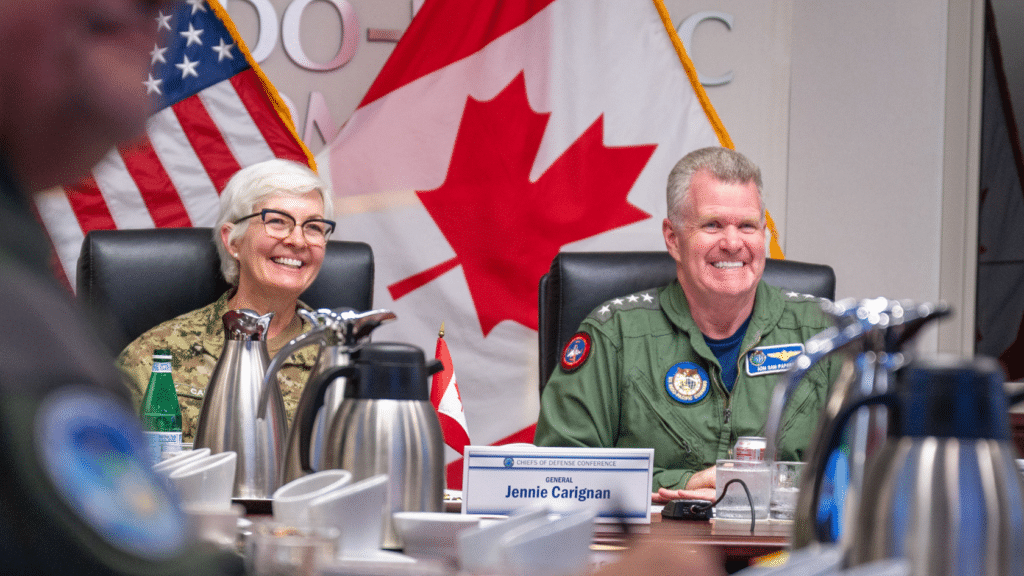
Archana Cini, Lookout Newspaper; with files from the Government of Canada - From Aug 31 to Sept 2, the Fairmont Empress Hotel and the Victoria Conference Centre (VCC) became one of the most secure square kilometres on Canada’s West Coast for the 2026 Indo-Pacific Chiefs of Defence Conference (PACOM CHODS).   The three-day international conference was co-hosted by General (Gen) Jennie Carignan, Canada’s Chief of the Defence Staff, and Admiral (Adm) Samuel Paparo, Commander of U.S. Pacific Command, and held under the theme Strengthening Collective Security: Navigating Challenges in a Dynamic Indo-Pacific Landscape. The conference traditionally rotates annually between Hawaii, home to U.S. Pacific Command, and partner nations across the region, like Hawaii (2024), and Thailand (2025). This year’s 28th PACOM CHODS marked the largest guest list in the conference’s history, with 32 invited countries in comparison to just six in 2016. This is also the second time the conference has returned to Canada, with its 2017 iteration also held in Victoria. The goal of the annual event is to promote mutual understanding and interoperability among senior military leaders while discussing shared challenges and opportunities.  [caption id="attachment_360910" align="alignright" width="300"] Senior military leaders representing 30 delegations and 29 countries gather for a photo during the 28th annual PACOM CHODS conference in Victoria on Sept 1.Photo: Cpl Mark Wanzel, CAF Imagery[/caption]  The Honourable David J. McGuinty, Canada’s Minister of National Defence, welcomed delegates during the 2026 PACOM CHODs opening ceremony by framing the conference around shared responsibility despite differences.   “Our geography may be different; our capabilities may be different; but the responsibility is shared,” said McGuinty. “To protect our people, to defend our sovereignty, to preserve peace, and to be ready when that peace is tested.” He then pointed to a busy year of Indo-Pacific engagement for Canada, including new defence dialogues launched with South Korea, India, and Japan; joint exercises with the Philippines; and the appointment of Canada’s first senior military representative...

Ship to Shore Tradeshow Coming to CFB Esquimalt

Archana Cini, Lookout Newspaper Join us!  Canadian Forces Base (CFB) Esquimalt’s annual Ship to Shore Industrial Tradeshow returns on Tuesday, Oct 6, bringing more than 40 industry suppliers and partners to the Naden Athletic Centre to showcase new technologies, products, services, and opportunities to the local Defence community.  Presented by the Lookout Newspaper and Creative Services, the event will run from 10 a.m. to 2 p.m. and feature a variety of indoor and outdoor displays, demonstrations, and engagements for attendees and local industry professionals.   New at this year’s tradeshow is the Industry Connect Hub, a dedicated space that will give Defence community members and industry professionals the ability to meet, exchange ideas, and discover new opportunities for professional growth. Alongside the event’s displays and demonstrations, attendees can also enjoy a complimentary gourmet burger lunch while connecting with the vendors, colleagues, and industry partners around them.  The Ship to Shore Tradeshow is free to attend for all local Defence community members.  Thank you to this year's Ship to Shore sponsor: Thank you to this year's Ship to Shore community partners:   Meet the 2026 Vendors  Western Equipment Ltd   KMS Tools  Point Hope Maritime Ltd   Industrial Plastics and Paints (The Redco Group)  Costco Wholesale  Calgary Police Service  New-Line Hose & Fittings   NLS Products  MarineLabs Data Systems  Willis College  University of Victoria Continuing Studies  Wesco Distribution Canada  Cloverdale Paint Inc  EB Horsman  Helmets to Hardhats  Grand & Toy  Levitt-Safety Limited  Grainger Canada  RCMP E Div Recruiting  Local 258 IBEW  Purolator   Commander Warehouse  Snap-On Tools of Canada  3M   Service First Limited   Fastenal Canada LTD  Testforce Systems Inc  Makita Canada Power Tools  Motion Industries   Velocity Bolting  Fountain Tire  Elec-Tech Sales Ltd  Transition Unit   Recruitment and Talent Strategies Team  Veterans Services  Fleet Maintenance Facility (FMF)  NDWCC   BMO  WestJet  Staples Canada Allredi Blast & Abrasives Canada  And more! 

RCN Veteran Finds New Purpose Through Art

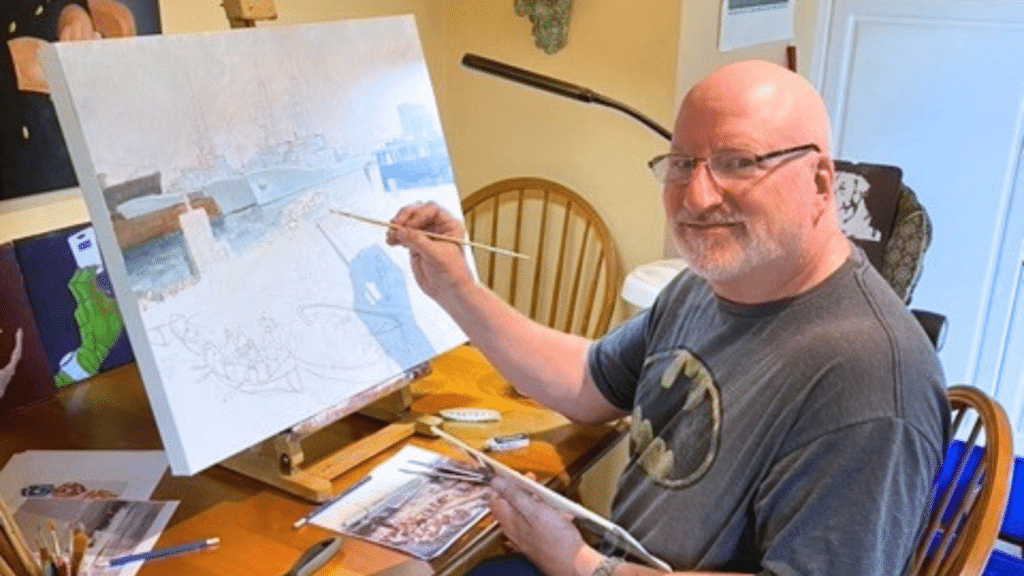
Archana Cini, Lookout Newspaper, with Michael Erwin RCN veteran Michael Erwin finds purpose after retirement through art. At 63, he returns to school at VISA to develop his creative skills. Now pursuing a BFA, Erwin encourages others to embrace art. - For more than 40 years, the Royal Canadian Navy (RCN) gave Michael Erwin a sense of purpose. After retiring in 2021 with no shortage of stories or skills, Erwin found himself facing a question other veterans may know well: who are you when the job that shaped you is gone?  Erwin first began service in 1981, joining as a reservist before transferring to the Regular Force in 1987. By the time Erwin reached retirement, the navy wasn’t simply a career.   “That long in the service leaves a mark,” he said. “The navy became a big part of who I was.”  When retirement approached alongside Erwin’s 60th birthday, he found himself apprehensive rather than excited, unsure what life after what sailors call swallowing the anchor might feel like.  “I thoroughly enjoyed the freedom that came with having no taskings or deadlines; the ability to do as I chose; and the satisfaction of not having to answer to chain of command,” Erwin said, though he added that his wife might disagree on the final part. However, the novelty of unstructured time only went so far.   “One can only drift productively for so long,” he said. “Though my days were filled with activity, there was something missing.” The navy, Erwin realized, hadn’t just given him skills, friendships, and stories over four decades — it had given him purpose.   Erwin had always doodled, on and off, for as long as he could remember, though he’d never taken any formal instruction and considered his artistic ability limited. When people asked what he planned to do in retirement, he’d often say he might “do something with art,” without much of a plan behind...

SLt Mitchell Keay Secures Top 20 at Tour de Victoria

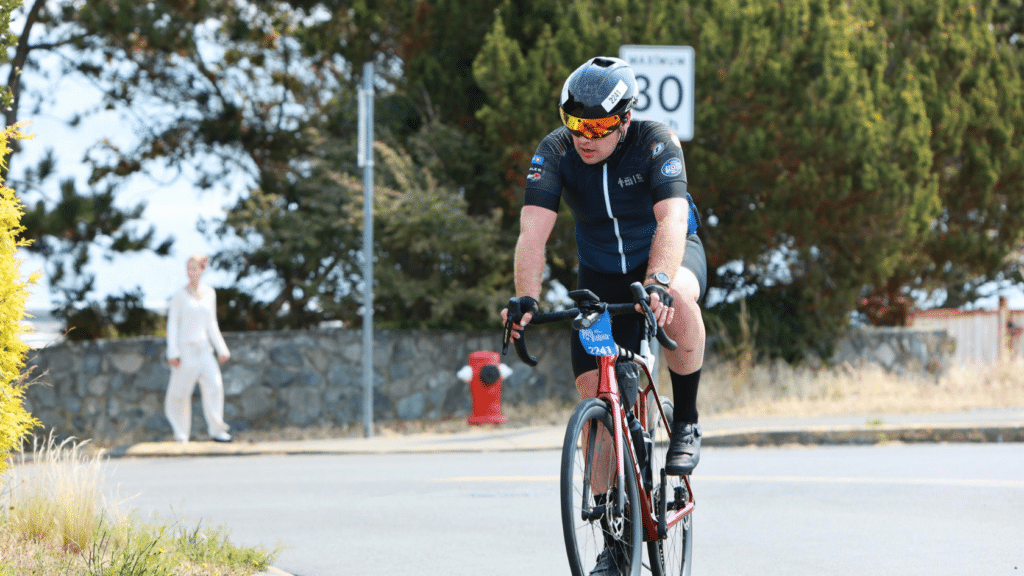
Archana Cini, Lookout Newspaper SLt Mitchell Keay placed 18th overall at Tour de Victoria 2026, finishing first in his division after two years of training. He reflected on how cycling shaped his confidence and career with the RCN. - Two years ago, Sub-Lieutenant (SLt) Mitchell Keay completed Tour de Victoria’s 100-kilometre (km) distance in 219th place. This August, he crossed the same finish line in 18th place, and first in his division — a result even he admits caught him off guard.  Racing in the men’s 30-34 division at Tour de Victoria this year with the hope of placing within the top 100, SLt Keay posted a chip time of 3:10:43 over the 100 km course.   “Moving through the course, I felt really good,” he said. “It was a punchy and dynamic race, and at the start I felt prepared, excited, and very strong.” SLt Keavy held an average heart rate of 163 BPM throughout the race, close to what he considers the edge of what’s sustainable over three to four hours. A sign, he shared, of dialed-in pacing built on a year of dedicated training.  SLt Keay has served in the Royal Canadian Navy (RCN) for more than a decade, first joining in April 2015 and working as a Naval Communicator (NAV COMM) before switching trades to become a Naval Warfare Officer (NWO) in 2023. Today, he works as an Assistant Analyst in the Reserve Management Cell at Personnel Coordination Centre Pacific  PCC(P), facilitating administration for Naval Reserve (NAVRES) personnel employed on the West Coast.  While cycling has been part of SLt Keay’s life since childhood, it wasn’t until the COVID-19 pandemic that it became something more. While living in Hamilton and taking part in Operation (Op) LASER in 2020, he completed his first 100km ride with a roommate.  “It was hard, but I quite enjoyed it,” said SLt Keavy. After relocating to Quebec City to work at NAVRES Headquarters...

Formation Fun Day Unites the Defence Community at New Work Point Venue

Archana Cini, Lookout Newspaper Members of the local Defence community gathered at Work Point for Formation Fun Day 2026. Families enjoyed a wide offering of indoor activities, outdoor attractions, and more. The annual event brought the community together for an anticipated afternoon of fun and connection. - More than a decade of Formation Fun Day traditions met a new home this year as the Defence Team community gathered at Work Point on Sept 12 for an afternoon of family fun, food and connection.   [caption id="attachment_360822" align="alignleft" width="300"] A parent and child engages with one of many indoor activity booths during Formation Fun Day 2026.Photo: Cpl Conor Munn, CAF Imagery[/caption] The move to Work Point marked a new chapter for the annual event, offering more space for both indoor activities and outdoor engagements. Attendees made their way to the Nixon Building and surrounding grounds, exploring more than 25 indoor activities and booths and a full lineup of outdoor attractions, including the popular RHIB rides.  Inside the Nixon Building, families and community members enjoyed everything from face painting, glitter tattoos and a photo booth to a Super Mario bouncy castle, mini putt, a golf simulator and a 20-foot obstacle course. Community organizations and hobby clubs also welcomed attendees throughout the afternoon.  [caption id="attachment_360823" align="alignright" width="300"] A caricaturist sketches people during Formation Fun Day 2026.Photo: Cpl Conor Munn, CAF Imagery.[/caption] Outside, the Work Point grounds were filled with activity, including rock climbing, Euro bungee, battle archery, obstacle courses, bounce slides, yard games, a marketplace, and a dedicated Five and Under Zone. Live music, balloon twisting, caricatures and static displays from across the Defence community added to the atmosphere. Food, treats, and refreshments were also available throughout the event, while children took part in a scavenger hunt by collecting stamps in event passports for a chance to win prizes.  We can’t wait to welcome...

1 2 3 … 222

Newsletter / bulletin d'information

Coming soon / Bientôt disponible

Name(Required)

Connect

Latest

E-Editions Archive

News Stories Archive