
Archana Cini, Lookout Newspaper
-
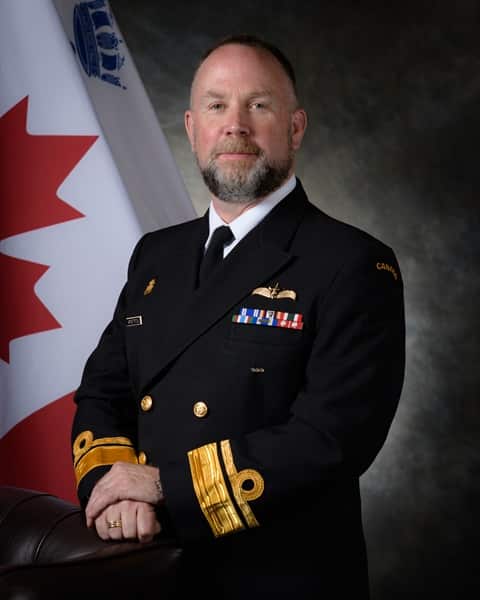
Rear-Admiral (RAdm) Armstrong outlines a decade of major capability growth for the RCN, including new Arctic and Offshore Patrol Vessels, the Canadian Patrol Submarine Project, and advances in uncrewed systems.
-
RAdm Armstrong emphasizes sailor-focused leadership, modern infrastructure, and mentorship as the foundation for building a future-ready force.
–
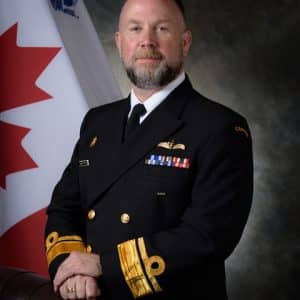
The Royal Canadian Navy (RCN) currently stands at the precipice of a transformative decade — and according to Rear-Admiral (RAdm) Jason Armstrong, Chief of Naval Capability, the coming years promise some of the most substantial capability upgrades in decades.
“We just received delivery of the Harry DeWolf class,” said RAdm Armstrong, referring to the new fleet of six Arctic and Offshore Patrol Vessels (AOPVs) helping the RCN operate in regions once out of reach. Armstrong called the class “a phenomenal capability,” noting its successful deployments to the Arctic, Indo-Pacific, and the Caribbean, where the fleet continues to demonstrate its international versatility. Notably, the AOPVs have also successfully deployed further north than any other RCN ship in Canadian history.
With the longest coastline in the world, Canada’s underwater surveillance capability is on the mind of RCN leadership. “There’s a lot of new builds coming for our sailors that I’m excited to speak to,” shared RAdm Armstrong. “The Canadian Patrol Submarine Project (CPSP) is very near and dear to my heart.” The CPSP will see up to 12 new submarines join the RCN over the next decade, with each submarine poised with the capabilities to efficiently detect, track, deter, and if necessary, defeat adversaries in all three of Canada’s oceans. “I’m very optimistic with where we’re collectively heading,” said the RAdm.
“There are also infrastructure projects on the move to improve quality of life for our sailors, and innovative work being done with regards to drones and uncrewed systems. It’s an exciting time.”
In terms of addressing and closing naval capability gaps in the next five years, RAdm Armstrong shared insights regarding both artificial intelligence and outer space. “We’re looking at artificial intelligence and how it’s going to enable war fighting in a more efficient navy. It’s much more than drafting reports — now it’s about enabling sailors to do things faster and better.”
RAdm Armstrong also noted that Defence teams in Ottawa and on both coasts are looking to leverage technologies in tandem with outer space to better protect Canadian assets. “Some of our young sailors genuinely know better than I do,” said RAdm Armstrong with a smile. “We’re looking to many of them to be innovative and we’re really going places.”
When asked what leadership meant to him, RAdm Armstrong took a pause before sharing his thoughts. “To me, leadership is setting an example of how to do things right. You enable people to be successful, you support them, and when mistakes happen, you own that. It’s part of my job as Chief of Naval Capability to help enable that success. We have phenomenal sailors and officers in our navy. They really are our future, so we must mentor and guide them effectively towards it.”
With a new decade of growth unfolding with every new hull laid and technology tested, Canada continues to build more than a fleet — it also builds a sailor-first naval future worth fighting for.