Lt(Navy) Michael Cormie, Fleet Diving Unit (Pacific)
-
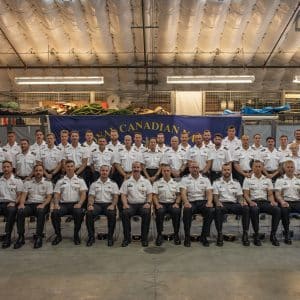
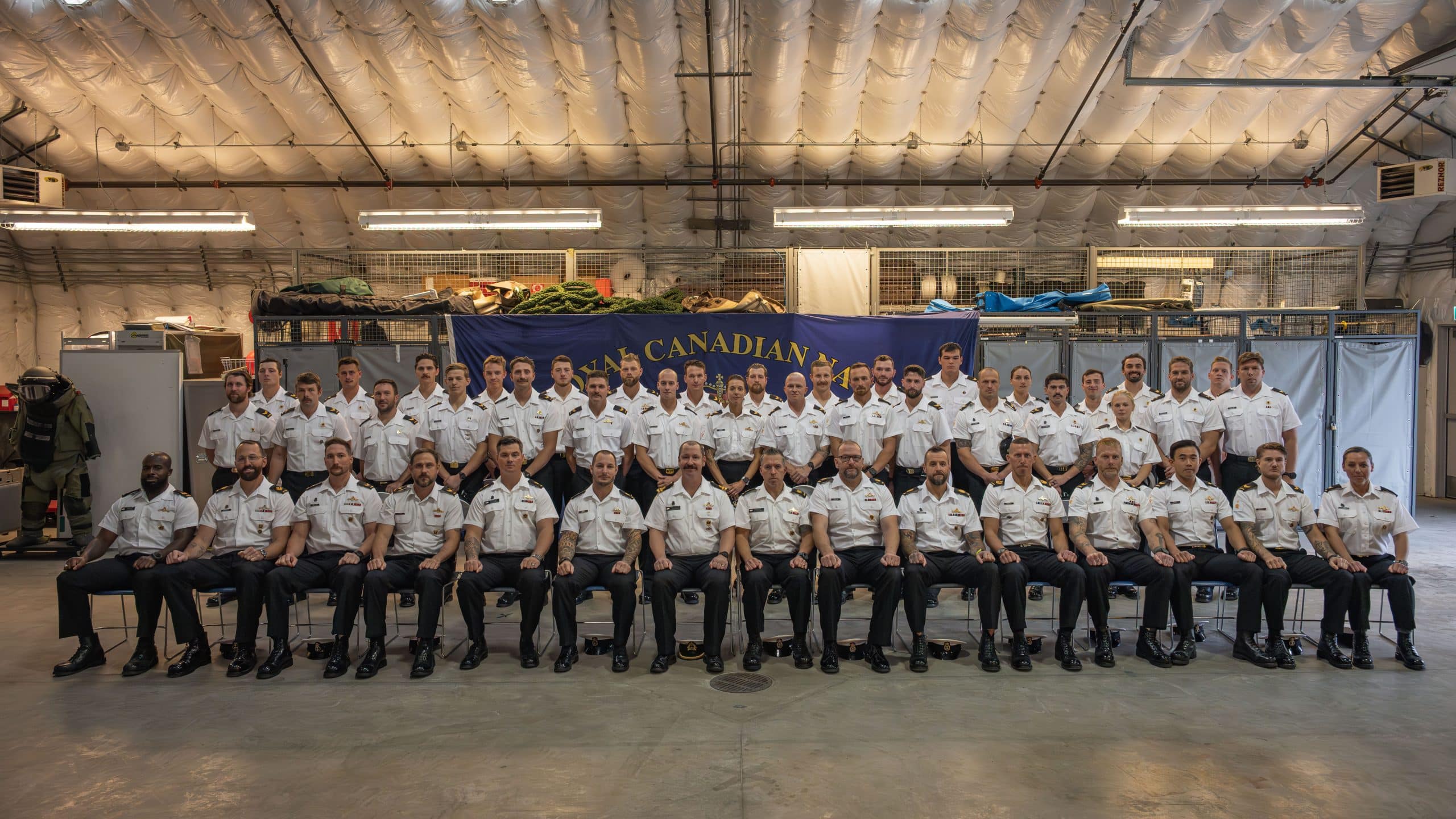
Fleet Diving Unit (Pacific) is currently training two concurrent classes of RQS1 Clearance Divers, with a record of 19 students currently enrolled.
-
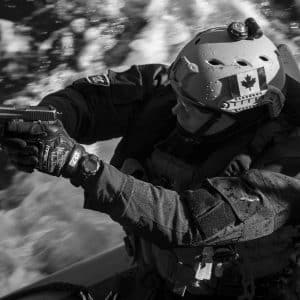
The 13-month course prepares divers for complex, real-world operations through intensive training in diving systems, fleet support skills, and more.
-
Despite infrastructure challenges and ongoing reconstitution, the School of Diving is adapting to rebuild capacity and deliver highly trained clearance divers.
–
Petty Officer 2nd Class (PO2) Paul Paquette has his work cut out for him.
He is the course instructor for one of two classes of RQS1 Clearance Divers being run concurrently at the School of Diving at Fleet Diving Unit (Pacific) (FDU(P)) this year. A record-high number of 19 students started their training in October 2025, aiming to graduate the high-intensity, thirteenmonth course in late October 2026. PO2 Paquette will help them get there.
Shortly after the courses began, students were on parade for the graduation of 2025’s class of divers. “The training is very much a marathon,” said Paquette. “So I hope being on parade helped them visualize what they are working towards when they graduate next year.” Over the duration of the course, the students will learn to dive with various types of diving equipment including the Compressed Air Breathing Apparatus, Surface Supplied Diving, and the two types of rebreather. In addition to the diving itself, students will learn other vital skills including rigging, driving various vehicles and boats, and operating recompression chambers. They will also cover introductory skills in Explosive Ordnance Disposal (EOD) at the Canadian Forces School of Military Engineering in Gagetown. Students will also be introduced to methods of searching for, identifying, destroying, and/ or recovering naval mines that have been rendered safe. They will also learn how to provide engineering support to the fleet and use cutting, welding, and various underwater hydraulic tools.
“The course is extremely long, simply because there are so many topics to cover and skills to teach that may be required in the real world on short notice,” said PO2 Paquette. PO2 Paquette would know — he was deployed to Petawawa days after the crash of a Chinook helicopter in the Ottawa River, which tragically killed both pilots in 2023. “It was a challenging job. It was deep, it was dark, and it was full of hazards. It ended up being one of the largest recovery jobs that Clearance Divers have undertaken. It also yielded many lessons that I want to make sure that I pass on to these students,” said Paquette.
FDU(P) continues to be deliberate in their effort of reconstitution after experiencing historically high attrition during the COVID-era. To lead this effort, FDU(P) has also dedicated additional human resources towards supporting a double-cohort of diving students.
“It has definitely forced us to think creatively about how we manage people, equipment and facilities because this is happening at the same time that G-Jetty is undergoing a disruptive, but important restoration project.”,” said Chief Petty Officer 2nd Class (CPO2) Keith Slade, Chief of the School of Diving. In the meantime, FDU(P)’s boats are berthed at D-Jetty, an inconvenient two kilometre distance by road. “We’ve been able to pivot somewhat, by installing equipment that makes the D-Jetty annex a bit more habitable and efficient, storing some of our assets there, and getting people their meals out of the weather,” continued Slade.
For now, the job ahead is clear for both students, and PO2 Paquette: there will be many long days and long night dives ahead. “This course is not for the faint of heart. It is hard,” concluded Paquette.
Clearance Diver and Clearance Diving Officer training are both open to all trades. For those interested in challenging the Assessment Centre, please contact goclearancediver@forces.gc.ca or your BPSO for more information.