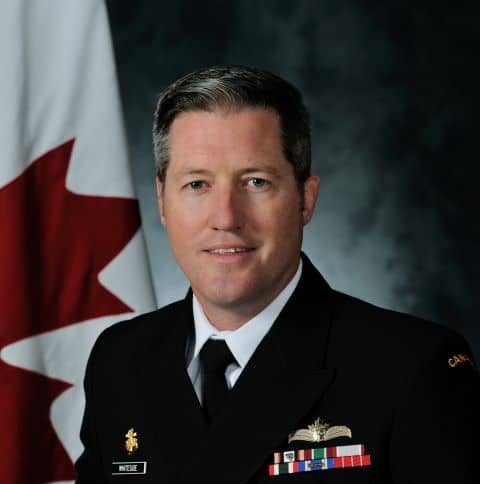
A Letter from the Base Commander of CFB Esquimalt
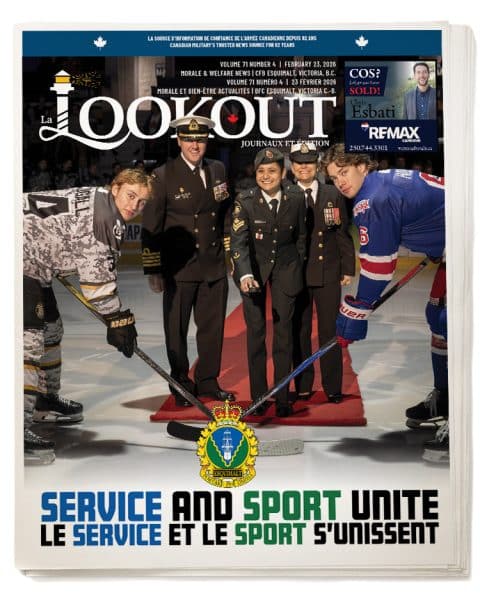
Dear Lookout Readers and Members of the Defence Community, As many of you are aware, if you are a reader of the print version of this newspaper, you are reading one of the last editions of the Lookout that will roll off a traditional press. Effective April 6, 2026, the Lookout Navy News will transition to a predominantly digital publication from its past paper format. This decision, made in close consultation with the Lookout team and PSP Esquimalt, was not taken lightly. The final print edition on March 23, 2026 will come almost 82 years to the day that the first Lookout Newspaper arrived at Canadian naval shore facilities in Victoria, decades before Canadian Forces Base (CFB) Esquimalt was formally named. While the broader circumstances driving this shift stem from the well-known challenges facing legacy media, particularly newspapers, it remains a sombre and significant moment for a storied institution woven deeply into the fabric of the Base and the lives of past and present members. We are acutely aware of the potential impacts this change may have on our loyal readers, many of whom hold the ink and feel of newsprint as fundamental to the Lookout's identity. We know many of our readers appreciate the feel of newsprint and the ritual of picking up a physical paper. That tradition has been an important part of the Lookout's identity, and we're grateful for the loyalty and connection it represents. At the same time, evolving habits in how people consume information present us with an opportunity to modernize while building on the strengths that have carried us through eight decades. This transition is about growth — not loss. In 2026, the Lookout moves toward a digital-first model that prioritizes accessible, timely, and engaging storytelling through our website, e-editions, and social media. This...
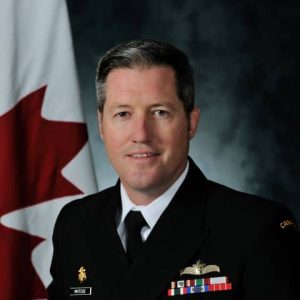
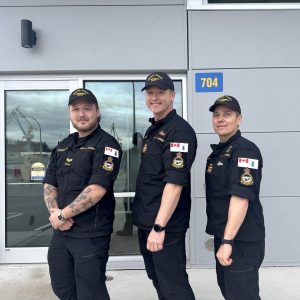
On Track by Leadmark: PCTU Reveals New Unit Crest
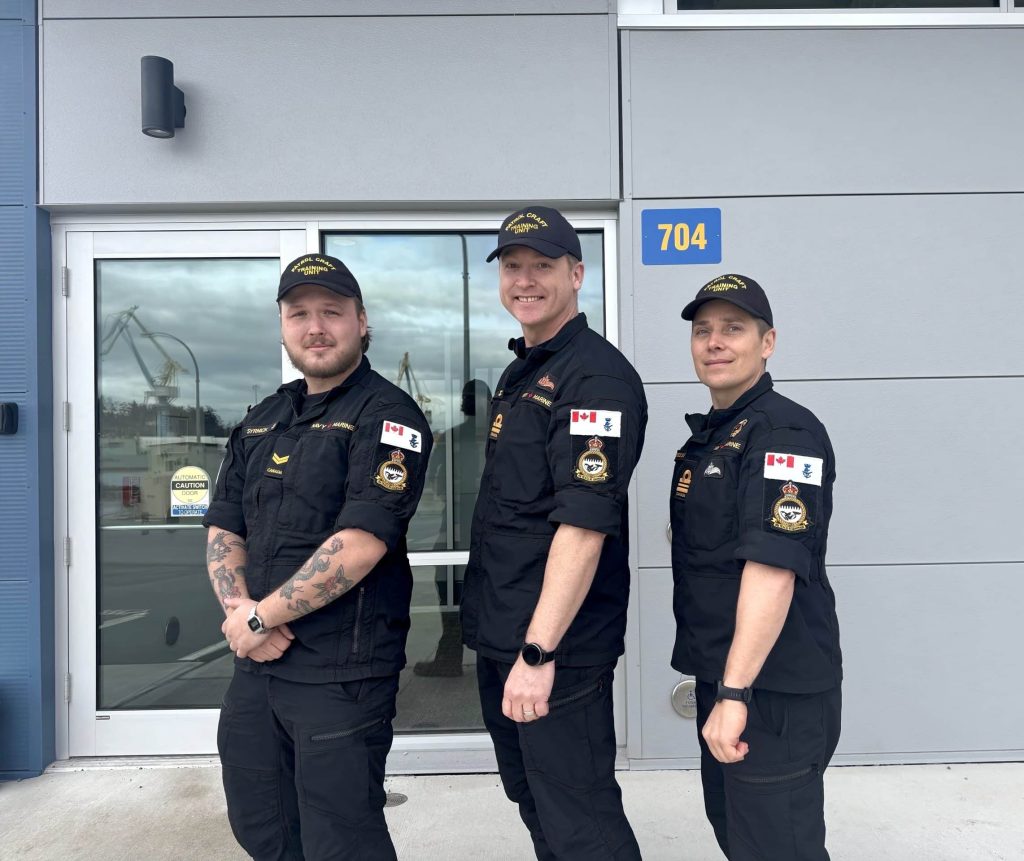
Archana Cini, Lookout Newspaper PCTU has revealed its first dedicated unit crest after decades of operating without a unique emblem, marking a new chapter in identity and recognition. Developed over nearly two years with the Directorate of History and Heritage, the crest arrives as the unit grows in size and capacity, expanding from 90 to 186 members. The crest’s symbolism highlights PCTU’s coastal training mandate, featuring an orca, Pacific elements, and the new motto: “On Track by Leadmark.” - After decades of shaping sailors behind the scenes at Canadian Forces Base (CFB) Esquimalt, the Patrol Craft Training Unit (PCTU) is stepping into a new chapter with a symbol that finally belongs to them alone: a dedicated unit crest. For Lieutenant-Commander (LCdr) Kevin Lashinski, Commanding Officer of PCIU, the new crest is much more than a visual update - it represents identity, morale, and the recognition of a unit that plays a critical role in generating skilled sailors for the Royal Canadian Navy (RCN). While the PCTU has long been an essential part of fleet readiness, it had never had a unique crest of its own. Historically, PCTU used the crest associated with Maritime Operations Group 4 (MOG 4). When MOG 4 was elim-inated, the unit defaulted to using the broader fleet crest instead. Now, that has changed. The crest took nearly two years to develop, crafted in partnership with the Directorate of History and Heritage (DHH). The timing is fitting: PCTU is not only growing in profile, but also in size and capacity. When LCdr Lashinski assumed command of the unit just over two years ago, it comprised just over 90 people. In the past year, it has expanded to 186. "Our unit has gotten significantly bigger - in fact, it's doubled," said LCdr Lashinski. "I started working on the...
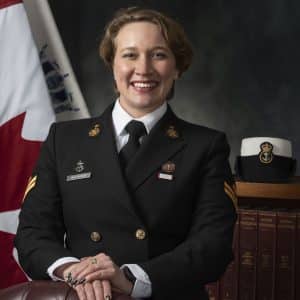
A New Voice for Junior Sailors: MS Van Manen Takes the Helm as Formation Master Sailor
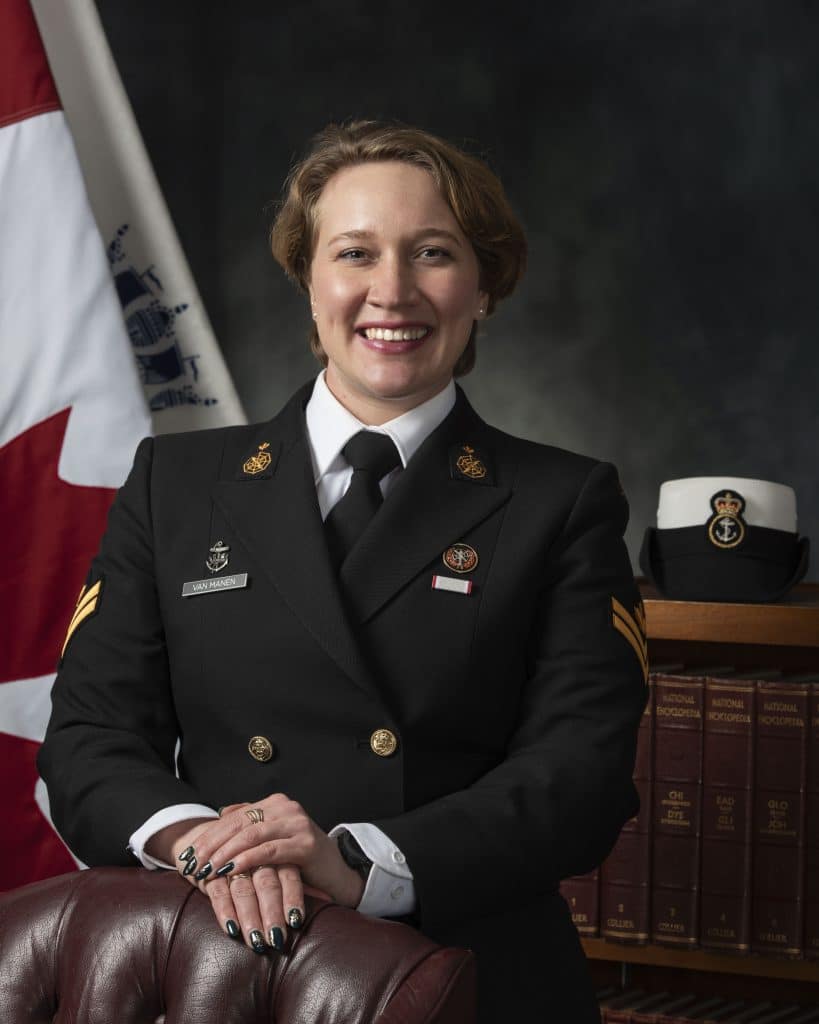
Archana Cini, Lookout Newspaper Whether new to the Royal Canadian Navy (RCN) or the base, approachability is the first thing Master Sailor (MS) Heather Van Manen wants others to notice. “When someone meets me for the first time, I want them to feel that I’m approachable.” Now stepping into her new role as Formation Master Sailor of Maritime Forces Pacific/Joint Task Force Pacific (MARPAC/JTFP), MS Van Manen brings more than rank and experience to the position. She brings the willingness to listen, advocate, and represent junior sailors. MS Van Manen’s story begins in a small town in Ontario, surrounded by mud, books, and nature. “I was definitely a tomboy,” said MS Van Manen. “I was also very much that kid that got in trouble for staying up reading books under the covers with a flashlight.” With her mother working as a teacher, summers were often spent outdoors helping at her grandparents' family camp until MS Van Manen’s teenage years, when her family moved north full time. Before joining the RCN, MS Van Manen also thrived in another demanding environment: the professional kitchen. For five years, she worked in the professional food industry as sous chef at a small bistro in southern Ontario. Eventually, while logging hours to challenge her Red Seal, MS Van Manen hit a turning point. “The pay, the hours, the lifestyle... it just didn’t feel very sustainable anymore,” shared MS Van Manen. Around the same time, MS Van Manen’s best friend had joined the naval reserves, insisting that MS Van Manen would also love it. Then, while on a short trip to Cuba for her mother’s birthday, MS Van Manen met someone attempting to join the French Foreign Legion — another unexpected nudge towards the military. After returning home, MS Van Manen applied to serve online. During the trade selection process, she chose one from each element and left it completely up to fate. MS Van Manen was sworn into service with the RCN on Oct 30, 2019. When asked how her family and friends felt at this career shift, MS Van Manen smiled and said simply, “They were very proud.” Despite the pace...
The Navy Canada Needs: VAdm Topshee Hosts Town Hall
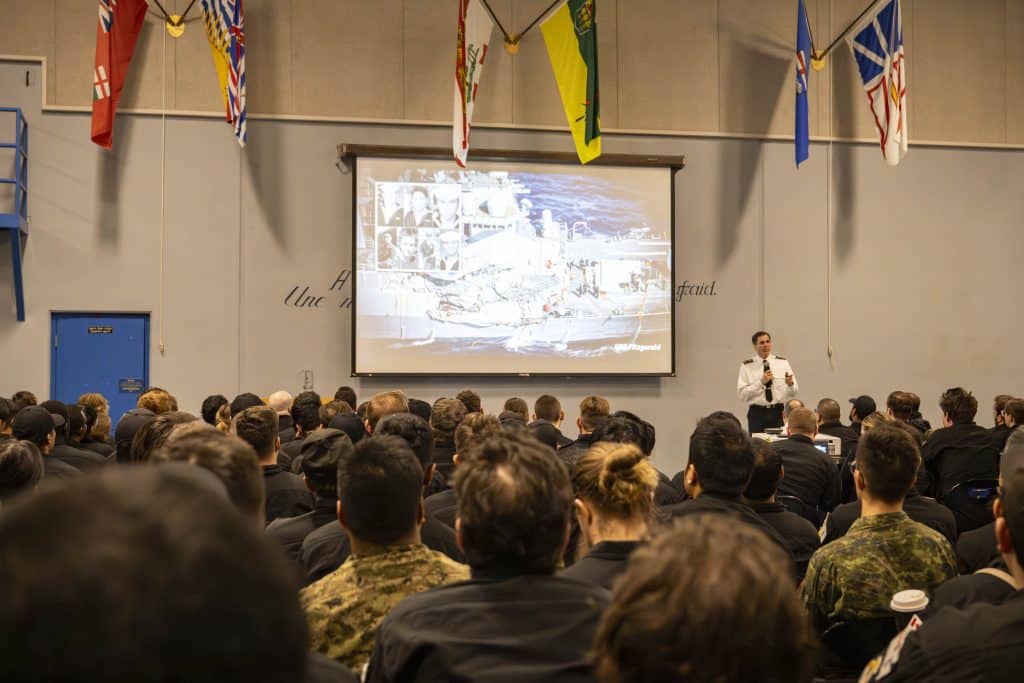
A/SLt Jamie De La Chevrotière-Martin, MARPAC Public Affairs Vice-Admiral Angus Topshee, Commander of the Royal Canadian Navy, hosted town halls across both coasts outlining a frank view of today’s security environment and what the RCN must become. He emphasized the need to strengthen maritime awareness to protect Canadian sovereignty, including building a unified maritime picture using sensors, autonomous systems, AI, and secure data-sharing. VAdm Topshee also highlighted shipbuilding and industrial capacity, modernization, and faster personnel generation. - In a series of town halls delivered on both coasts, Vice-Admiral (VAdm) Angus Topshee, Commander of the Royal Canadian Navy (CRCN), offered a frank assessment of today’s security environment and a clear vision for what Canada’s navy must become. His starting point was blunt: the global climate has hardened. While Canada’s 2017 defence policy, Strong, Secure, Engaged, emphasized a stable rules‑based international order, VAdm Topshee said today’s reality is increasingly shaped by power, interests, and competition. In that world, maritime forces matter and Canada must be able to defend its sovereignty. Despite readiness pressures and an aging fleet, VAdm Topshee noted the RCN has always maintained a strong global presence for a navy of its size. But the focus of the town halls was not on past achievements. Instead, he outlined what must happen next: improved maritime awareness; modern ships and submarines; faster and smarter personnel generation; and a culture focused relentlessly on competence, readiness, and war fighters. MARITIME AWARENESS AND CANADIAN SOVEREIGNTY Canada’s defining challenge remains geography. With the longest coastline in the world, three oceans, and vast maritime approaches, Canadians expect their navy to know what is happening on and under national waters. To close that gap, VAdm Topshee described a whole‑of‑government effort to build a single recognized maritime picture. This includes: the Coast Guard’s expanding surveillance mandate; partnerships with industry...
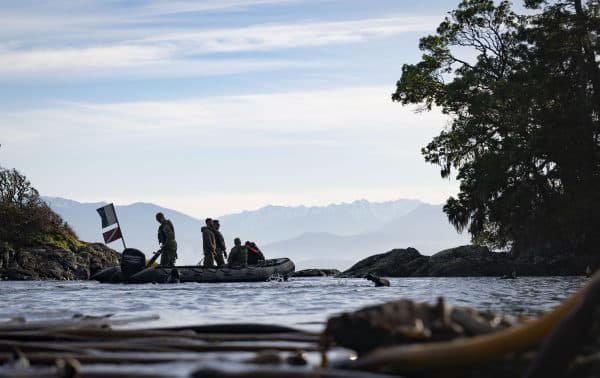
Exercise ROUGISH BUOY 2026: Demanding International Diving Exercise Returns to Vancouver Island for Third Consecutive Year
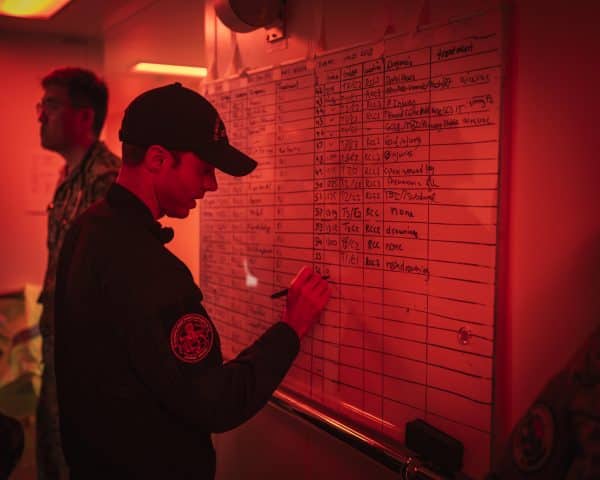
A New Year, A New Focus on Security: Welcome to Security Awareness Week
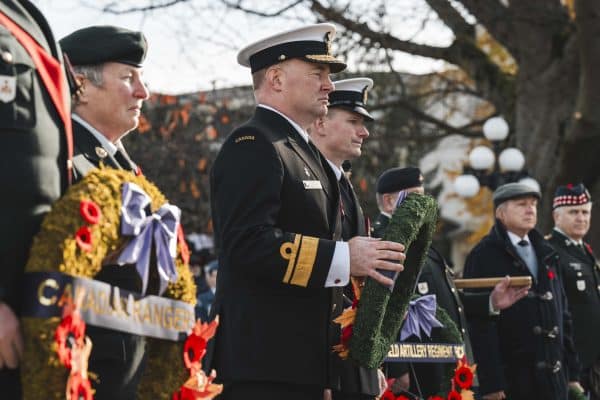
In Conversation with Rear-Admiral David Patchell: On Leadership, the Courage to Trust, and The Will To Fight

Community Musical Jam
February 25, 2026

Formation 5km
February 27, 2026
Community Musical Jam
March 4, 2026
CFB Esquimalt: A Historic Naval Base Anchoring Canada’s West Coast
Reach out to Lookout Newspaper
"*" indicates required fields
Share Your Navy Story
Do you have a story about life at CFB Esquimalt or experiences with Canada’s Navy? We’d love to hear from you! Share your unique perspective and contribute to preserving the legacy of our naval community.