

LCdr Michelle Scott, MARPAC
-
The Royal Canadian Navy (RCN) hosted a town hall for sailors in late 2025, allowing them to ask questions regarding the future of the navy and any potential concerns.
-
Questions asked by sailors during the town halls centred around the themes of housing, security, and force generation. Responses from RCN leadership can be read below.
–
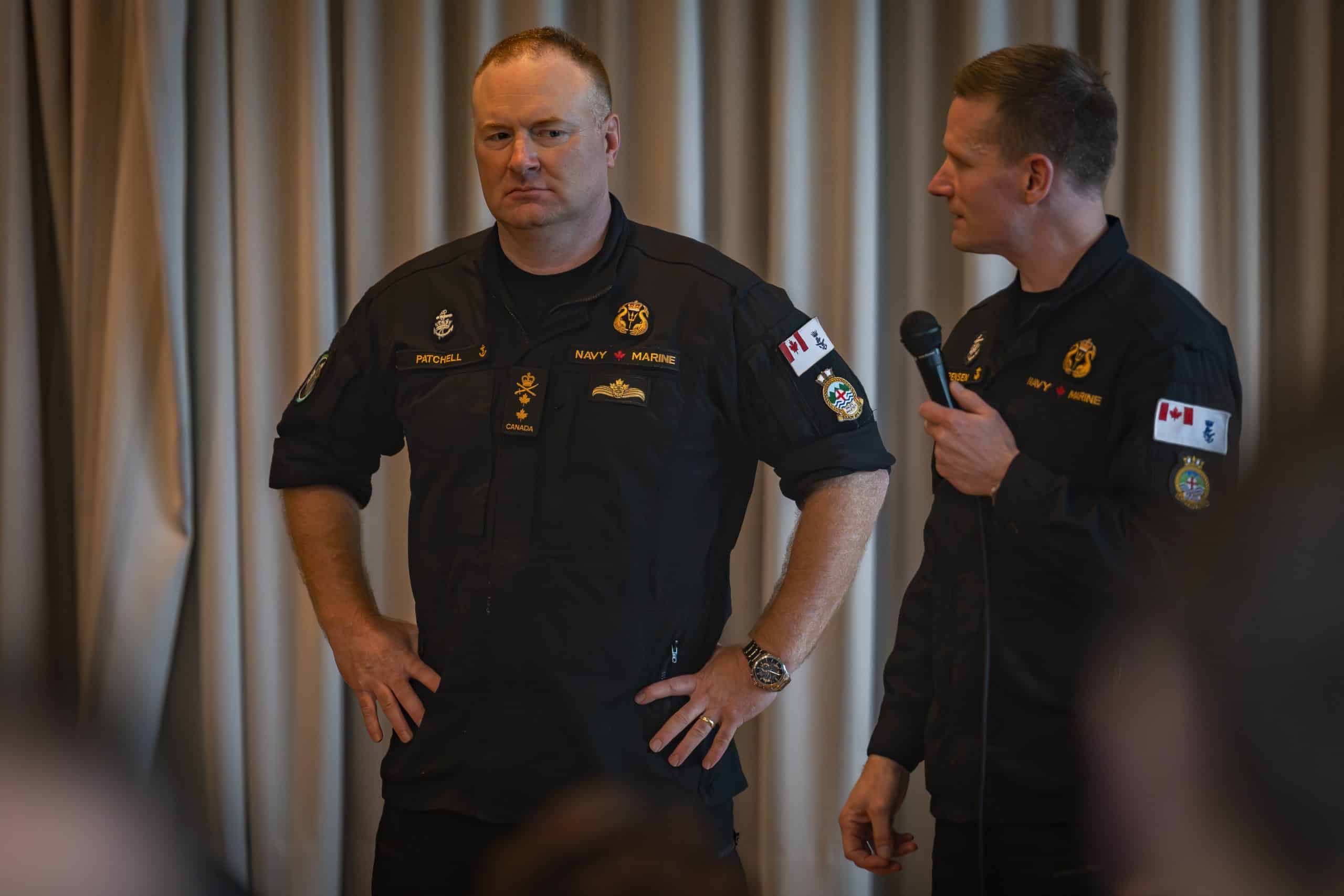
In November, Rear-Admiral (RAdm) David Patchell, Chief Petty Officer 1st Class (CPO1) Jonathon Sorensen, and Formation Master Sailor (MS) Haley LeClair held a series of command town halls for the Formation. While not every question and answer is captured here, these questions highlight the predominant themes of housing, security, and force generation.
HOUSING
Q: How is the Navy addressing housing challenges for our sailors, soldiers and aviators, especially as we work to grow the force and accommodate those on the Basic Training List?
A: We recognize that housing remains one of the most pressing challenges. At present, inventory of housing on Base is insufficient, and we are committed to addressing this gap through multiple approaches. New infrastructure projects are underway, including the soon-to-start construction of multiplexes, the purchase of a condominium building at 244 Island Highway, and we are exploring additional options to meet the needs of our members. We are also working closely with local communities to ensure there is adequate housing in the surrounding area. With over 1,800 personnel on the Basic Training List, accessible and affordable lodging for these members is a priority. In the interim, services like the MFRC housing coordinator help connect members with rental opportunities.
Q: What is being done to improve infrastructure and maintain morale and retention while major projects like the Nelles Block replacement and the new mess facility are still years away?
A: We know that infrastructure limitations and delays affect morale and retention, and this is a shared responsibility across all levels of leadership. Construction on Nelles Block replacement is scheduled to begin in summer 2026, which includes a new mess facility which we expect to be ready in 2030. This, along with construction of additional accommodations on Colville Rd over the next few years, and multiplex housing projects are clear indications that we are working to improve living conditions for our members, soonest. The impact of each of these infrastructure projects, such as on parking and fitness and welfare capabilities such as the soccer pitch, outdoor volleyball court, outdoor track, etc, are all being planned as part of these projects to ensure we continue to offer the best access we can concurrent to preparing for the growth of our Force. In the meantime, leaders will focus on building strong teams, managing individuals as people, and leveraging available time to improve and sustain operational readiness. In order to retain our exceptional sailors, we need to ensure a sense of purpose and belonging.
Q: Are housing benefits like the Canadian Forces Housing Differential (CFHD) being applied fairly, and what steps are being taken to address inequities and expand housing capacity for members?
A: We know that housing benefits, such as the CFHD are not applicable to all members; sailors, soldiers, and aviators living in Residential Housing Units (RHU)s are currently ineligible. These issues are under review and have been raised with senior leadership, including Commander of the Royal Canadian Navy and the Chief of Military Personnel. While posting allowances help offset relocation costs, we also expect members of the Canadian Armed Forces to move periodically to gain breadth of experience and to ensure service requirements are met. At the same time, the government has provided a pay raise, and we owe Canadians a Navy that is ready to defend our country. To meet that commitment, we need to invest not only in personnel, ships, and training but also in infrastructure. We are pursuing innovative solutions to expand housing capacity, including purchasing land, homes, and even warehouses where building new infrastructure is not immediately possible. Some RHUs have been renovated, but rising rents remain a concern. If accommodations are falling short, we need to hear about it: your feedback is essential to ensure housing remains fit for purpose.
SECURITY
Q: With AEGIS coming online, what changes are expected in our security posture, and how are we preparing for cyber threats and information warfare?
A: We anticipate significant changes to our security posture, similar to the measures already being implemented for RCAF’s future fighter programme. This includes upgrading physical security systems, such as moving from basic ID cards to swipe card access at Bases, to increased security for sensitive areas. At the same time, cyber resilience is a top priority. New software solutions are being introduced, though validation will take time, and cyber defence will be embedded into training programs to ensure sailors can recognize and respond to threats. We are also investing early in the Information Warfare domain, creating a new Naval Warfare Officer subbranch called Information Warfare Officer (IWO) and developing sailors who are experts in network defence. These steps will help us build a cadre of experts while maintaining the ability to operate effectively in communications-denied environments.
Q: What is being done to address delays in security clearance processing, and how will this impact training and readiness?
A: Security clearances remain a challenge, particularly for permanent residents, whose files take longer to process. While most of our sailors are meeting timelines and starting courses on schedule, we recognize the need to improve overall throughput. To address this, DND has hired additional civilian staff in Ottawa and expanded CAF-wide capacity for clearance processing. Security clearance checks must be done properly, and we will not compromise their integrity; however, the majority of sailors are not missing training because of clearance delays. Our focus is on accelerating the process without sacrificing security, ensuring that members can begin their courses on time and contribute to operational readiness.
Q: Where will AEGIS training be conducted, and how will we ensure access for our personnel in the coming years?
A: For the foreseeable future, AEGIS training will be conducted in the United States. Currently, five RCN personnel are posted to the United States to pursue AEGIS training and gain practical experience on AEGIS systems, with plans to scale this approach. Over the next five to ten years, Canada will develop our own training capability which will be located within the CTIC(A) and CTIC(P). The goal for RCN AEGIS training is to share validation responsibilities with our U.S. partners. Until then, sending sailors, soldiers, and aviators south remains essential, and opportunities for additional personnel to participate are still available.
FORCE GENERATION
Q: How is the RCN maintaining momentum on shipbuilding and capability development while managing resource challenges and operational priorities?
A: The RCN is committed to maintaining momentum on shipbuilding and capability development. While AEGIS represents a significant advancement, future platforms such as the new corvettes will be built in Canada using Canadian systems to strengthen national capacity. Scaling back shipbuilding is not an option; the government is fully invested, and we must sustain that commitment. At the same time, we recognize the need to prioritize tasks. If there are activities that do not contribute to core readiness, we encourage feedback so we can focus on what truly builds capacity. We are looking at ways to increase sea days closer to home and optimize training schedules to ensure operational effectiveness.
Q: What steps are being taken to address personnel shortfalls, improve recruitment and training, and ensure standards are maintained as the Navy grows?
A: Our personnel shortfall is significant—currently about 1,900 sailors, but with a goal to close that gap by 2028. By 2040, the Navy must grow to two-and-a-half or three times its current size, which requires aggressive recruitment and training strategies. There are 4,500 Reservists across Canada, and some will want fulltime service while some Regular Force members may seek part-time roles. Recruitment remains a challenge. Programs like NCM-Step are underfilled, and we are exploring ways to break down barriers and accelerate entry. While the Navy will be bringing in a significant number of new sailors, we are not lowering standards, we are motivating this next generation of naval warfighters. We must maintain the ability to fight, float, and move, and accountability is critical. Instructors play a vital role, and we expect them to be engaged and committed to training excellence. Course critiques are encouraged to ensure time is valued and standards are upheld.
Q: How is the RCN balancing the need for a strong military force with the growth of the civilian workforce, and what is being done to expedite hiring and fill critical gaps?
A: Building a strong Navy also requires a strong civilian workforce. Organizations like Fleet Maintenance Facility (FMF) Cape Breton and CFB Esquimalt provide essential capability, and we are hiring. We need to grow both military and civilian teams to meet future demands. Hiring more public servants is essential but will take time; we are looking at ways to expedite hiring and fill gaps without compromising safety or readiness. Ultimately, our priority is training and inspiring the next generation of sailors while building a robust support structure across the entire Defence Team.