

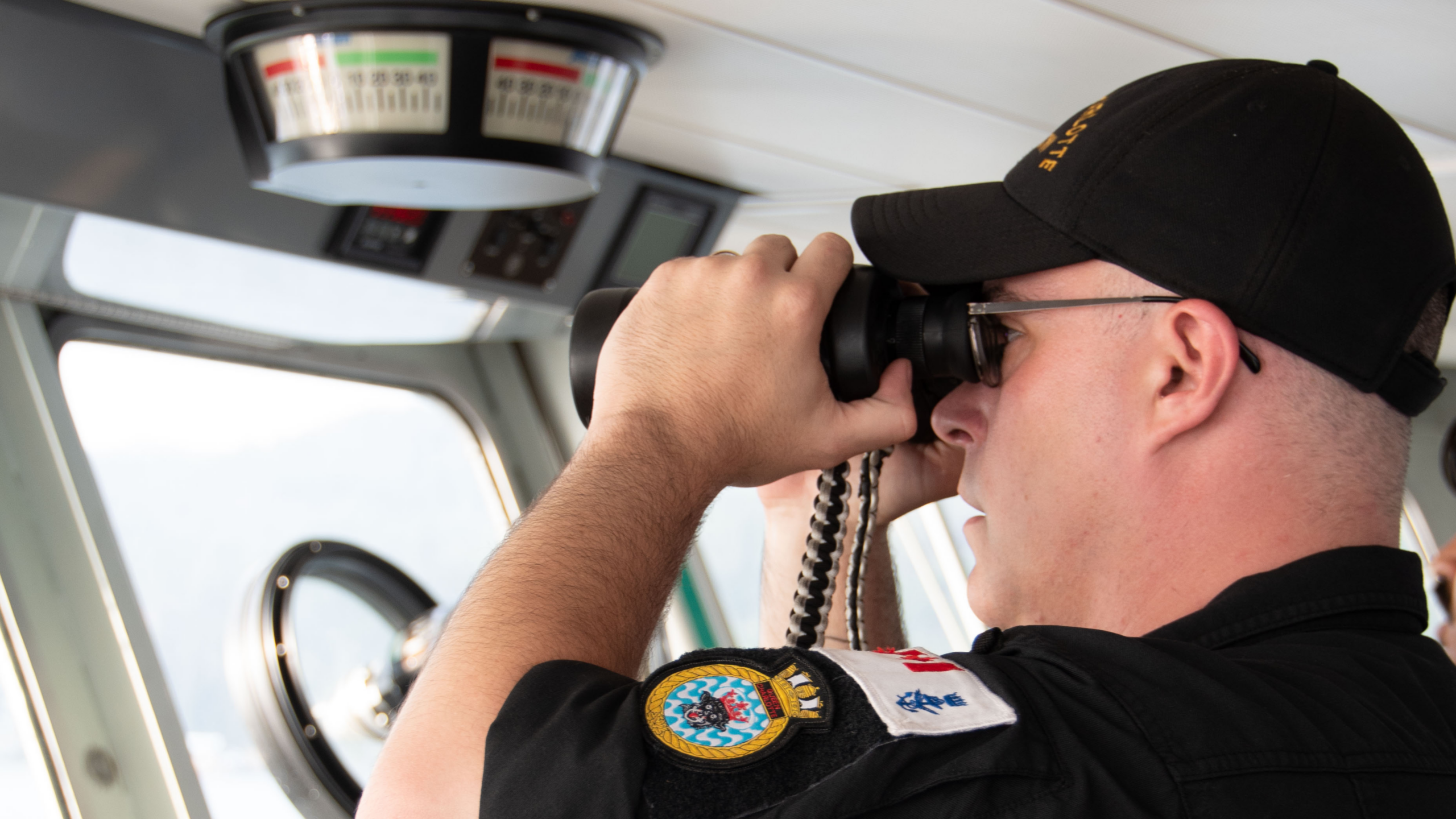
Lt(N) Krystal Fleury, MARPAC Public Affairs
-
PCV Wolf 59 stopped during Ex GOLDRUSH after whales were spotted near the vessel off the coast of Comox.
-
The crew followed marine mammal mitigation protocols, allowing the whales to safely approach and continue their route.
-
The sighting was reported to the Canadian Coast Guard Marine Mammal Response Program to support conservation research.
–
The B.C. coast is one of Canada’s most remarkable environments, defined by dramatic shorelines, rich forests, and diverse marine life. For Royal Canadian Navy (RCN) sailors, operating in these waters means upholding a deep responsibility to the communities and wildlife that depend on them.
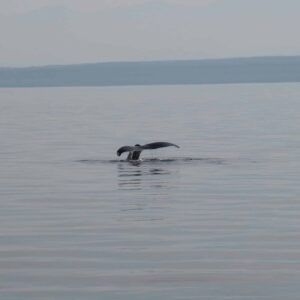
The tail of a whale above water as spotted by a sailor aboard PCT Vessel Wolf 59. Photo: Lt(N) Krystal Fleury
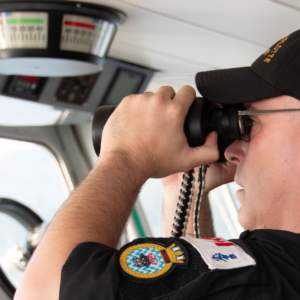
On July 21, residents near Comox may have noticed Patrol Craft Training Vessel (PCT) Wolf 59 paused during Exercise (Ex) GOLDRUSH. The ship’s lookout spotted a whale fin in the distance and announced the sighting to the crew. Even though the whales were initially outside the mandatory mitigation range, Wolf 59 was heading in its direction. Lieutenant(N) (Lt(N)) Jason Wychopen, commanding officer of Wolf 59, immediately ordered the vessel to a stop to ensure the whales could pass safely.
Under marine mammal mitigation protocols, any sighting within 1,000 yards requires a vessel to slow and stop for at least 15 minutes. In this scenario, Wolf 59’s crew monitored the whales for approximately 30 minutes as the whales approached, investigated the ship, and then continued along their feeding route.
Once the whales moved on, the crew resumed their course and reported the encounter through the Canadian Coast Guard Marine Mammal Response Program (CCG MMRP), contributing valuable data to conservation research. For many of the sailors still early in their careers, the experience was a memorable reminder of the extraordinary wildlife that shares our coastal waters.