

Lookout Newspaper Logo

Leadership & Policy

Global Commitment to Local Impact: The Honourable Jill McKnight Details Defence Investments at CFB Esquimalt

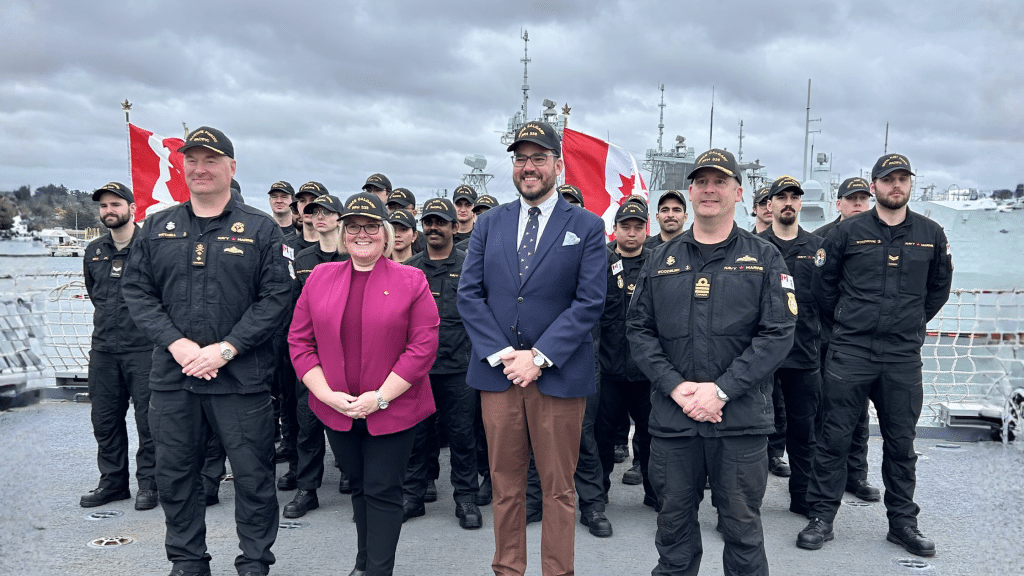
Archana Cini, Lookout Newspaper; with files from the Government of Canada  Minister of Veterans Affair Jill McKnight visited CFB Esquimalt following Canada reaching NATO’s 2% defence spending target. Major ongoing and upcoming investments include jetty replacement, military housing expansion, and improved CAF compensation and benefits. Funding will continue to support long-term fleet readiness, modernization, and operations across the Pacific region. - For those serving on the West Coast, the future of defence is already under construction.   On April 1, the Honourable Jill McKnight, Minister of Veterans Affairs and Associate Minister of National Defence, visited Canadian Forces Base (CFB) Esquimalt to deliver remarks on the flight deck of His Majesty’s Canadian Ship (HMCS) Calgary. Joined by Victoria Member of Parliament Will Greaves and Rear-Admiral (RAdm) David Patchell, Commander of Maritime Forces Pacific/Joint Task Force Pacific (MARPAC/JTFP), McKnight spoke to Defence team members and media representatives gathered at B Jetty.   The visit followed Prime Minister Mark Carney’s announcement that Canada has now reached NATO’s two per cent defence spending target in the 2025-26 fiscal year, marking a significant milestone in Canada’s approach to national defence and collective security. For the Defence community of Vancouver Island, the announcement carries direct and visible implications. As such, McKnight’s visit turned this nationwide milestone into a clear explanation on how this national investment will be felt locally — through infrastructure; Defence personnel and community support; and operational readiness.  “Here on the west coast, readiness is essential,” said McKnight. “As such, following Prime Minister Mark Carney’s historic announcement, we’re making targeted investments in personnel. This includes key capabilities and infrastructure that underpin operations in the Pacific.”   One of the most significant local investments is the $1.1 billion investment to replace the aging A and B jetties at CFB Esquimalt, supporting Royal Canadian Navy (RCN) operations and future fleet requirements. With B Jetty commissioned in early 2025 and now fully...

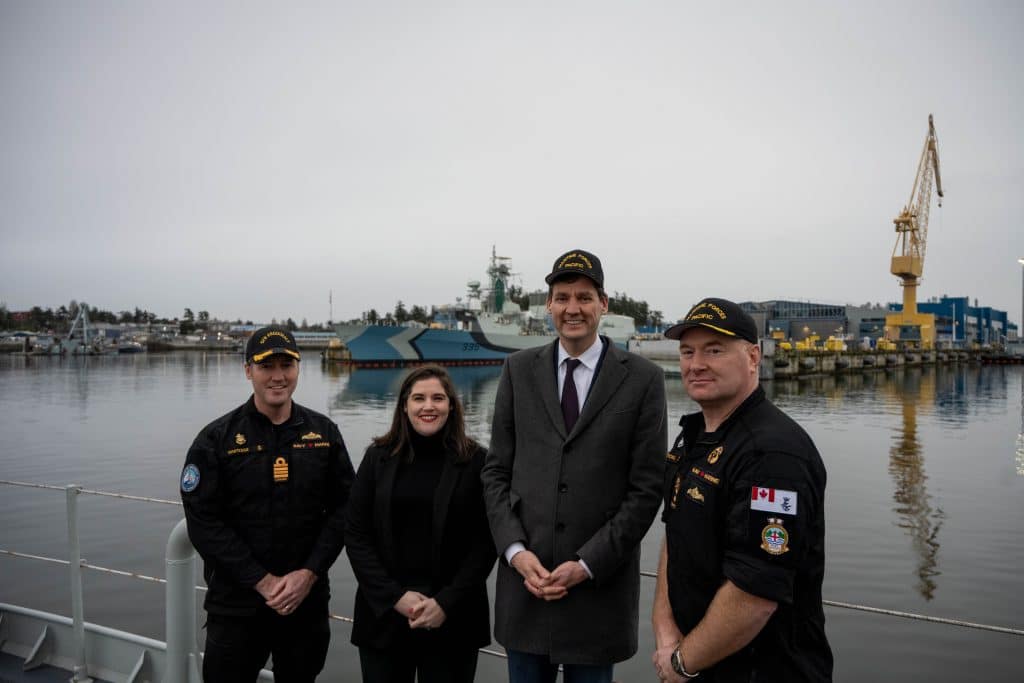
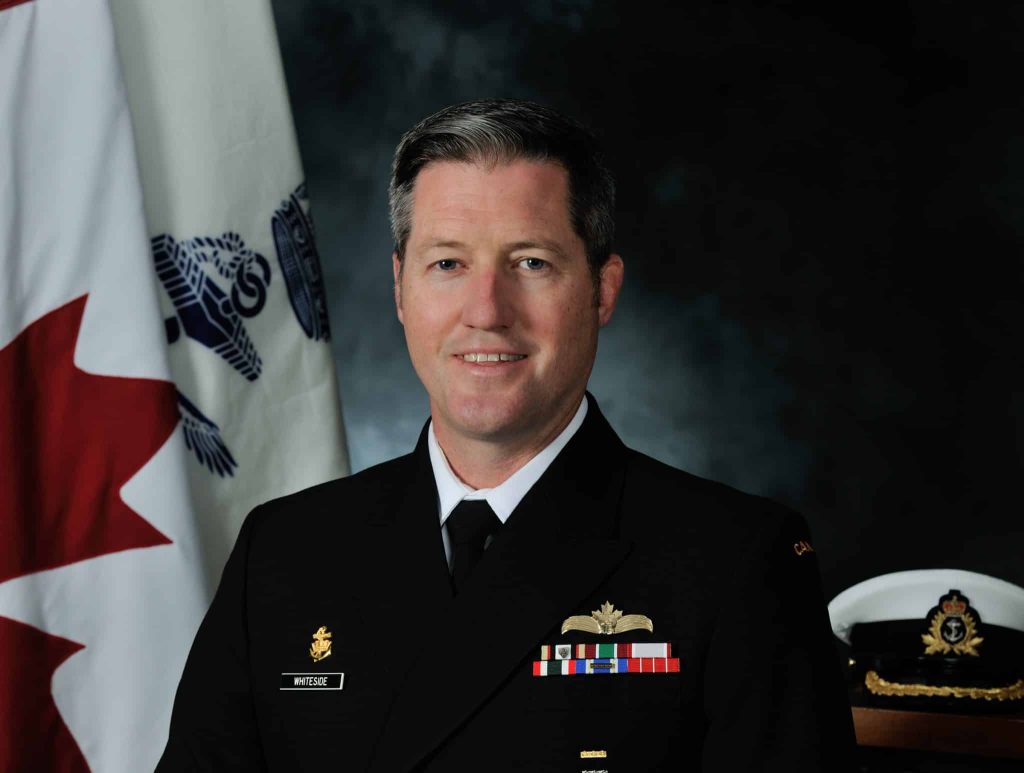
Premier David Emy during a tour of Canadian Forces Base (CFB) Esquimalt while accompanied by Rear-Admiral (R-Adm) David Patchell, Commander Maritime Forces Pacific/Joint Task Force Pacific and Captain(Navy) (Capt(Navy)) Kevin Whiteside, Commander of CFB Esquimalt, on Dec 11, 2025. Photo: Sailor 1st Class (S1) Kyle Maguire, MARPAC Imaging

Rear-Admiral Patchell Hosts Premier Eby to Highlight Strategic Importance of Canada’s West Coast Naval Hub

LCdr Linda Coleman, MARPAC Public Affairs Rear-Admiral David Patchell hosted Premier David Eby at Canadian Forces Base (CFB) Esquimalt to showcase Canada’s West Coast naval hub. Discussions highlighted fleet readiness, submarine infrastructure plans, economic impact, and skilled trades growth. Leaders emphasized environmental stewardship and collaboration with Indigenous Nations in B.C. - Rear-Admiral (RAdm) David Patchell, Commander Maritime Forces Pacific and Joint Task Force Pacific (MARPAC/JTFP), welcomed the Premier of British Columbia, David Eby, to Canadian Forces Base (CFB) Esquimalt on Dec 11, 2025, for a first official visit highlighting the strategic, economic, and environmental importance of Canada’s West Coast naval hub. The Premier was accompanied by MLA Darlene Rotchford, Parliamentary Secretary for Armed Forces Development and Veteran’s Affairs. “I was very pleased to welcome Premier Eby to Maritime Forces Pacific,” said RAdm Patchell. “This visit was an important opportunity to showcase the strategic significance of our West Coast naval hub, the work our sailors and civilians do every day, and the strong connection between the Royal Canadian Navy (RCN) and the Province of British Columbia.” During the visit, Premier Eby was taken on a sail through Esquimalt Harbour aboard an Orca-class training vessel, where he received a comprehensive tour and briefing on the RCN’s assets and operations on the West Coast. Joining the sail were Base Commander Captain (Navy) (Capt(Navy)) Kevin Whiteside, Doug Young, King’s Harbour Master, and Mike Bodman, manager of Base Safety, Environment and Indigenous Relations. While underway, Premier Eby received an overview of CFB Esquimalt, the Dockyard, and harbour operations, emphasizing the base’s central role in training, readiness, and fleet support and maintenance. It was noted that Esquimalt is an exceptional location for training sailors and highlighted the critical importance of training vessels in meeting the RCN’s future personnel demands. It was emphasized to Premier Eby that...

The Honourable David McGuinty, Minister of National Defence (MND) meets with members of Fleet Maintenance Facility (FMF) Cape Breton during a visit to Canadian Forces Base (CFB) Esquimalt on Feb 19. Photo: Sailor 1st Class (S1) Jordan Schilstra, MARPAC Imaging

Minister of National Defence Connects with Defence Community of CFB Esquimalt

LCdr Linda Coleman, MARPAC Public Affairs, with contributions from Lindsay Groves, Lookout Newspaper The Honourable Minister David J. McGuinty met with RCN members, families, and civilian staff to discuss defence investment and quality-of-life priorities. He toured Fleet Diving Unit (Pacific), Esquimalt Harbour recapitalization projects, and FMF Cape Breton facilities. The visit reinforced Canada’s growing defence investment, fleet modernization, and Pacific naval readiness. - Canadian Forces Base (CFB) Esquimalt was buzzing with energy on Feb 19 as the Minister of National Defence David J. McGuinty arrived for a full day of engagement with the Defence team. From early‑morning conversations with Royal Canadian Navy (RCN) sailors to hands‑on tours of key operational facilities, the visit underscored a moment of major renewal for Canada’s navy and the people who serve it. The day started with a town hall at the Colwood Pacific Activity Centre - Esquimalt (CPAC) to connect with members and families from His Majesty’s Canadian (HMC) Ships Ottawa, Vancouver, Calgary and Regina. “We asked Canadians: What should we do with our Armed Forces? They told us, invest in them,” said the Minister. “Yes, you’ll hear about big procurements, billions of dollars in acquisitions, but we also need to invest in you, because we can’t do this without you... I am focused on your quality of life.” The Minister spoke about the changes he wants to see in the years ahead. While acknowledging the scale of the transformation, he noted, “it’s a complicated structure” and asked members to “be patient with us” as it will be a “big turnaround.” “But here’s the best news,” Minister McGuinty added. “I couldn’t believe how easy it is to implement and execute change because of you. Members are trained to execute.” [caption id="attachment_334429" align="alignleft" width="600"] The Honourable David McGuinty, Minister of National Defence (MND) speaking during a...

A Letter from the Base Commander of CFB Esquimalt

Dear Lookout Readers and Members of the Defence Community, As many of you are aware, if you are a reader of the print version of this newspaper, you are reading one of the last editions of the Lookout that will roll off a traditional press. Effective April 6, 2026, the Lookout Navy News will transition to a predominantly digital publication from its past paper format. This decision, made in close consultation with the Lookout team and PSP Esquimalt, was not taken lightly. The final print edition on March 23, 2026 will come almost 82 years to the day that the first newspaper arrived at Canadian naval shore facilities in Victoria, decades before Canadian Forces Base (CFB) Esquimalt was formally named. While the broader circumstances driving this shift stem from the well-known challenges facing legacy media, particularly newspapers, it remains a sombre and significant moment for a storied institution woven deeply into the fabric of the Base and the lives of past and present members. We are acutely aware of the potential impacts this change may have on our loyal readers, many of whom hold the ink and feel of newsprint as fundamental to the Lookout's identity. We know many of our readers appreciate the feel of newsprint and the ritual of picking up a physical paper. That tradition has been an important part of the Lookout's identity, and we're grateful for the loyalty and connection it represents. At the same time, evolving habits in how people consume information present us with an opportunity to modernize while building on the strengths that have carried us through eight decades. This transition is about growth — not loss. In 2026, the Lookout moves toward a digital-first model that prioritizes accessible, timely, and engaging storytelling through our website, e-editions, and social media. This shift...

A New Voice for Junior Sailors: MS Van Manen Takes the Helm as Formation Master Sailor

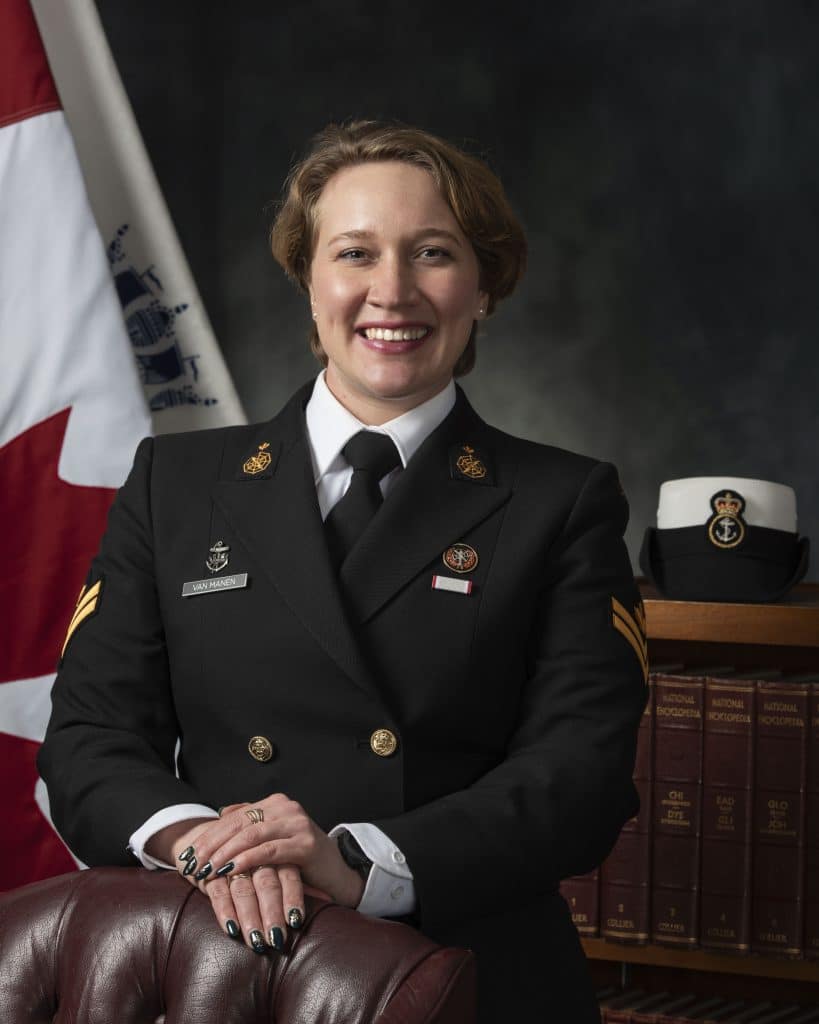
Archana Cini, Lookout Newspaper Whether new to the Royal Canadian Navy (RCN) or the base, approachability is the first thing Master Sailor (MS) Heather Van Manen wants others to notice.  “When someone meets me for the first time, I want them to feel that I’m approachable.”   Now stepping into her new role as Formation Master Sailor of Maritime Forces Pacific/Joint Task Force Pacific (MARPAC/JTFP), MS Van Manen brings more than rank and experience to the position. She brings the willingness to listen, advocate, and represent junior sailors.   MS Van Manen’s story begins in a small town in Ontario, surrounded by mud, books, and nature.   “I was definitely a tomboy,” said MS Van Manen. “I was also very much that kid that got in trouble for staying up reading books under the covers with a flashlight.”  With her mother working as a teacher, summers were often spent outdoors helping at her grandparents' family camp until MS Van Manen’s teenage years, when her family moved north full time. Before joining the RCN, MS Van Manen also thrived in another demanding environment: the professional kitchen. For five years, she worked in the professional food industry as sous chef at a small bistro in southern Ontario. Eventually, while logging hours to challenge her Red Seal, MS Van Manen hit a turning point.   “The pay, the hours, the lifestyle... it just didn’t feel very sustainable anymore,” shared MS Van Manen.   Around the same time, MS Van Manen’s best friend had joined the naval reserves, insisting that MS Van Manen would also love it. Then, while on a short trip to Cuba for her mother’s birthday, MS Van Manen met someone attempting to join the French Foreign Legion — another unexpected nudge towards the military.  After returning home, MS Van Manen applied to serve online. During the trade selection process, she chose one from each element and left it completely up to fate.   MS Van Manen was sworn into service with the RCN on Oct 30, 2019. When asked how her family and friends felt at this career shift, MS Van Manen smiled and said simply, “They were very proud.”   Despite the pace...

The Navy Canada Needs: VAdm Topshee Hosts Town Hall

A/SLt Jamie De La Chevrotière-Martin, MARPAC Public Affairs Vice-Admiral Angus Topshee, Commander of the Royal Canadian Navy, hosted town halls across both coasts outlining a frank view of today’s security environment and what the RCN must become. He emphasized the need to strengthen maritime awareness to protect Canadian sovereignty, including building a unified maritime picture using sensors, autonomous systems, AI, and secure data-sharing. VAdm Topshee also highlighted shipbuilding and industrial capacity, modernization, and faster personnel generation. - In a series of town halls delivered on both coasts, Vice-Admiral (VAdm) Angus Topshee, Commander of the Royal Canadian Navy (CRCN), offered a frank assessment of today’s security environment and a clear vision for what Canada’s navy must become. His starting point was blunt: the global climate has hardened. While Canada’s 2017 defence policy, Strong, Secure, Engaged, emphasized a stable rules‑based international order, VAdm Topshee said today’s reality is increasingly shaped by power, interests, and competition. In that world, maritime forces matter and Canada must be able to defend its sovereignty. Despite readiness pressures and an aging fleet, VAdm Topshee noted the RCN has always maintained a strong global presence for a navy of its size. But the focus of the town halls was not on past achievements. Instead, he outlined what must happen next: improved maritime awareness; modern ships and submarines; faster and smarter personnel generation; and a culture focused relentlessly on competence, readiness, and war fighters. MARITIME AWARENESS AND CANADIAN SOVEREIGNTY Canada’s defining challenge remains geography. With the longest coastline in the world, three oceans, and vast maritime approaches, Canadians expect their navy to know what is happening on and under national waters. To close that gap, VAdm Topshee described a whole‑of‑government effort to build a single recognized maritime picture. This includes: the Coast Guard’s expanding surveillance mandate; partnerships with industry...

A New Year, A New Focus on Security: Welcome to Security Awareness Week

L2 Stephen Vallis, L2 MARPAC /JTF(P) Physical and Personnel Security Officer Security Awareness Week runs Feb 9–13, 2026, with the theme 'Security starts with you,' reminding Defence Team members that protecting information, materials, and facilities is a shared responsibility. Members are encouraged to adopt a security mindset by staying proactive, learning workplace zone requirements, understanding classified materials, and knowing who to contact for guidance within their unit. Members are also reminded to track and maintain their security clearance status, and to note that the new Personnel Security Processing System (PSPS) replaced WebSCPS in Nov 2025 for all clearance requests and updates. - This year, Security Awareness Week is observed from Feb 9 to 13, with the 2026 theme being ‘Security starts with you.’ For those of us in the Defence Team, many of these changes impact our daily business: we clearly have many global rivals whose goals conflict with our own. These entities may include foreign nations and their intelligence services; foreign and transnational terrorist networks; and criminal elements. No matter your role in the Defence Team, you have access to information, materials, and facilities that will be of interest to all those entities. Collectively and individually, we have a responsibility to protect these things. Effective security requires everyone to develop a security mindset: a proactive, vigilant way of thinking that involves constantly looking for vulnerabilities and potential failures, often described as ’thinking like an attacker’ to anticipate how systems, data, or physical assets could be misused, broken, or compromised, and then taking steps to prevent that. Similarly, we need everyone to support a culture of security awareness, which is achieved when security considerations are included in all planning and day to day operations, and all Defence Team members adopt shared values in the way we think about and approach...

In Conversation with Rear-Admiral David Patchell: On Leadership, the Courage to Trust, and The Will To Fight

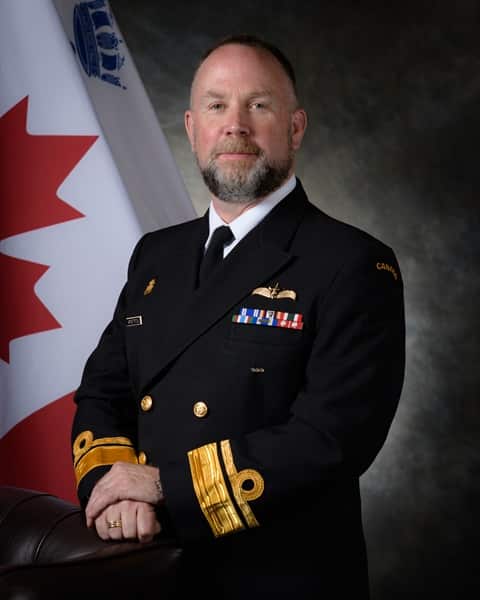
Lindsay Groves, Lookout Newspaper Today, leadership carries many definitions and, at times, misunderstandings. It can appear to be a lot of certainty, command, and action — necessary qualities for any leader. Yet there are foundational elements of leadership that are often less noted, such as calmness, serenity, integrity, and courage. Those are words used to describe Major (Maj) Dick Winters in the book Conversations With Major Dick Winters: Life Lessons From The Commander Of The Band Of Brothers by Cole C. Kingseed. Winters’ story was brought to life by Steven Spielberg and Tom Hanks in the HBO series Band of Brothers, which shared his experience in the Second World War and the hard-earned respect he earned as a leader. Winters, that book, and my work with the CFB Esquimalt community inspired this article — and I hope a series — because leadership is only a word until you witness it in action. When I sat down with Rear-Admiral (RAdm) David Patchell, Commander of Maritime Forces Pacific (MARPAC) and Joint Task Force Pacific ( JTFP), to learn more about his thoughts on leadership, morale, and service, he was quick to redirect the spotlight. “It’s difficult to talk about one’s own leadership,” said RAdm Patchell. “It’s much easier to talk about the amazing leadership I see around this formation.” On the bridge, across the base, at sea and at home, leadership is all around us. “I was on board [His Majesty’s Canadian Ship] HMCS Regina this week,” he continued. “The way that the command team leads — absolutely impressive. The Commanding Officer (CO) Darren Sleen inspires his team by talking about the importance of things as simple as drills and writing them out. Everyone can go and read the CO’s philosophy and understand, in detail, why what they’re doing is important.” RAdm...

Sailing into 2026 with the RCN: Rear-Admiral town hall recap

LCdr Michelle Scott, MARPAC The Royal Canadian Navy (RCN) hosted a town hall for sailors in late 2025, allowing them to ask questions regarding the future of the navy and any potential concerns. Questions asked by sailors during the town halls centred around the themes of housing, security, and force generation. Responses from RCN leadership can be read below. - In November, Rear-Admiral (RAdm) David Patchell, Chief Petty Officer 1st Class (CPO1) Jonathon Sorensen, and Formation Master Sailor (MS) Haley LeClair held a series of command town halls for the Formation. While not every question and answer is captured here, these questions highlight the predominant themes of housing, security, and force generation. HOUSING Q: How is the Navy addressing housing challenges for our sailors, soldiers and aviators, especially as we work to grow the force and accommodate those on the Basic Training List? A: We recognize that housing remains one of the most pressing challenges. At present, inventory of housing on Base is insufficient, and we are committed to addressing this gap through multiple approaches. New infrastructure projects are underway, including the soon-to-start construction of multiplexes, the purchase of a condominium building at 244 Island Highway, and we are exploring additional options to meet the needs of our members. We are also working closely with local communities to ensure there is adequate housing in the surrounding area. With over 1,800 personnel on the Basic Training List, accessible and affordable lodging for these members is a priority. In the interim, services like the MFRC housing coordinator help connect members with rental opportunities. Q: What is being done to improve infrastructure and maintain morale and retention while major projects like the Nelles Block replacement and the new mess facility are still years away? A: We know that infrastructure limitations and delays affect...

Canadian Naval Capability in 2026 and Beyond: The Future of the RCN with RAdm Armstrong

Archana Cini, Lookout Newspaper Rear-Admiral (RAdm) Armstrong outlines a decade of major capability growth for the RCN, including new Arctic and Offshore Patrol Vessels, the Canadian Patrol Submarine Project, and advances in uncrewed systems. RAdm Armstrong emphasizes sailor-focused leadership, modern infrastructure, and mentorship as the foundation for building a future-ready force. - The Royal Canadian Navy (RCN) currently stands at the precipice of a transformative decade — and according to Rear-Admiral (RAdm) Jason Armstrong, Chief of Naval Capability, the coming years promise some of the most substantial capability upgrades in decades. “We just received delivery of the Harry DeWolf class,” said RAdm Armstrong, referring to the new fleet of six Arctic and Offshore Patrol Vessels (AOPVs) helping the RCN operate in regions once out of reach. Armstrong called the class “a phenomenal capability,” noting its successful deployments to the Arctic, Indo-Pacific, and the Caribbean, where the fleet continues to demonstrate its international versatility. Notably, the AOPVs have also successfully deployed further north than any other RCN ship in Canadian history. With the longest coastline in the world, Canada’s underwater surveillance capability is on the mind of RCN leadership. “There’s a lot of new builds coming for our sailors that I’m excited to speak to,” shared RAdm Armstrong. “The Canadian Patrol Submarine Project (CPSP) is very near and dear to my heart.” The CPSP will see up to 12 new submarines join the RCN over the next decade, with each submarine poised with the capabilities to efficiently detect, track, deter, and if necessary, defeat adversaries in all three of Canada’s oceans. “I’m very optimistic with where we’re collectively heading,” said the RAdm. “There are also infrastructure projects on the move to improve quality of life for our sailors, and innovative work being done with regards to drones and uncrewed systems. It’s...

RAdm David Patchell Addresses Questions from Sailors in Town Hall

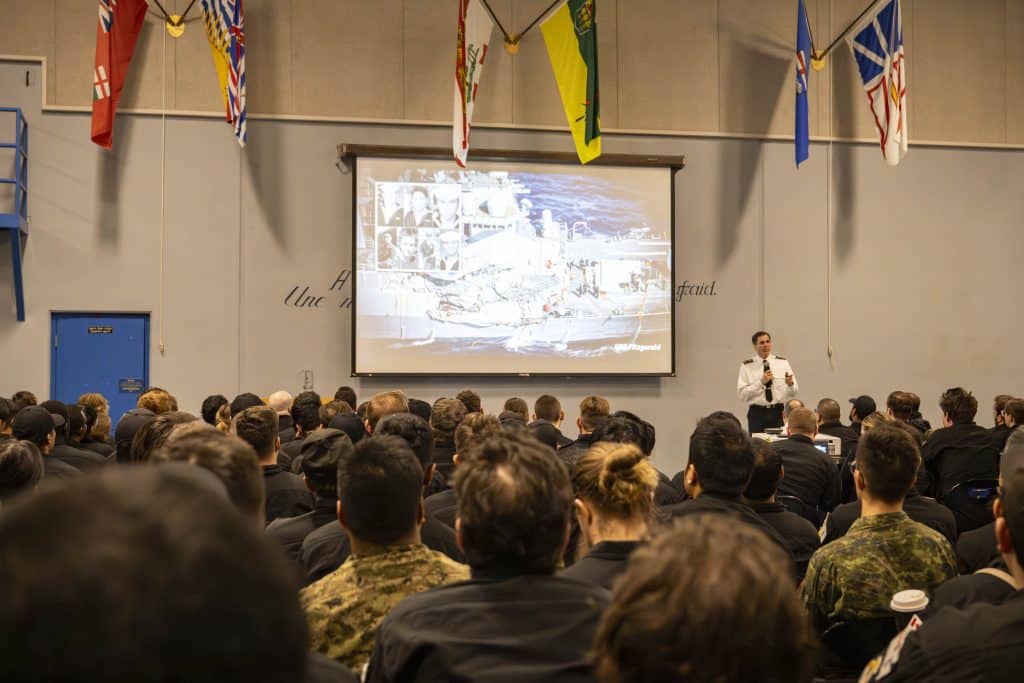
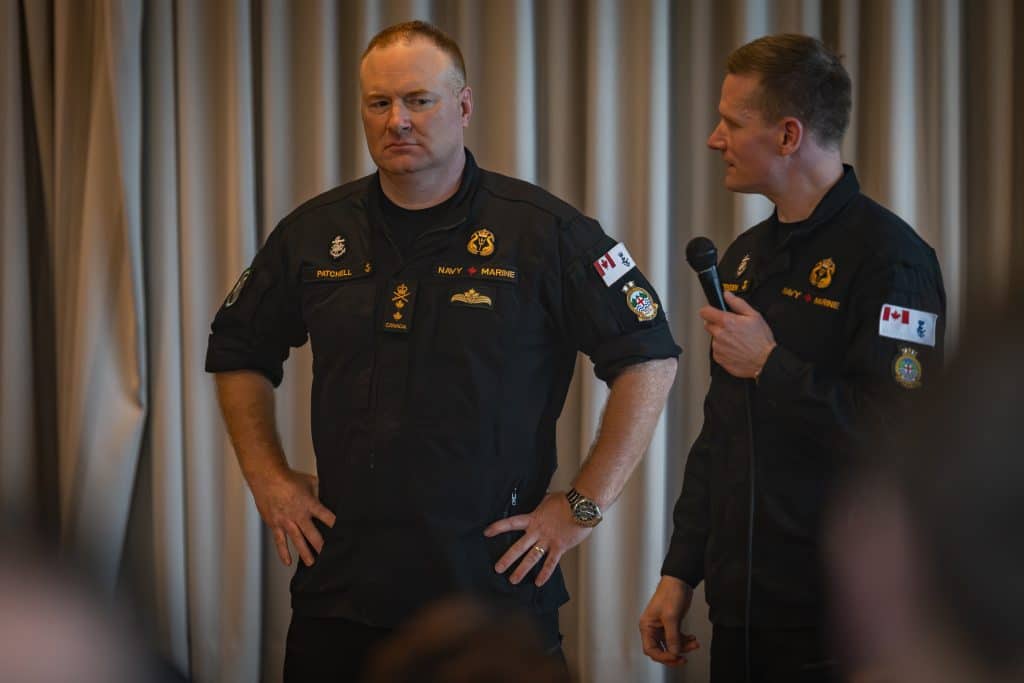
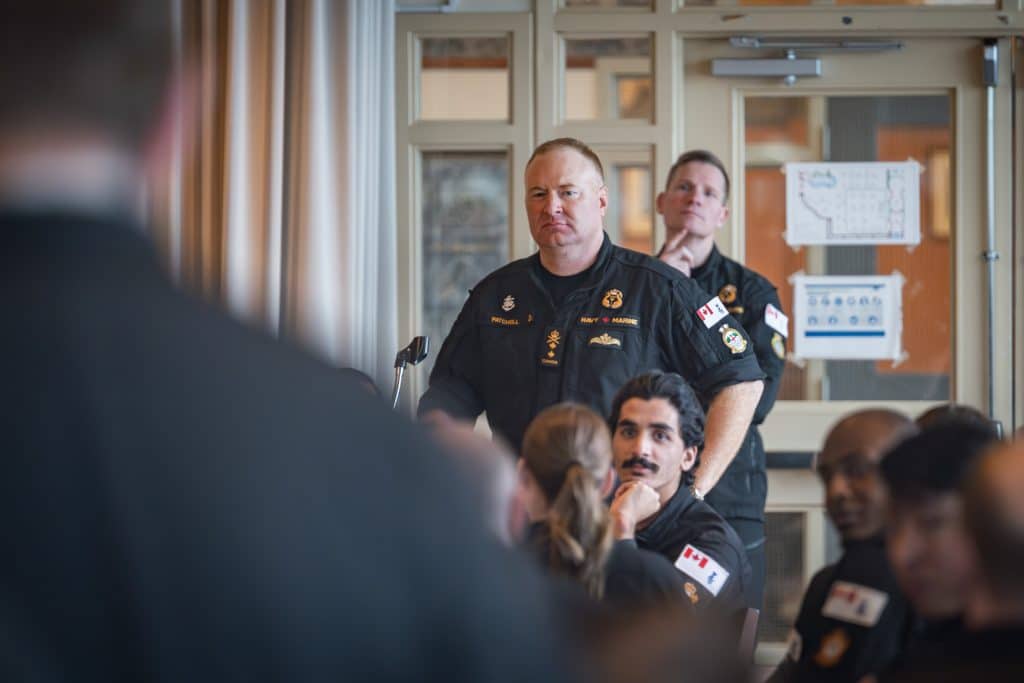
Archana Cini, Lookout Newspaper RAdm Patchell led an open town hall at CFB Esquimalt, addressing fleet expansion, infrastructure renewal, and future Navy priorities. Sailors raised concerns about PT time, training bottlenecks, sea duty pay, security clearances, and childcare shortages. Leadership emphasized professionalism, transparency, and collective responsibility as the Navy grows to meet rising demands. - With the Royal Canadian Navy (RCN) currently short over a thousand sailors, Rear Admiral (RAdm) David Patchell, Commander of Maritime Forces Pacific (MARPAC) and Joint Task Force Pacific ( JTFP), walked into a Nov 19 town hall prepared to speak openly. Hundreds of sailors packed the Rainbow Room at the Canadian Forces Base (CFB) Esquimalt’s Chief and Petty Officers’ Mess for the candid exchange. Split into two open question and answer periods (one for Junior non-commissioned members and another for Chief and Petty Officers), the town hall addressed topics ranging from new service vessels and infrastructure plans to personnel shortages, training bottlenecks, and daily quality-of-life concerns. RAdm Patchell opened the event by thanking sailors for their service during a period of operational demand and transformation, noting that the Navy “must grow two-and-a-half to three times our current size” to meet future requirements. RAdm Patchell also framed the town hall as an open forum, with a ‘no-holds-barred’ approach. He also emphasized three key future priorities for the Formation: defending Canada; regrowing and training the Navy; and inspiring professional warfighters. RAdm Patchell then outlined major Defence investments, calling the progress of the National Shipbuilding Strategy “the most significant recapitalization in generations.” This includes the River-class destroyers, up to 12 new submarines, a future coastal corvette, additional Joint Support Ships, and up to 30 new training vessels. Locally, CFB Esquimalt is also preparing for extensive infrastructure renewal, including new housing, a new Nelles Block, an upcoming Alpha Jetty...

Stay connected

Categories

Featured News

E-Editions Archive

News Stories Archive