

Archana Cini, Lookout Newspaper
“We have a really good team here. We’re not in any significant danger.”
– Ross Fetterly, on a phone call he made to his superior hours before the Second Intifada began
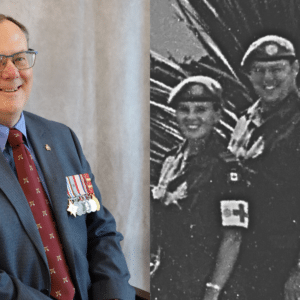
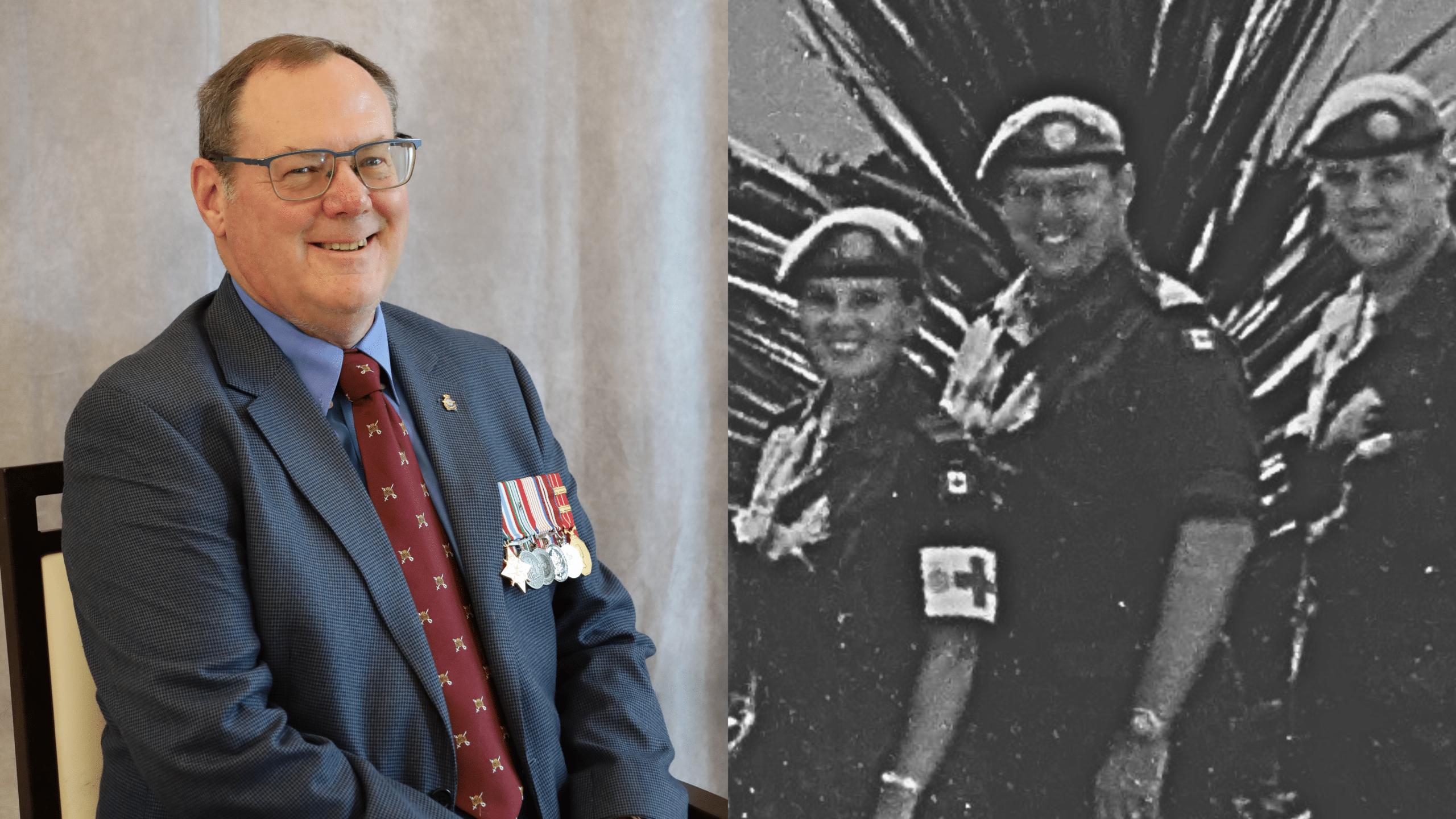
At 66-years-old, Ross Fetterly has a story for almost everything — a smelter tunnel in Kitimat; a night in a Kabul-bound convoy; a tour with a Ukrainian colleague who traded a Jesuit seminary for a career in Defence. Through 34 years of service in the Canadian Armed Forces (CAF), Ross has built a distinguished career in logistics and finance, alongside a repertoire of stories that have only gotten better with time. Today, Ross attends the Veterans Health Centre day program at the Veterans Memorial Lodge, a Broadmead Care Home.
Ross was born in northern Quebec, where his father worked as a chemical engineer. Here, Ross attended the town’s only English school.
“When I went outside, it was all French, and I learned French very quickly because of this,” said Ross. The family later moved to Kitimat, B.C., where his father then began work at an aluminum smelter fed by water piped 17 kilometres through a mountain. To him, this time of his life was “heaven for a young boy.”
As a young adult, Ross attended McGill University to complete a Bachelor of Commerce undergraduate degree, after which he landed a banking job. However, interest rates soon climbed to 17 per cent and Ross was left without a job after a mass layoff.
“I remember asking myself, ‘Do I really want to work in a bank? I’m a young guy. I want to be,’” said Ross. The next day, he sat down with a military recruiter and began his career with the CAF.
Ross was halfway through basic officer training in Chilliwack, B.C., when instructors pulled him aside to tell him that he’d already passed. His new job, they said, was to ensure that everyone else passed. Ross traces the start of his leadership qualities back to this point, when he found himself boosting the morale of those around him and even carrying another recruit’s rifle. When the course concluded, every single recruit had passed.
While Ross had initially wanted to serve as an infantry officer, the CAF had other hopes.
“The infantry, they told me, were a dime a dozen,” Ross said. “What they really needed at the time was logisticians: finance, procurement, and contracting.” As such, Ross moved on to train in all three and was then posted to Ottawa. It was here, at a church service, that a minister introduced him to a woman named Sherry, who he drove home from service. Today, the two have been married for more than three decades.
Ross then spent four years running logistics for the Canadian Forces Snowbirds out of Moose Jaw before postings carried him through Edmonton and back to Ottawa. In 2000, he was then deployed to the Golan Heights as acting commanding officer of the United Nations Logistics Battalion. Tasked to monitor the tension of the region, Ross recalls making a phone call to his superior in Canada and sharing that he felt there was no immediate danger around him.
“We have a really good team here. We’re not in any significant danger,” Ross said on the line. Just hours later, Ross found himself at the centre of history when the second Palestinian uprising, a five-year period of violence also known as the Second Intifada, began. Still, he remembers codes, the voices of his superiors keeping him steady across the ocean, and even the details of a report he wrote for the Chief of Defence Staff.
Another difficult tour came later, at Kandahar Air Force Base in Afghanistan.
“When President Obama announced a surge of 30,000 troops without consulting NATO allies, it fell to me to plan the budget for the sudden growth,” said Ross. He recalls Shura meetings (the Arabic word for collective roundtable decision-making gatherings) held in round buildings and a roommate, a military police officer, describing drone surveillance.
After retiring in 2017, Ross completed a PhD at the Royal Military College of Canada (RMC), after which the college’s president asked him to stay on as an adjunct professor. Ross accepted, teaching finance, defence decision making, and government procurement for nearly a decade.
When asked what he’s most proud of, Ross doesn’t reach for medals or milestones; instead, he talks about the teams. He speaks of the people of the logistics battalion that stayed calm when the Second Intifada began; his colleagues in Kandahar; those at RMC he spent years teaching.
This story is brought to you in partnership with Broadmead Care, a registered charity and non-profit care provider supporting veterans through long term care and programs that honour their life history, support their abilities, and maintain their dignity. To learn more, call 250-658-0311 or visit broadmeadcare.com