
Lookout Newspaper Logo

Operations & Deployment

Bridging Borders at Sea

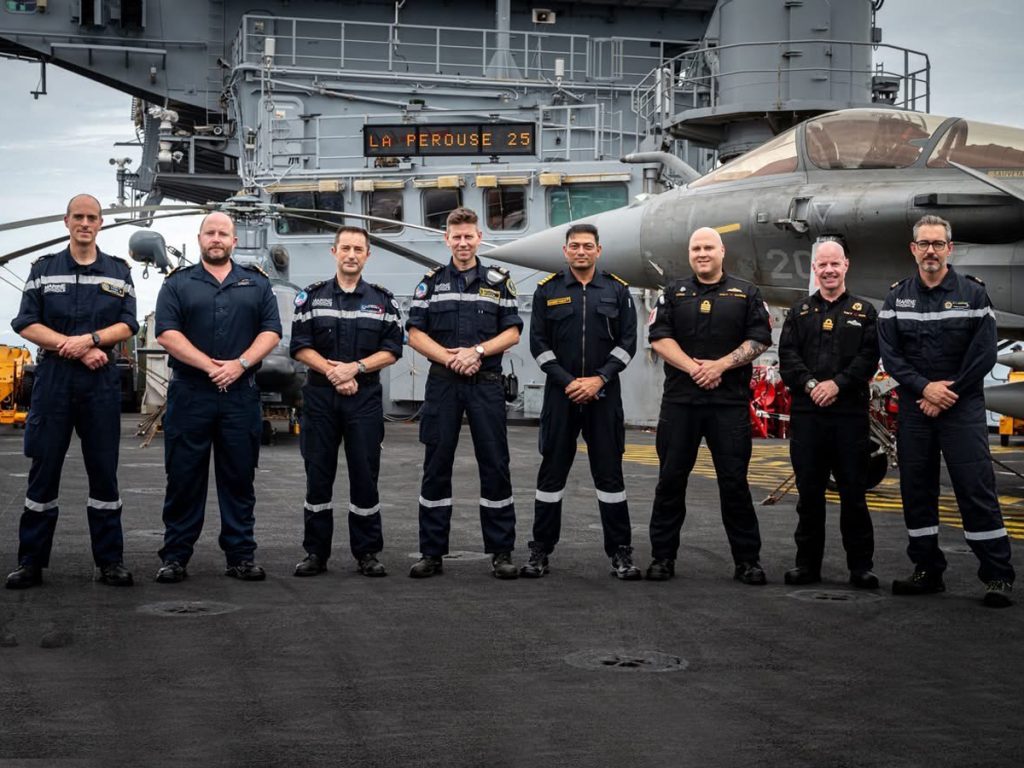
HMCS Ottawa is currently taking part in multinational exercise La Perouse 25, centered around a French Carrier Strike Group. The exercise involves nine partner nations and takes place in the coasts and straits between the Indian Ocean and the Pacific Ocean: Malacca, Sunda, and Lombok. During the exercise, commanding officers from the different ships had the opportunity to meet face-to-face onboard French aircraft carrier Charles De Gaulle while French sailors visited and learned more about the Royal Canadian Navy.  Photos:  Sailor 3rd Class Jacob Saunders  

The Advanced Naval Capabilities Unit participates in Bold Quest 24 in Jacksonville

Advanced Naval Capabilities Unit Sailors Fly High at Bold Quest 24

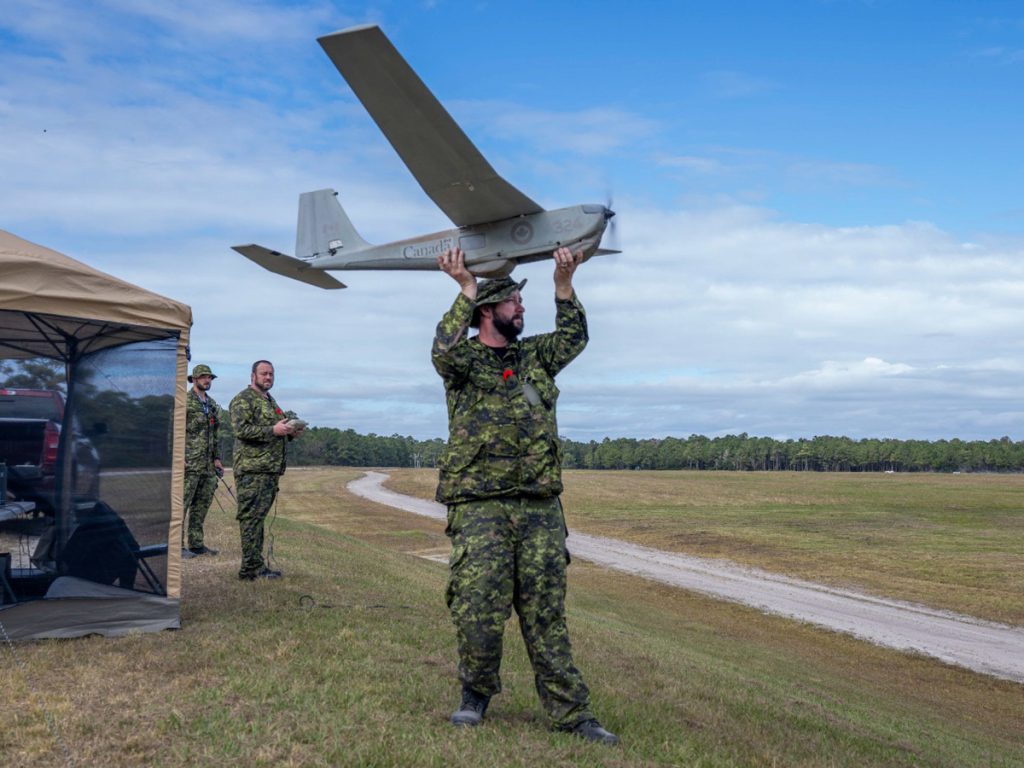
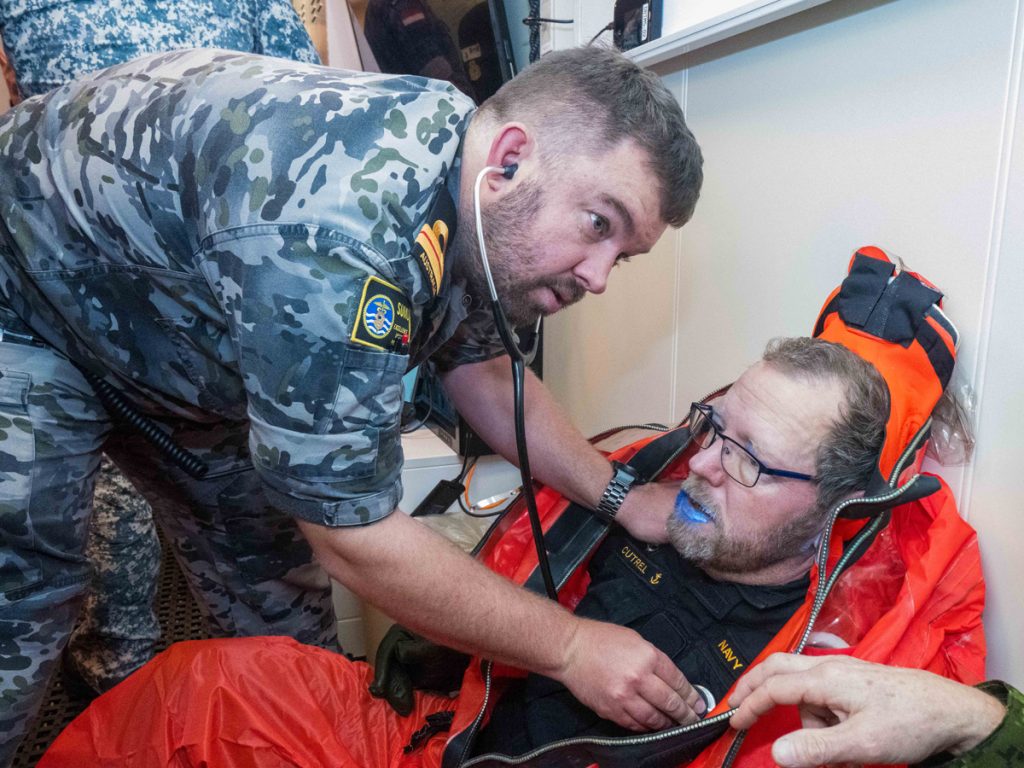
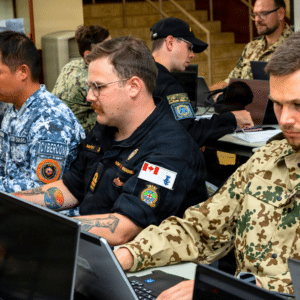
Lt(N) R. Davies, Uncrewed System Officer, ANCU  —  From October to November 2024, Advanced Naval Capabilities Unit (ANCU) took part in Bold Quest 24, a significant multinational event hosted by the United States Joint Staff in Jacksonville, North Carolina. This prestigious event brought together approximately 2,000 personnel from 17 different nations, fostering collaboration and enhancing capabilities among allied forces. The ANCU team had three primary missions during the exercise: to integrate into the intelligence cycle of the exercise, participate in a medical demonstration and practical field test of modern medical networking technologies, and support Intelligence, Surveillance, and Reconnaissance operations. To achieve these goals, ANCU deployed a team comprised of an Intelligence officer, a medic and Uncrewed Systems operators flying the CU-175 Puma – a miniature fixed wing Uncrewed Aircraft system used both on land and at sea. One of the standout achievements of the ANCU team during Bold Quest 24 was their support for the first successful execution of the Intelligence Requirement Management and Collection Management (IRM&CM) process using solely Canadian assets through Federated Mission Network (FMN). ANCU sailors played a critical role in providing Full Motion Video (FMV) to the FMN and the Mission Partner Environment. This FMV was subsequently transmitted to the Canadian Forces Maritime Warfare Centre and Trinity in Halifax, marking a significant advancement in the speed and efficiency of intelligence collection and processing. Leading the intelligence efforts, Lieutenant(N) Jeong served as the Naval Intelligence lead for Bold Quest 24, heading a team focused on the practical use of Common Intelligence Picture tools and implementing the IRM&CM cycle. Meanwhile, ANCU’s medic, Master Corporal (MCpl) Patterson, integrated with the Royal Navy and the United States Marine Corps to evaluate the United States Air Force Research Laboratories Battlefield Digital Data Collection Kit (BATDOK), to address medical needs and gather vital...

Malahat introduces life at sea to new recruits

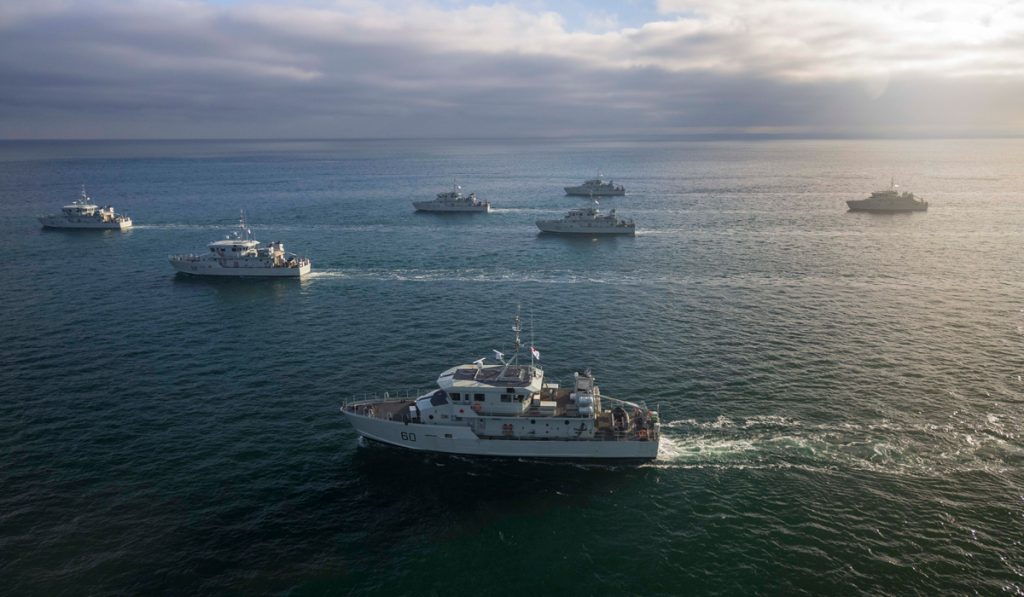
SLt Rudee Gaudet, HMCS Malahat PAO On a mid-January weekend, members of Victoria’s Naval Reserve Division HMCS Malahat took advantage of the mild West Coast climate by going to sea on board Patrol Craft Training (PCT) Grizzly. It was the second sailing opportunity for Malahat sailors to refresh skills and introduce new members of the unit to life at sea in an Orca Class vessel since the training year started in September. Grizzly departed Esquimalt Harbour Saturday morning, crossed into U.S. waters and spent Saturday evening in Friday Harbor, San Juan Island, Washington. Among the 23 sailors on board for the weekend training were five of Malahat’s newest recruits, going to sea for the first time in a naval vessel. Training weekends are always jam-packed with events to maximize the sailors’ opportunity to keep their skills sharp, and this weekend was no different. By working through diver training, man overboard exercises, engineering drills and a simulated fire exercise, the new recruits had a solid idea of what to expect as they progress through their training in the coming months. “I am keen to take every opportunity to get junior sailors to sea,” said Lieutenant-Commander Michael Lawless, Commanding Officer HMCS Malahat. “The mandate of the Naval Reserve is to generate trained individuals and teams for Canadian Armed Forces operations. Training weekends at sea provide real-world experience, establishing a foundation of skills, which are further built upon throughout the year in classrooms and simulators.” For one recent recruit, a highlight of the weekend was the diver training. The recruit, a former Artillery Sergeant and Afghanistan veteran, loved diving so much that she transferred into the Naval Reserve as a Port Inspection Diver. “The dive training and learning some new seamanship skills was amazing, but my favorite part of going to sea for the first time was the 10 a.m. soup,” she said. “What a wonderful navy tradition!” PCT Grizzly with its Malahat crew embarked, departed Friday Harbor on Sunday morning, sailed through...

New lease on Life for Oriole

Ben Green, Lookout Newspaper Since the beginning of the year, HMCS Oriole has been inside a giant temporary shed at Port Hope Shipyard, only a stones-throw away from Victoria’s downtown Inner Harbour and the open ocean. The longest commissioned ship in the Royal Canadian Navy (RCN) is turning 91 years old this summer, and the docking work period looks to inject another nine decades of life into the historic training ship. “There is an entirely new lower half of the ship,” says LCdr Jeff Kibble, Oriole’s Captain. “So the hull plating, the ribs, the frames, effectively the lower 10 feet of the ship, or almost everything below the water line, is being replaced in its entirety.” Her keel sits atop a moveable steel grid and her hull is supported by giant wood and steel beams. Oriole is literally a shell of its former self. The engine, generator, tanks, fridges, and even sections of the two-inch thick teak deck have been removed to allow workers full access to her steel hull and frames. On the “to do” check list are painting the hull and interior shell, and repairing all underwater valves, propeller, rudder and shafts. However, the area receiving the most attention is replacing the entire keel and rusted structural supports. Glen Shippam, Oriole’s refit manager, says her age still presents unique obstacles despite many of Port Hope Shipyard workers having been involved in the ship’s refits since the 1970s and 80s. “The major challenges with working on a 91-year-old ship are getting the original drawings and then carrying out the repairs on original structures using welding procedures in lieu of rivets,” he says. “Riveting in ships has gone the way of the buggy whip and horses.” When built in the early 20th century, Oriole was pieced together using rivets. Modern ship-building...

Ready to RAS – Charlottetown at Sea

LS Norman Snook, HMCS Charlottetown The pipe was made, “Starboard watch, special sea-duty men, RAS teams three and five: close up for RAS with FGS Rhön! Dress: naval combat dress, negative ball caps.” Personnel from all messes in HMCS Charlottetown began to take up their positions for a “liquid RAS” — replenishment at sea with fuel — with Rhön, the German refuelling ship accompanying Standing NATO Maritime Group 1. Sailors put on their game face, for no one ever knows precisely what to expect: a calm, co-operative sea, or that stubborn windswept kind with spray tossing over the guardrails. Heavy weather can make a RAS more difficult than it already is. In my opinion, replenishment at sea is one of the riskiest things we do in a Canadian warship, and we do it all the time. On this deployment, Charlottetown is patrolling as a part of NATO task force, so we are usually at sea for more than two weeks. To keep the fuel tanks topped up, the ship needs to RAS every three to four days. To conduct a RAS, two ships with a combined mass equivalent to about 25,000 automobiles must maintain station about 50 metres apart for hours, often in difficult seas, while thousands of pounds of diesel fuel flows through 10-inch hoses suspended between them from heavy steel cables under tremendous tension. The ships are never more than a few seconds from colliding, so a mechanical failure or the smallest mistake by the bridge team could be disastrous. Nevertheless, with thoughtful preparations based on generations of experience, the crew of a Canadian warship minimizes the risk to the greatest extent possible before the refuelling ship is even in sight. The bridge team isn’t the only group with an important job to do. On the RAS deck, where...

Law Enforcement at Sea

[caption id="attachment_215" align="alignright" width="200"] Last month, HMCS Algonquin participated in a series of exercises off Southern California with U.S. and Mexican naval assets.[/caption] Lt(N) Mike Ronaldson, HMCS Algonquin In mid-February, HMCS Algonquin took part in the North American Maritime Security Initiative (NAMSI) exercise off the coast of Southern California and Northern Mexico. NAMSI is an interagency tri-lateral security initiative between the U.S., Canadian, and Mexican maritime commands. The primary goal of the exercise was to test the interoperability and mutual understanding amongst the participating commands. The Feb. 22-23 exercise was conducted to validate the tri-lateral agreement’s standard operating procedures (SOP) used to coordinate the hand over of custody of a suspect vessel from one nation to another. The procedures are designed to facilitate maritime law enforcement as it relates to interdicting vessels suspected of trafficking illicit drugs or other illegal activities prohibited by international law. The exercise was also an opportunity to observe and learn from how the U.S. and Mexico conduct boarding operations. The first day had Algonquin’s boarding team board the U.S. tanker, USNS Henry J. Kaiser, who was playing the role of the merchant vessel Black Pearl, a container ship known to be harboring a person of interest with links to terrorist activity. After obtaining permission from Canadian maritime authorities, Algonquin’s Naval Boarding Party secured the vessel and conducted a search for the potential terrorist. Once the person was located, secured and his identity confirmed, U.S. national authorities were contacted in order to turn over the custody of the vessel to the United States. Shortly after national maritime authorities had completed the requisite paperwork, USCGC Boutwell was seen charging over the horizon in order to take custody of the Black Pearl and the person of interest. Algonquin’s Naval Boarding Party officer and his team conducted a thorough...

Farewell to HMCS Vancouver from the dias at Duntz Head

[caption id="attachment_273" align="aligncenter" width="630"] Chief of Maritime Staff, Vice Admiral Dean McFadden (right) and Commander Canadian Fleet Pacific, Commodore Peter Ellis, bid farewell to HMCS Vancouver from the dias at Duntz Head.[/caption] Chief of Maritime Staff, Vice Admiral Dean McFadden (right) and Commander Canadian Fleet Pacific, Commodore Peter Ellis, bid farewell to HMCS Vancouver from the dias at Duntz Head. HMCS Vancouver departed 10 July 2011 for the Mediterranean for OP MOBILE, the CF participation in Operation UNIFIED PROTECTOR, the NATO-led effort to impose on Libya the arms embargo and no-fly zone, and to protect civilians and civilian-populated areas in Libya. Photo credit: Cpl Charles A. Stephen, MARPAC Imaging

Connect

Top Categories

Latest

E-Editions Archive

News Stories Archive