
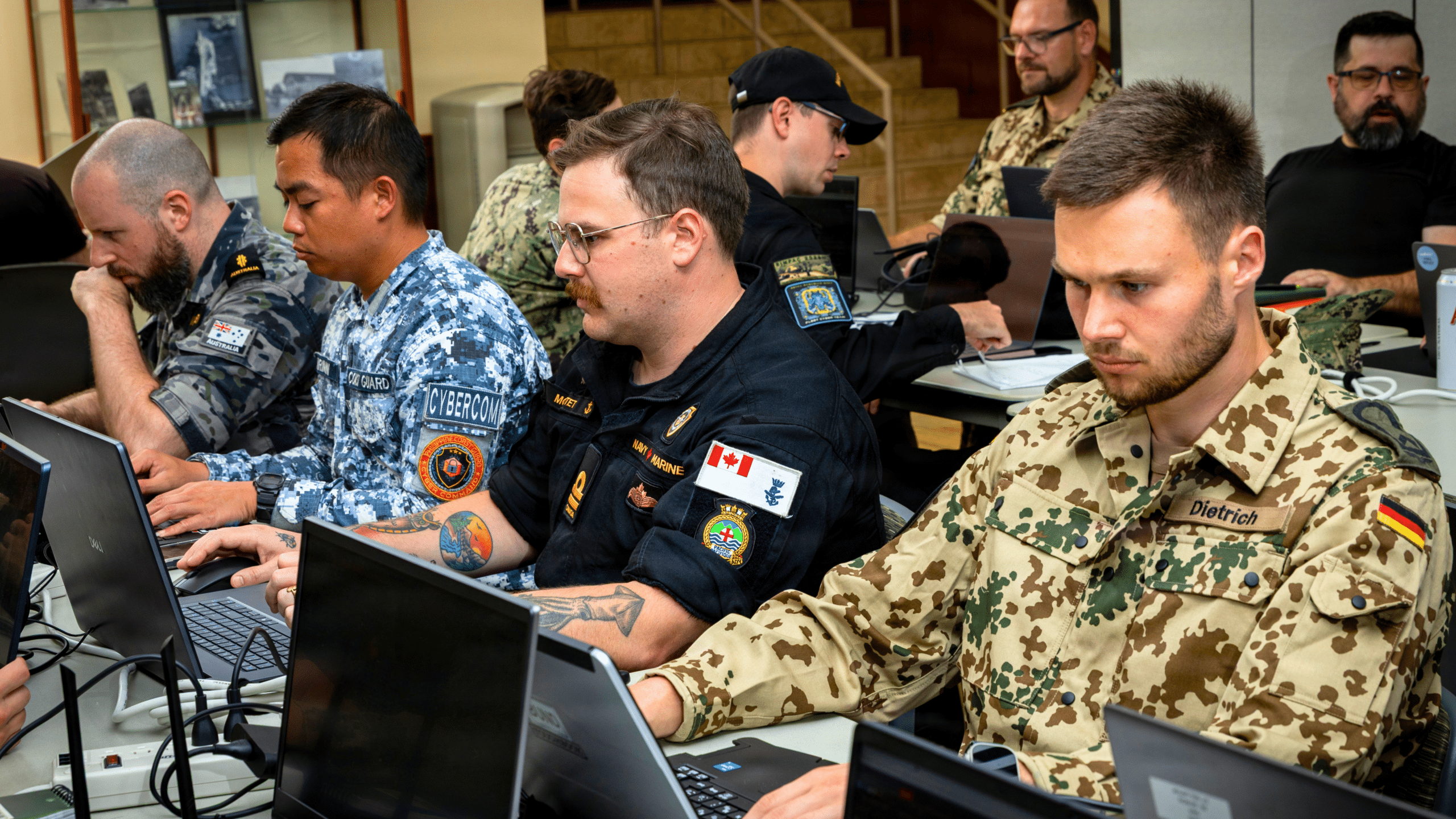
LCdr Linda Coleman, MARPAC Public Affairs
-
RCN cyber specialists joined allies from five nations during RIMPAC 2026 to strengthen multinational cyber readiness.
-
Participants trained through realistic cyber scenarios focused on collaboration, information sharing, and defending critical networks.
-
The exercise reinforced international partnerships and highlighted the importance of cyber capabilities in modern operations.
–
More than 30 cyber specialists from six nations gathered at Pearl Harbor, Hawaiʻi, for advanced cyber warfare training conducted during Exercise (Ex) Rim of the Pacific (RIMPAC) 2026, the world’s largest international maritime exercise. Participants from Canada, Australia, the United States, Germany, the Philippines, and the Republic of Korea worked together in a Persistent Cyber Training Environment to enhance multinational cooperation and cyber readiness.
The Royal Canadian Navy (RCN) was represented by Lieutenant(N) (Lt(N)) Charles Mottet, Chief Petty Officer 2nd Class (CPO2) Gavin Flannigan, Petty Officer 1st Class (PO1) Nicholas Fenton, Master Sailor (MS) Steve Gosling, MS Chris Harris, Sailor 1st Class (S1) Alexander Reed, and S1 Jeff Tsang. The exercise provided an opportunity for Canadian personnel to strengthen professional relationships and exchange expertise with allies and partners.
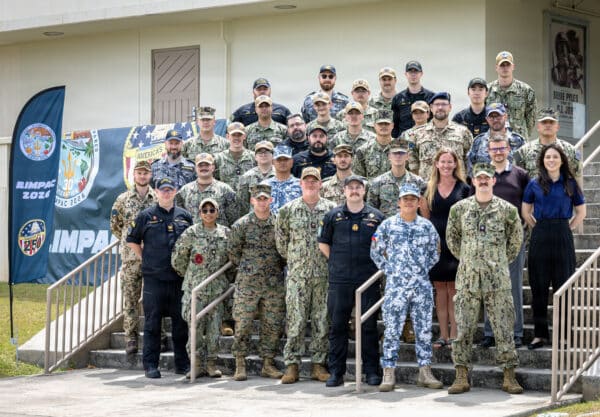
Persistent Cyber Training Environment personnel from Australia, United States, Germany, Canada, the Philippines and Republic of Korea pose for a photo during RIMPAC 2026. Photo: Leading Seaman Shaun Chatfield, Royal Australian Navy
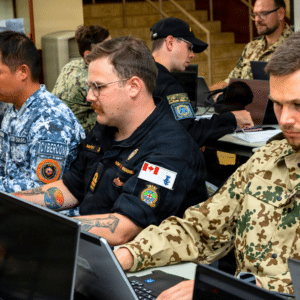
Conducted during RIMPAC’s harbour phase, the training immersed participants in realistic cyber scenarios requiring integrated multinational teams to respond to simulated threats.
“This exercise is designed to challenge personnel in a dynamic environment, requiring them to coordinate responses, share information, and solve complex cyber threats collaboratively,” said CPO2 Flannigan. “By working together in these scenarios, we gain valuable experience operating across national boundaries while improving our collective ability to defend critical military networks and systems.”
A key objective was to identify best practices and lessons learned that can be shared among participating nations. These outcomes will help inform the development of common procedures, reporting standards, and operational frameworks for future multinational cyber operations.
Lt(N) Mottet highlighted the value of the RCN’s Fleet Cyber Teams participation.
“Fleet Cyber Teams (Pacific and Atlantic) participation in the exercise at RIMPAC has been a great opportunity to learn and build on each other’s experiences in Defensive Cyber Operations,” he said. “The close ties we are deepening with our allies have been invaluable for Canada’s reputation as a global player in the cyber domain.”
The exercise also emphasized the importance of relationship-building alongside technical training. Participants developed trust, communication, and collaboration skills that will support future joint operations and responses to shared cyber challenges.
“It’s been an amazing opportunity to collaborate with multiple nations to share diverse experiences and knowledge within the Cyber Warfare Domain,” noted PO1 Fenton.
RIMPAC brings together naval, air, and land forces from around the world to strengthen partnerships and enhance collective security. For Canada, participation reinforces relationships with key allies while improving operational effectiveness in both traditional and emerging domains. As cyber threats continue to grow in complexity, multinational initiatives such as this demonstrate a shared commitment to maintaining a secure and resilient international security environment.