

Archana Cini, Lookout Newspaper.
-
The RCN introduced a new small-arms capability aboard Orca-class training vessels at CFB Esquimalt.
-
Sailors conducted a live-fire shoot aboard COUGAR off Constance Bank on April 22.
-
The initiative strengthens operational readiness, weapons training, and at-sea safety procedures.
–
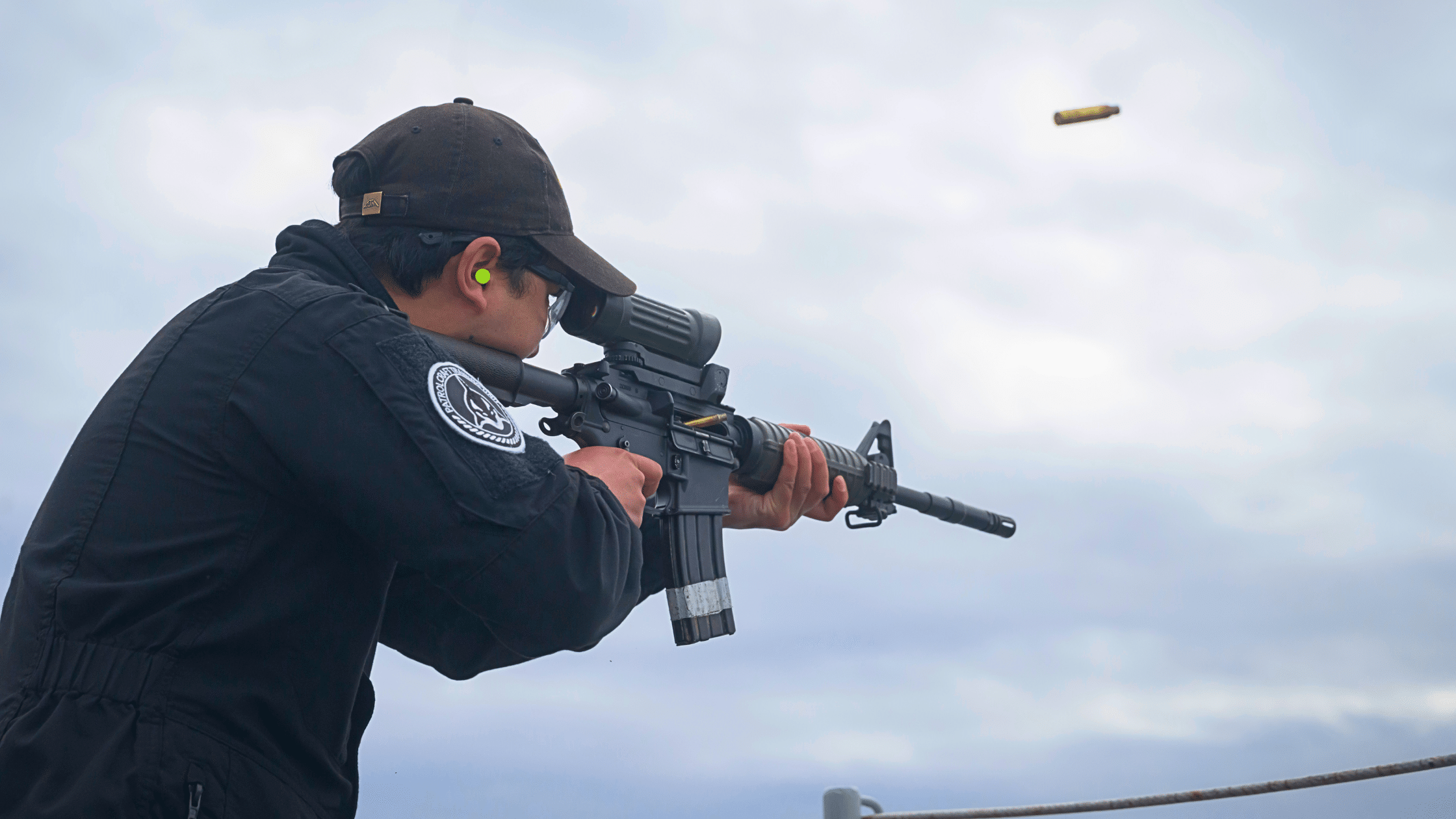
A sharp crack echoed across the waters off Constance Bank on April 22 as members of the Royal Canadian Navy (RCN) conducted a live-fire shoot aboard the Orca-class Patrol Craft Training (PCT) vessel Cougar.
This shoot forms part of a broader effort to introduce small-arms operational capabilities aboard the RCN’s Orca-class vessels, which are operated by members of Patrol Craft Training Unit (PCTU). While Orca-class vessels are primarily utilized as training platforms, the introduction of embarked weapons reflect both the changing realities of the global modern maritime environment and the RCN’s renewed focus on operational readiness at every level of training.
“The introduction of a small-arms capability on the Orca-class reflects an evolving security environment,” said Lieutenant(Navy) (Lt(Navy)) Jeremy Morissette. “There is growing recognition that even training platforms must be prepared to operate safely and credibly in a range of situations.”
This new capability includes the C8 and C22 rifles, and C6 machine gun. For PCTU, the capability represents more than simply adding weapons to a platform — it also reinforces the principle of ‘we train as we fight,’ bridging the gap between a training environment and an operational environment.
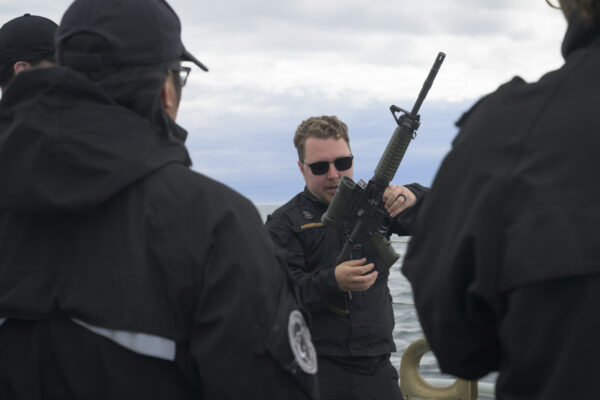
S1 Nathan Anderson reiterates C8 procedures prior to the small arms shoot conducted aboard PCT vessel COUGAR on April 22. Photo: S1 Jordan Schilstra, MARPAC Imaging
“The Orca-class vessels are arguably the RCN vessels that see the most sea days year-round, and where many sailors will have their first sailing experience,” said Lt(Navy) Morissette. “Having weapons onboard allows sailors from all ranks to gain exposure to weapons procedures at sea while also making the vessels more operationally able to respond to potential threats.”
Beyond operational advantages, the capability’s introduction also provides sailors with valuable hands-on exposure to procedures, responsibilities, and safety standards associated with conducting weapons serials at sea.
Before the April 22 shoot could take place, extensive preparation and procedural development were required. Members involved in the ship’s weapon safety organization also underwent formal range qualifications and received mentorship supported by senior personnel under established Canadian Armed Forces (CAF) standards.
“Safety is central to how the RCN operates, and this capability is no exception,” noted Lt(Navy) Morissette. “The rigorous planning and training process that went into making this shoot happen ensured the atmosphere onboard was calm and composed and that every member knew exactly what their role and duties were.”
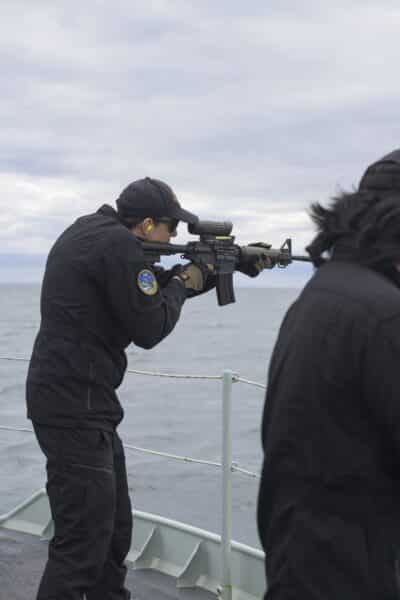
Sailor 1st Class Felix Parnell of Patrol Craft Training Unit (PCTU) shoots the C8 rifle during a small arms shoot onboard Pactrol Craft Training (PCT) vessel COUGAR at Constance Bank, Victoria on 22 April 2026.
Photo Credit: Sailor 1st Class Jordan Schilstra, MARPAC Imaging Services, Esquimalt
For the shoot location, the team chose Constance Bank, a well-established maritime training area off the coast of Victoria. Even though it was selected for its abundance of safe water for conducting live-fire serials and geographical location, weapons firing at sea introduces a unique level of complexity in comparison to a static land range.
“When conducting a shoot ashore, the range is almost entirely predictable,” said Lt(Navy) Morissette. “At sea, you need to account for other vessels, marine mammals, range to land, sea state, and constantly changing environmental conditions.”
Ultimately, these factors combined with strict safety procedures, make maritime weapons capabilities a distinct and demanding skillset. As the RCN continues to modernize and adapt to evolving maritime demands, initiatives like this are helping ensure that operability begins early — even aboard the Canadian Pacific Fleet’s training vessels.
When asked to describe the value of the new small arms capability in one word, Lt(Navy) Morissette’s response was simple: readiness.