
Lindsay Groves, Lookout Newspaper.
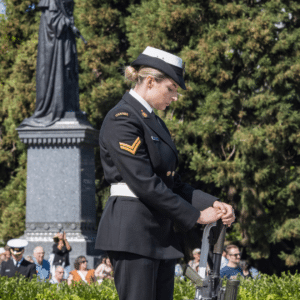
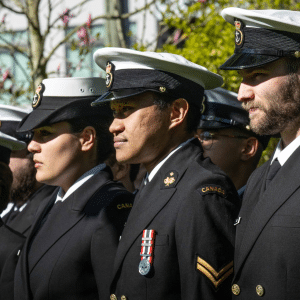
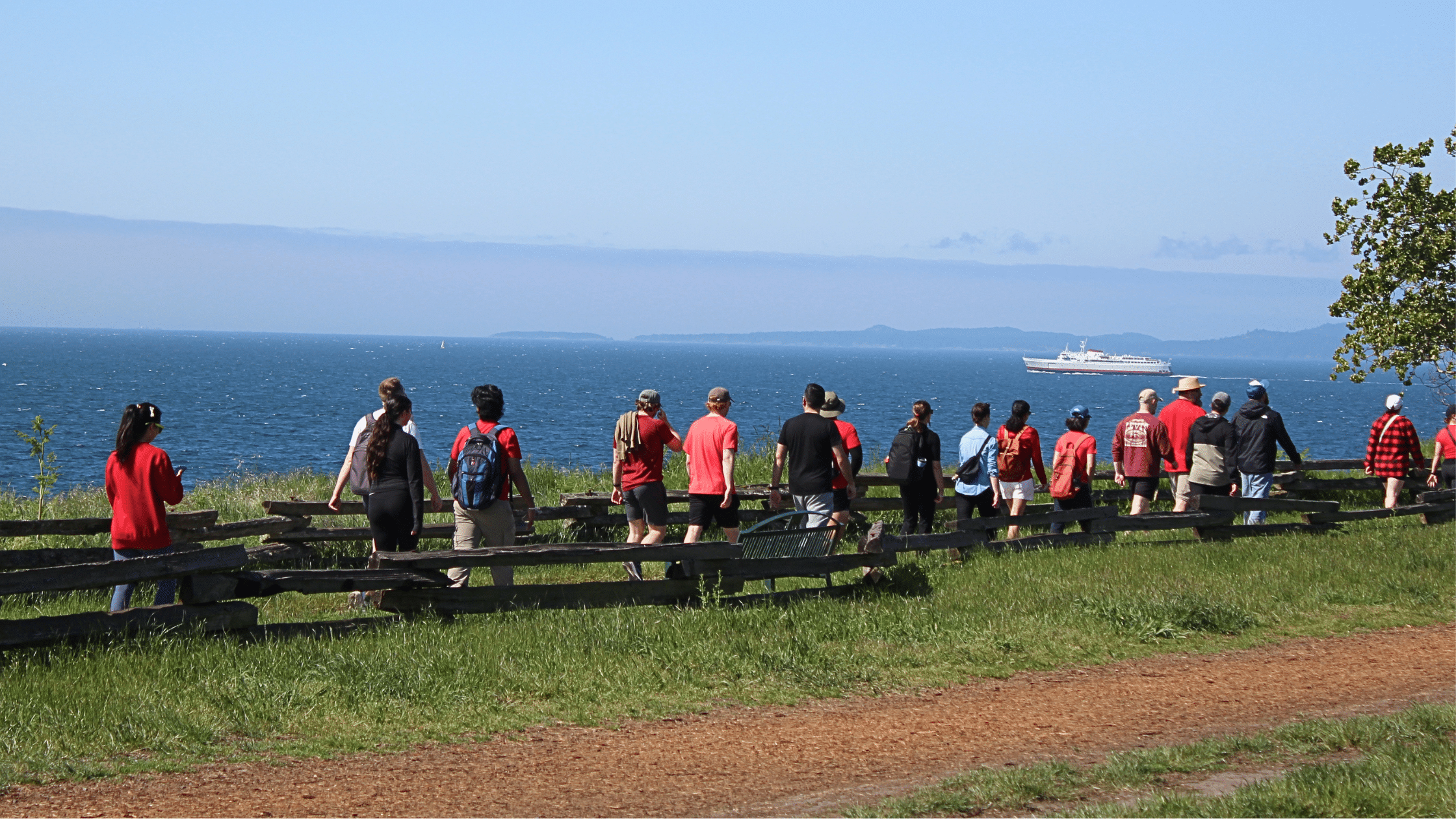
- Defence Team members and community allies gathered at Clover Point for Red Dress Day in solidarity with MMIWG2S+ awareness.
- The event emphasized healing through movement, reflection, and community connection under the theme “Movement is Medicine.”
–
At Clover Point on May 5, members and allies of the Indigenous Community and the Defence Team gathered for the event, “Movement is Medicine,” in recognition of Red Dress Day — the National Day of Awareness for Missing and Murdered Indigenous Women, Girls, and 2SLGBTQIA+ people (MMIWG2S+).
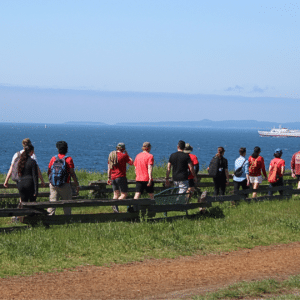
This event, coordinated by Caitlin Hancock of Fleet Maintenance Facility (FMF), aimed to raise awareness of MMIWG2S+, support the effort to end gendered and racialized violence against Indigenous peoples, and encourage healing, reflection, and community support. Participants were invited to wear red, walk, run, or wheel in solidarity.
Sergeant (Sgt) Nate (Nathan) Spence, a member of the Sandy Bay First Nation in Manitoba (Man.) and the Military Co-Chair of the Pacific region’s Defence Indigenous Advisory Group (DIAG), opened the event with a land acknowledgement spoken in his Anishinaabemowin language. He then shared his own deep connection to Red Dress Day.

“For me, this movement is not abstract,” he said. “It is not symbolic. It is personal.” His aunt, Charlene Ward-Lake, was murdered on Nov 1, 2007 — “a day forever engraved in my mind, my heart, and my soul,” Sgt Spence shared. He continued to share how the violence of that day did not end with her passing. It flowed through her loved ones, leaving Ward-Lake’s daughters without their mother and her grandchildren without their grandmother. Those left behind are now without Ward-Lake’s “laughter, her warmth, and the joy she brought,” Sgt Spence said. Instead, her family is left “with an absence that cannot be filled.” Sgt Spence continued, saying that within this “gaping hole,” there have been no answers and no justice in the 6,760 days since Ward-Lake’s life was taken.
“But today,” he said, “this event, and events like it … offer a moment for me, for my family, for my friends, and for all of us as a society to bring these stories back to the forefront. To refuse to let Charlene’s name, her life, and her memory fade into the silence.”
“Today, we remember. Today, we stand together … we honour all Missing and Murdered Indigenous Women, Girls, and Two-Spirit people.”
Lisa deWit, proudly Wetʼsuwetʼen and a member of DIAG, also spoke at the gathering with a reflection on gratitude, healing, and respect for the land and ancestors. “Today is about a sincere dedication to ending violence, healing relationships, and fostering respect,” said deWit. “Our feet are standing on where the ancestors lived, and Mary Anne [Mary Anne Thomas, Elder from the Xwsepsum (Esquimalt) Nation, part of the Lekwungen (Songhees)] has taught me, we must always tell the old ones what we are doing so they can guide and protect us.”
“I thank you for the land that we gather on today,” deWit continued. “And I feel your spirit around us as we uplift our families and loved ones. I raise my hands in gratitude for welcoming us as guests on your ancestral land.” Throughout the event, participants were encouraged to care for themselves and one another. “Move, nourish, take a break if you need, but all is welcome,” said deWit.
She also shared the deeply personal story of her Auntie, Frances Brown, who disappeared in 2017. “For me, the phone rang on Oct 15, 2017. It was a Sunday morning,” she said. “My mom cuts to the chase: Auntie Frances is missing. We can’t find her.” Brown was 53 years old when she disappeared. She was described as Indigenous, with brown eyes and brown hair, standing five-foot-eight and 119 pounds. DeWit remembered her auntie as someone who “taught me how to bead,” reflecting on a woman who “launched two children into the world” and was in the process of reclaiming her life and time.
According to RCMP reports, 18 Indigenous women and girls have gone missing along the Highway of Tears, an approximately 700-kilometre stretch of Highway 16 between Prince George and Prince Rupert in British Columbia (B.C.). Indigenous organizations place the number of missing Indigenous wom en and girls closer to 40. Many, including Brown, have never been found.
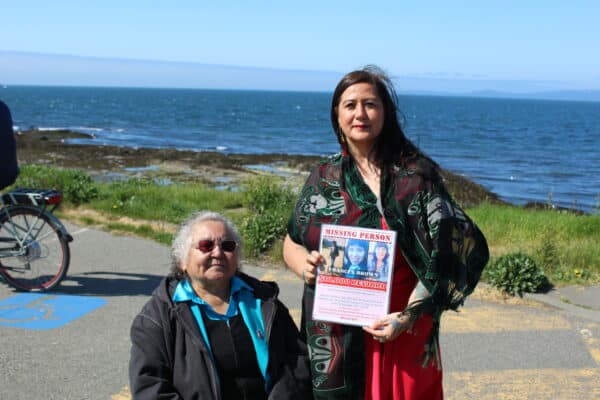
Lisa deWit with Mary Anne Thomas, Esquimalt Nation Elder, on May 5 for Red Dress Day, the National Day of Awareness for Missing and Murdered Indigenous Women, Girls and
2SLGBTQIA+ people (MMIWG2S+). Photos: Lindsay Groves, Lookout Newspaper
“This October will be nine years since I received that phone call,” said deWit. “We have never found her body.”
Reflecting on the lasting impacts of loss and uncertainty, deWit spoke about the realities many Indigenous communities continue to face. “I don’t know a reality where I have not been acutely aware that you can cease to exist and no one will know what has happened to you,” said deWit. “As time goes on, you question what justice is.” She also emphasized the importance of community-led healing and education. “Host healing circles and educate younger generations with strength-based solutions,” said deWit. “We heal, find our voice, look out for young ones and become matriarchs … [Healing] is founded in relationship.” DeWit referred to the National Inquiry’s Final Report, Reclaiming Power and Place, which outlines the Calls for Justice addressing systemic violence against Indigenous women, girls, and 2SLGBTQIA+ people.
“We wear red because we believe it’s the colour Spirit can see and they will know we’re still searching,” deWit said. “Enjoy the medicine today.”
–
Red Dress Day was inspired by Métis artist Jaime Black and her REDress Project, launched in 2010 to honour missing and murdered Indigenous women and girls. The commemorative day also coincided with Canadian Mental Health Association Mental Health Week, which focuses on raising awareness around mental health and community well-being. There is a $10,000 reward for the arrest and conviction of person(s) responsible for the disappearance or safe return of Frances Brown. If you or anyone you know have information that can help locate Frances Brown, please contact Smithers RCMP (250-847-3233).