Republic of Korea Navy Visit to CFB Esquimalt Highlights Growing Maritime Partnership
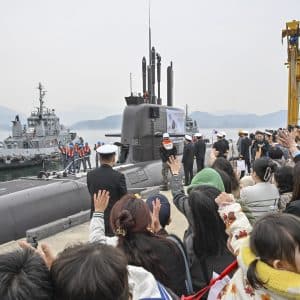
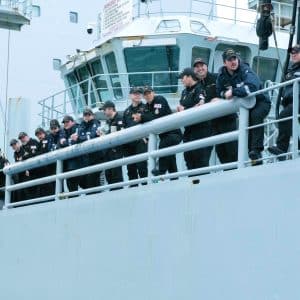
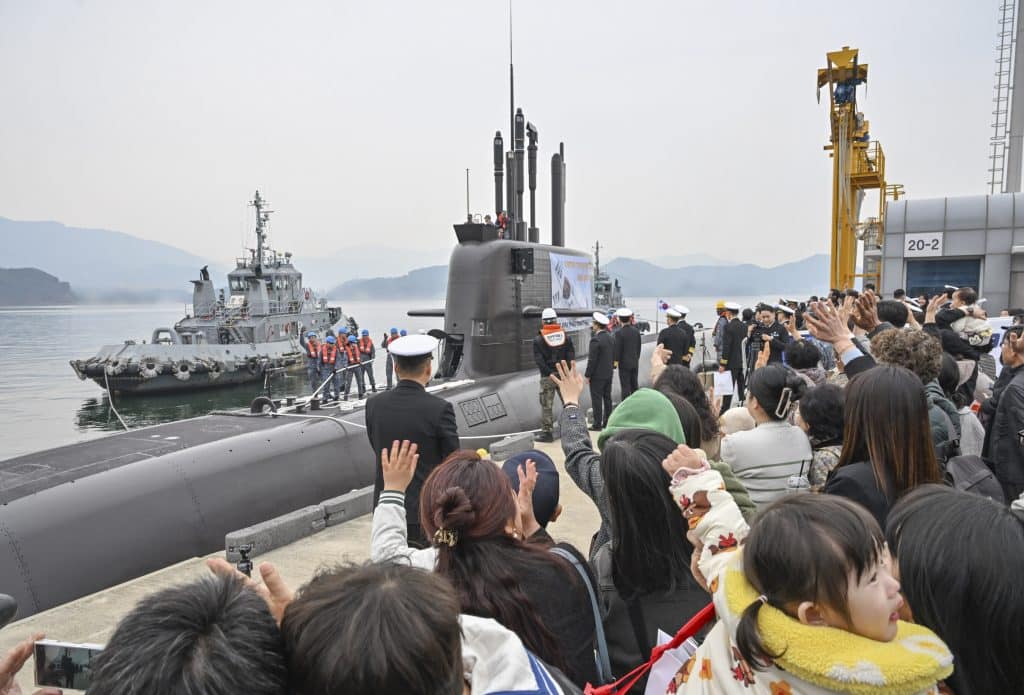
Archana Cini, Lookout Newspaper, with files from the Government of Canada Two Republic of Korea Navy vessels will visit CFB Esquimalt from May 23 to June 2 following a 14,000-kilometre trans-Pacific voyage. Joint activities, including personnel exchanges and exercises, will strengthen interoperability with the RCN. The visit supports broader maritime cooperation and force generation, including future participation in the multinational RIMPAC exercise. - A Republic of Korea Navy (ROKN) port visit to Canadian Forces Base (CFB) Esquimalt is planned for later this spring, highlighting Canada’s continued focus on enhancing maritime interoperability and collaboration with allied navies. The visit, scheduled from May 23 to June 2, will see two ROKN vessels arrive in Esquimalt: ROKS Daejeon (FFG-823), a Daegu-class frigate, and ROKS Dosan Ahn Chang-ho (SS-083), a KSS-III class submarine. Both ROKN vessels are currently sailing on a 14,000-kilometre trans-Pacific voyage from Jinhae, South Korea, to Canada’s West Coast. During the port visit, sailors from both navies will take part in a series of professional engagements, strengthening the growing maritime partnership between the Royal Canadian Navy (RCN) and ROKN. These interactions will build mutual understanding and enhance interoperability between both parties while also reinforcing their joint shared commitment to regional stability. [caption id="attachment_335136" align="aligncenter" width="975"] ROKS Dosan Ahn Chang-ho at sea making its first trans-Pacific voyage to Canadian shores. Photo supplied.[/caption] A key component of the engagement will be a personnel exchange conducted through the RCN’s REGULUS program, which provides members of the RCN with opportunities to operate alongside allied and partner navies, exposing them to different tactics, techniques, and operational environments in the process. As such, two Canadian sailors will sail with members of the ROKN aboard ROKS Dosan Ahn Chang-ho for the final leg of its journey from Hawaii to CFB Esquimalt. Near the conclusion of the ROKN port...
From the Lookout Archives: Children’s Questions, Answered at Sea
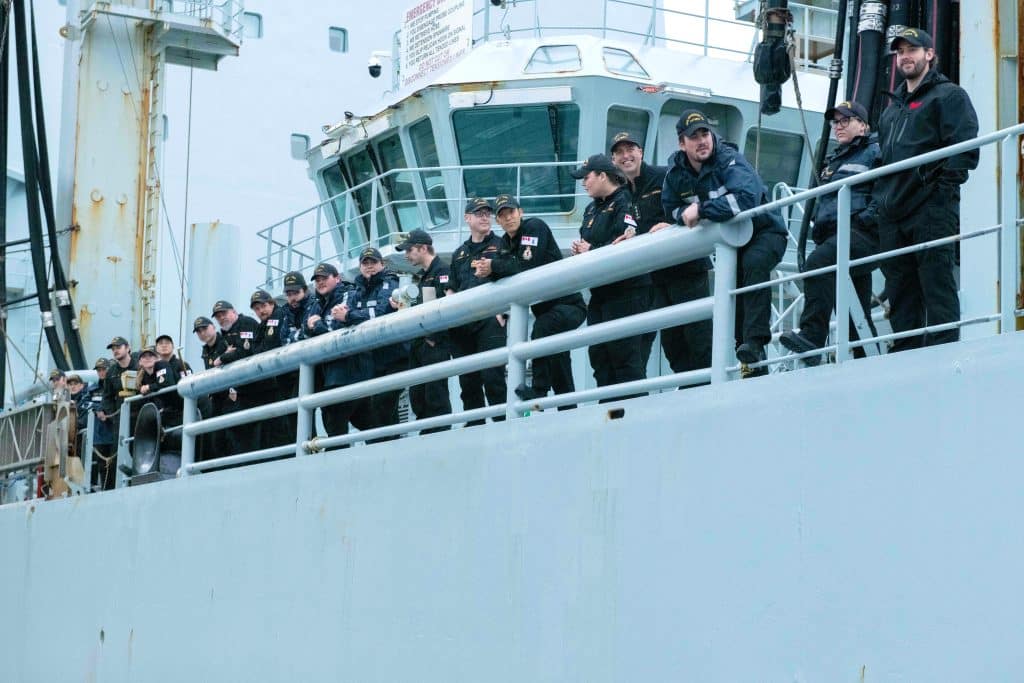
Consolidated by Archana Cini, Lookout Newspaper. From the archives of 2002 comes a story that continues to resonate more than two decades later — one shaped by the honest curiosity of children and the candid reflections of a sailor at sea. In this March archival piece, ‘Children’s important questions: HMCS Vancouver responds,’ young Canadians wrote to sailors deployed on Operation Apollo to better understand life at sea. Their questions, heartfelt and often profound, offered a glimpse into how young minds view concepts of service, separation, and sacrifice. Thousands of such letters were received, carefully read by those serving aboard His Majesty’s Canadian Ship (HMCS) Vancouver. Among the ship’s company during this time was then Lieutenant(Navy) (Lt(Navy)) David Patchell, whose thoughtful and unfiltered responses revealed the shared humanity between sailors deployed abroad and families waiting at home. Today, this Lookout contributor from more than two decades ago serves as a Rear-Admiral (RAdm) in the Royal Canadian Navy (RCN) and Commander of Maritime Forces Pacific/Joint Task Force Pacific (MARPAC/JTFP), making this archival story not only a snapshot in time, but part of RAdm Patchell’s ongoing impact upon the Canadian Defence community. As we revisit this archival story, the Lookout is inviting children from the public and Defence communities to submit their own questions to sailors for a modern retelling. - Children’s Important Questions: HMCS Vancouver Responds Editor's note: This article appeared in the March 11, 2002 edition of the Lookout and was written by then Lieutenant (Navy) David Patchell. We picked a few of our favourite questions to feature. Since leaving Victoria on Oct. 29, 2001, HMCS Vancouver has received thousands of letters of support from Canadians. It seems as though the vast majority of these letters are from children. It breaks my heart that I do not have the time to...
Bligh Island Ties B.C. Coast to International Naval History
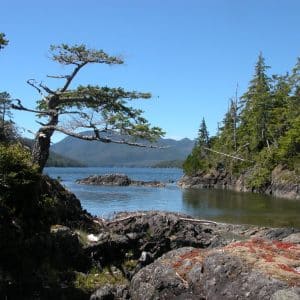
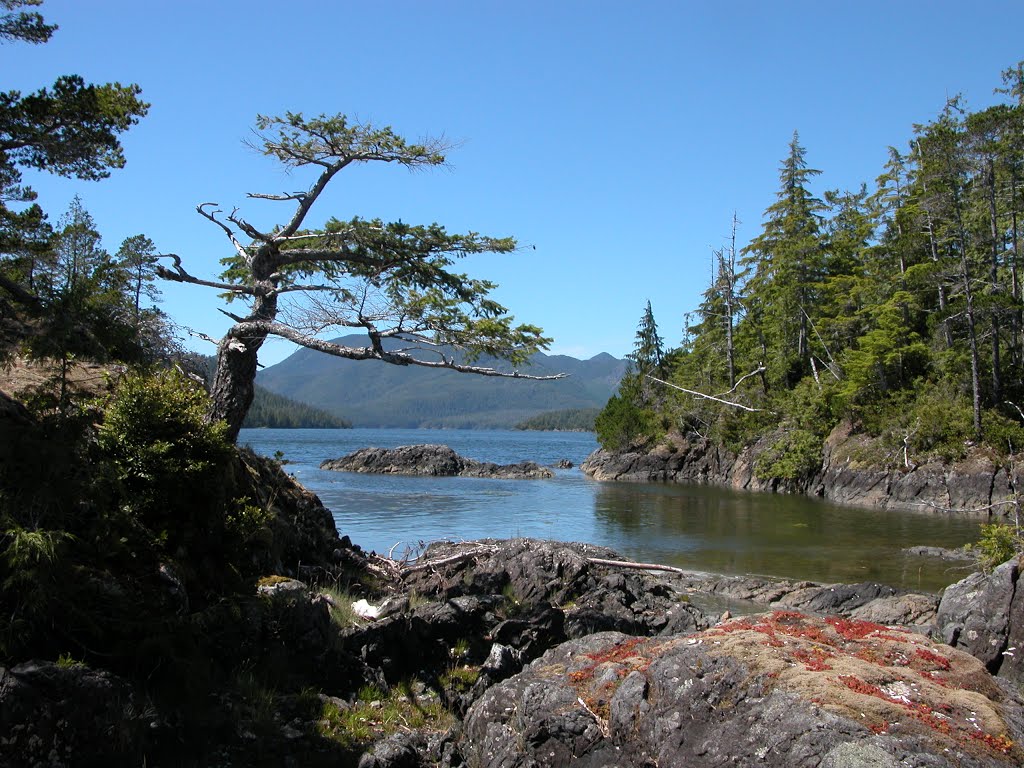
Lieutenant(Navy) Mike Makow, CD NRU ASTERIX Bligh Island in Nootka Sound is named after Vice-Admiral (V-Adm) William Bligh, linking B.C.’s coast to global naval history. V-Adm Bligh served under Captain James Cook and later survived the infamous HMS Bounty mutiny, navigating 3,500 nautical miles to safety. The island highlights how exploration and maritime history connect distant regions across the world. - Bligh Island is located in Nootka Sound, on the west coast of Vancouver Island in British Columbia (B.C.). It is situated to the east of Nootka Island, in between the mouths of Muchalat Inlet, Tlupana Inlet, and Tahsis Inlet. While it is a tranquil escape for many today, its name also carries one of the most dramatic tales in local maritime history. Named after Vice-Admiral (VAdm) William Bligh, the island commemorates a man whose legacy spans both scientific achievement and scandalous rebellion. The late VAdm Bligh served as Master aboard His Majesty’s Ship (HMS) Resolution during Captain James Cook’s third voyage in 1778. HMS Resolution was a merchant collier purchased and then converted into a warship by the Royal Navy in 1771. It was in a cove on Bligh Island — now known as Resolution Cove — that the Resolution was refitted, marking VAdm Bligh’s first connection to the rugged shores of Nootka Sound. [caption id="attachment_335119" align="alignleft" width="328"] A portrait of VAdm William Bligh, completed by Alexander Huey in 1814. Credit: National Library of Australia[/caption] But VAdm Bligh’s fame, or infamy, would come nearly a decade later. In 1787, he was appointed commander of HMS Bounty, tasked with transporting breadfruit plants from Tahiti to the British West Indies. After a five-month layover in Tahiti, where the crew enjoyed a relaxed lifestyle and formed relationships with locals, discipline aboard the Bounty began to unravel. On April 28, 1789, Acting Lieutenant...
Community to Mark 81 Years Since HMCS Esquimalt Tragedy
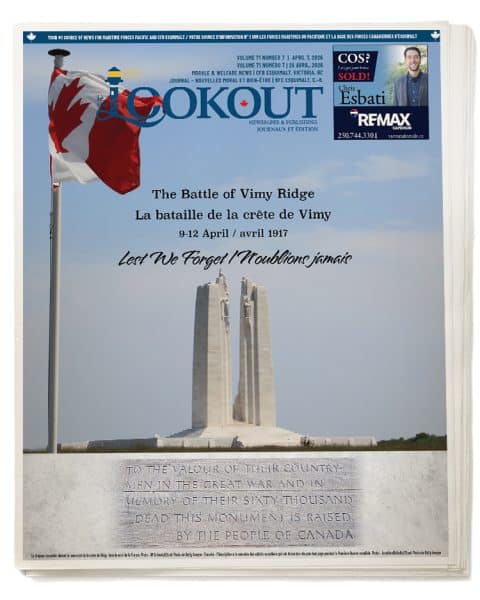
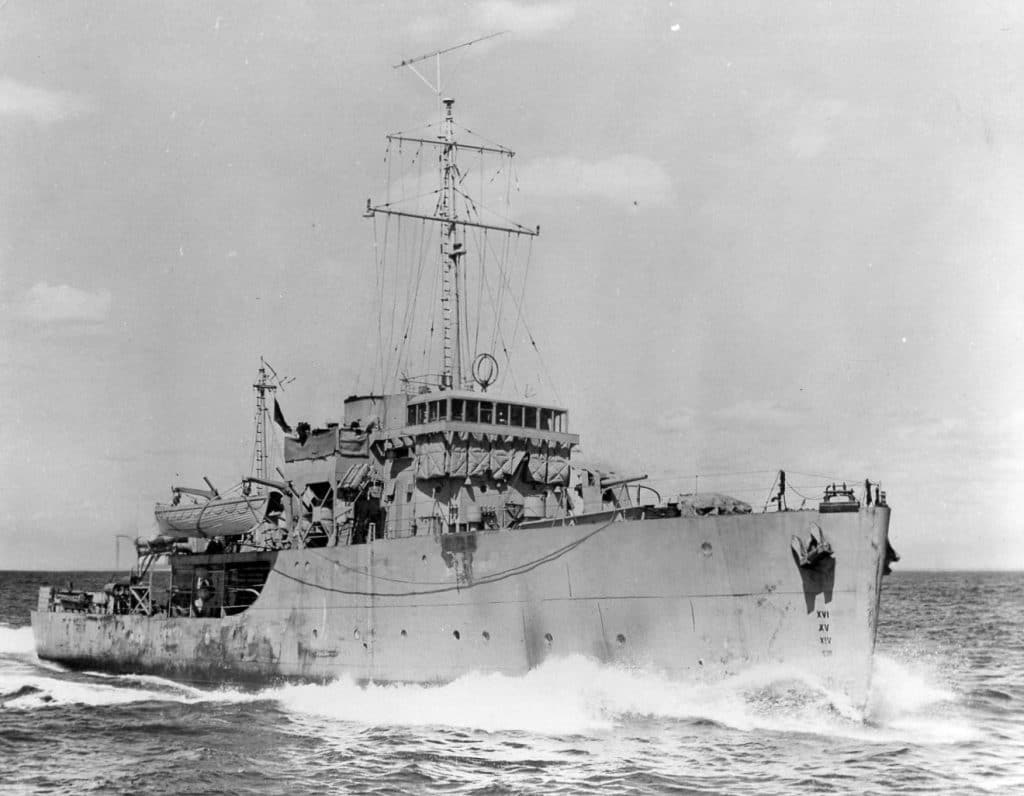
Archana Cini, Lookout Newspaper. Contributions by Robert Fisher, Historian, and the CFB Esquimalt Naval and Military Museum An upcoming public ceremony on April 16 will mark 81 years since the sinking of HMCS Esquimalt, the last Canadian warship lost in the Second World War. The ship was torpedoed off Halifax in 1945, resulting in the loss of 44 sailors, many to exposure while awaiting rescue. The annual remembrance honours those who served and underscores the lasting impact of war on Canadian communities. - Each year, remembrance asks something of us. It invites us to pause, to reflect, and to carry ourselves with knowledge of the sacrifices and stories that might otherwise fade with time. At 10 a.m. on April 16, remembrance will once again take shape as members of the Defence community and public are invited to gather in honour of His Majesty's Canadian Ship (HMCS) Esquimalt, the last Canadian warship lost to enemy action in the Second World War. Organized by the Township of Esquimalt and supported by Canadian Forces Base (CFB) Esquimalt, the ceremony will mark 81 years since the ship’s sinking and pay tribute to the sailors who never came home. HMCS Esquimalt was a Bangor-class minesweeper, one of many vessels tasked with the vital and often dangerous work of keeping sea lanes safe during wartime. Armed with a 12-pounder gun, anti-aircraft weapons, and depth charges, Esquimalt was built for the constant vigilance required during the Battle of the Atlantic. The ship’s crew, comprising seven officers and 64 sailors, included many members of the Royal Canadian Navy Volunteer Reserve (RCNVR). On the morning of April 16, 1945, Esquimalt was conducting an anti-submarine patrol just five miles off Chebucto Head, near Halifax. The war in Europe was nearing its end; for many, the worst seemed to be over. But at 6:30 a.m., that sense of distance from danger changed. A torpedo fired from German submarine U-190 struck Esquimalt’s starboard...

MARPAC Health & Wellness – Weekly Water Fun
April 15, 2026
HMCS Esquimalt Ceremony
April 16, 2026

Soapy Saturday
April 18, 2026
CFB Esquimalt: A Historic Naval Base Anchoring Canada’s West Coast
Located just west of Victoria, British Columbia, CFB Esquimalt is a historic naval base and home to Canada’s Pacific Fleet. As one of the largest military installations in Canada, it plays a vital role in supporting maritime operations, fostering economic growth, and serving the community with a range of services and facilities.
Contact the Lookout Newspaper
"*" indicates required fields
Share Your Navy Story
Do you have a story about life at CFB Esquimalt or experiences with Canada’s Navy? We’d love to hear from you! Share your unique perspective and contribute to preserving the legacy of our naval community.