Lookout Newspaper Logo

Republic of Korea Navy Visit to CFB Esquimalt Highlights Growing Maritime Partnership

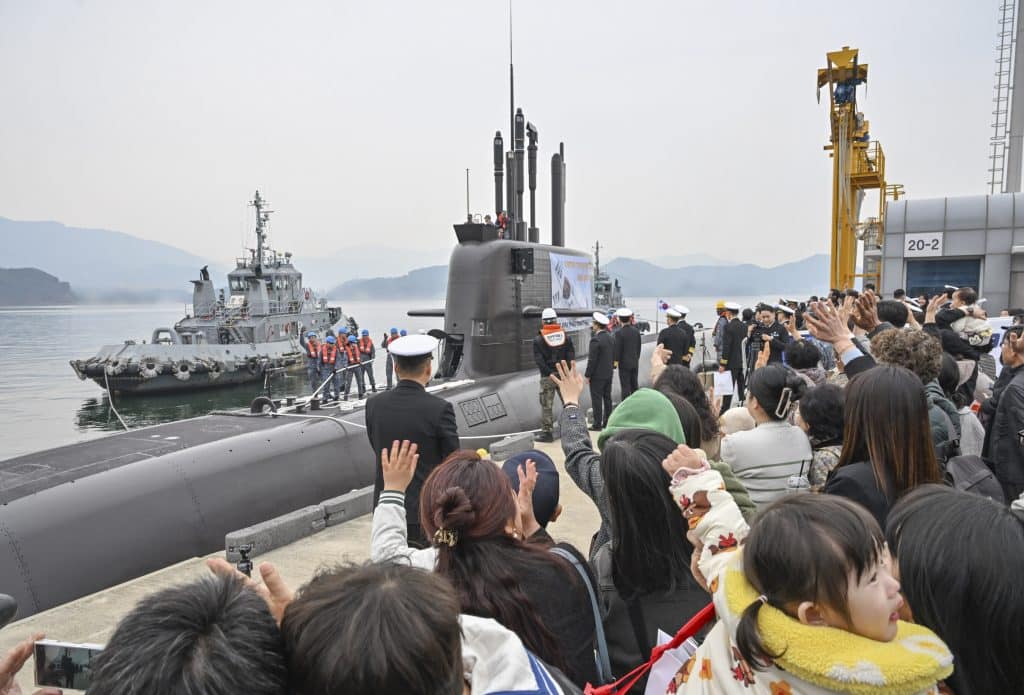
Archana Cini, Lookout Newspaper, with files from the Government of Canada Two Republic of Korea Navy vessels will visit CFB Esquimalt from May 23 to June 2 following a 14,000-kilometre trans-Pacific voyage. Joint activities, including personnel exchanges and exercises, will strengthen interoperability with the RCN. The visit supports broader maritime cooperation and force generation, including future participation in the multinational RIMPAC exercise. - A Republic of Korea Navy (ROKN) port visit to Canadian Forces Base (CFB) Esquimalt is planned for later this spring, highlighting Canada’s continued focus on enhancing maritime interoperability and collaboration with allied navies. The visit, scheduled from May 23 to June 2, will see two ROKN vessels arrive in Esquimalt: ROKS Daejeon (FFG-823), a Daegu-class frigate, and ROKS Dosan Ahn Chang-ho (SS-083), a KSS-III class submarine. Both ROKN vessels are currently sailing on a 14,000-kilometre trans-Pacific voyage from Jinhae, South Korea, to Canada’s West Coast. During the port visit, sailors from both navies will take part in a series of professional engagements, strengthening the growing maritime partnership between the Royal Canadian Navy (RCN) and ROKN. These interactions will build mutual understanding and enhance interoperability between both parties while also reinforcing their joint shared commitment to regional stability. [caption id="attachment_335136" align="aligncenter" width="975"] ROKS Dosan Ahn Chang-ho at sea making its first trans-Pacific voyage to Canadian shores. Photo supplied.[/caption] A key component of the engagement will be a personnel exchange conducted through the RCN’s REGULUS program, which provides members of the RCN with opportunities to operate alongside allied and partner navies, exposing them to different tactics, techniques, and operational environments in the process. As such, two Canadian sailors will sail with members of the ROKN aboard ROKS Dosan Ahn Chang-ho for the final leg of its journey from Hawaii to CFB Esquimalt. Near the conclusion of the ROKN port...

From the Lookout Archives: Children’s Questions, Answered at Sea

Consolidated by Archana Cini, Lookout Newspaper.  From the archives of 2002 comes a story that continues to resonate more than two decades later — one shaped by the honest curiosity of children and the candid reflections of a sailor at sea. In this March archival piece, ‘Children’s important questions: HMCS Vancouver responds,’ young Canadians wrote to sailors deployed on Operation Apollo to better understand life at sea. Their questions, heartfelt and often profound, offered a glimpse into how young minds view concepts of service, separation, and sacrifice. Thousands of such letters were received, carefully read by those serving aboard His Majesty’s Canadian Ship (HMCS) Vancouver. Among the ship’s company during this time was then Lieutenant(Navy) (Lt(Navy)) David Patchell, whose thoughtful and unfiltered responses revealed the shared humanity between sailors deployed abroad and families waiting at home. Today, this Lookout contributor from more than two decades ago serves as a Rear-Admiral (RAdm) in the Royal Canadian Navy (RCN) and Commander of Maritime Forces Pacific/Joint Task Force Pacific (MARPAC/JTFP), making this archival story not only a snapshot in time, but part of RAdm Patchell’s ongoing impact upon the Canadian Defence community. As we revisit this archival story, the Lookout is inviting children from the public and Defence communities to submit their own questions to sailors for a modern retelling. - Children’s Important Questions: HMCS Vancouver Responds Editor's note: This article appeared in the March 11, 2002 edition of the Lookout and was written by then Lieutenant (Navy) David Patchell. We picked a few of our favourite questions to feature. Since leaving Victoria on Oct. 29, 2001, HMCS Vancouver has received thousands of letters of support from Canadians. It seems as though the vast majority of these letters are from children. It breaks my heart that I do not have the time to...

Bligh Island Ties B.C. Coast to International Naval History

Lieutenant(Navy) Mike Makow, CD NRU ASTERIX Bligh Island in Nootka Sound is named after Vice-Admiral (V-Adm) William Bligh, linking B.C.’s coast to global naval history. V-Adm Bligh served under Captain James Cook and later survived the infamous HMS Bounty mutiny, navigating 3,500 nautical miles to safety. The island highlights how exploration and maritime history connect distant regions across the world. - Bligh Island is located in Nootka Sound, on the west coast of Vancouver Island in British Columbia (B.C.). It is situated to the east of Nootka Island, in between the mouths of Muchalat Inlet, Tlupana Inlet, and Tahsis Inlet. While it is a tranquil escape for many today, its name also carries one of the most dramatic tales in local maritime history. Named after Vice-Admiral (VAdm) William Bligh, the island commemorates a man whose legacy spans both scientific achievement and scandalous rebellion. The late VAdm Bligh served as Master aboard His Majesty’s Ship (HMS) Resolution during Captain James Cook’s third voyage in 1778. HMS Resolution was a merchant collier purchased and then converted into a warship by the Royal Navy in 1771. It was in a cove on Bligh Island — now known as Resolution Cove — that the Resolution was refitted, marking VAdm Bligh’s first connection to the rugged shores of Nootka Sound. [caption id="attachment_335119" align="alignleft" width="328"] A portrait of VAdm William Bligh, completed by Alexander Huey in 1814. Credit: National Library of Australia[/caption] But VAdm Bligh’s fame, or infamy, would come nearly a decade later. In 1787, he was appointed commander of HMS Bounty, tasked with transporting breadfruit plants from Tahiti to the British West Indies. After a five-month layover in Tahiti, where the crew enjoyed a relaxed lifestyle and formed relationships with locals, discipline aboard the Bounty began to unravel. On April 28, 1789, Acting Lieutenant...

Community to Mark 81 Years Since HMCS Esquimalt Tragedy

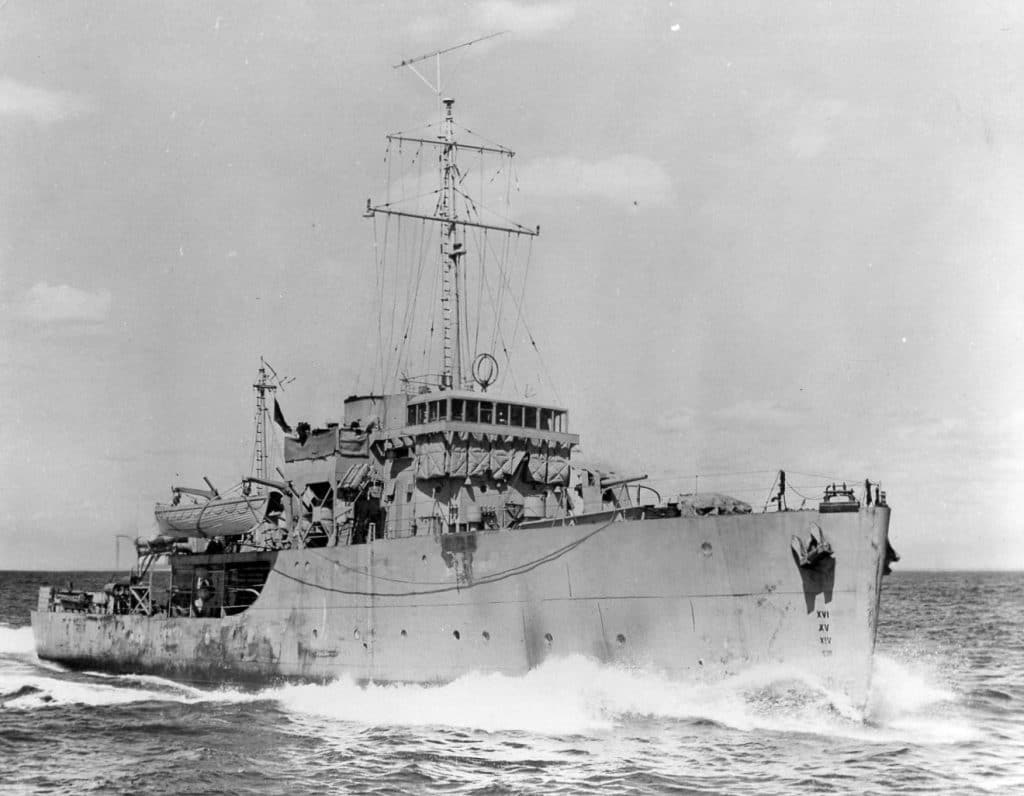
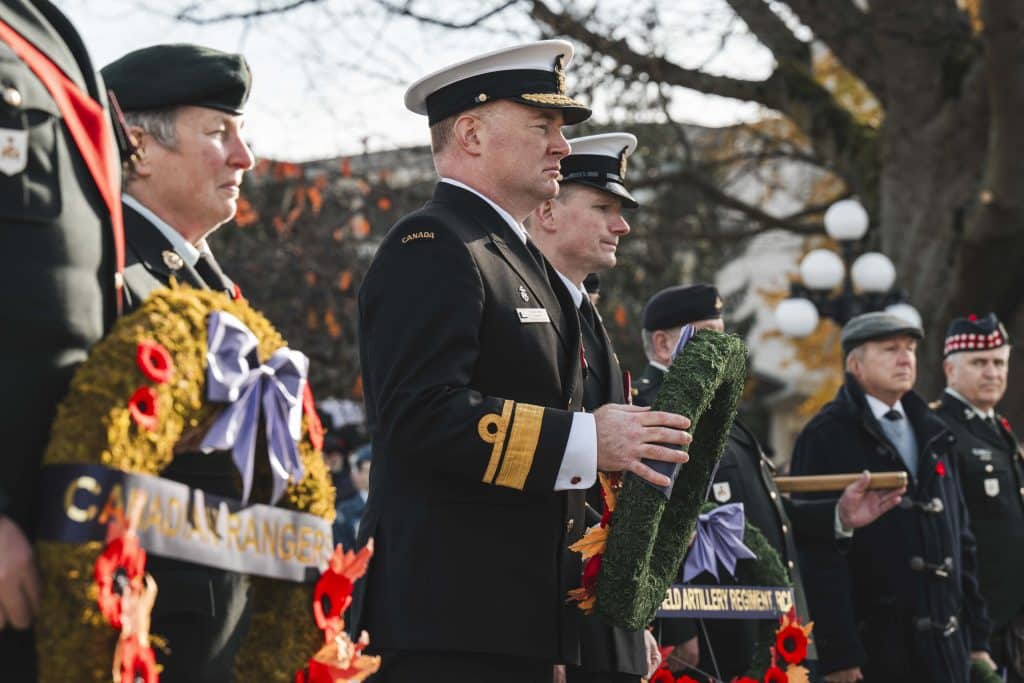
Archana Cini, Lookout Newspaper. Contributions by Robert Fisher, Historian, and the CFB Esquimalt Naval and Military Museum An upcoming public ceremony on April 16 will mark 81 years since the sinking of HMCS Esquimalt, the last Canadian warship lost in the Second World War. The ship was torpedoed off Halifax in 1945, resulting in the loss of 44 sailors, many to exposure while awaiting rescue. The annual remembrance honours those who served and underscores the lasting impact of war on Canadian communities. - Each year, remembrance asks something of us. It invites us to pause, to reflect, and to carry ourselves with knowledge of the sacrifices and stories that might otherwise fade with time.   At 10 a.m. on April 16, remembrance will once again take shape as members of the Defence community and public are invited to gather in honour of His Majesty's Canadian Ship (HMCS) Esquimalt, the last Canadian warship lost to enemy action in the Second World War. Organized by the Township of Esquimalt and supported by Canadian Forces Base (CFB) Esquimalt, the ceremony will mark 81 years since the ship’s sinking and pay tribute to the sailors who never came home.   HMCS Esquimalt was a Bangor-class minesweeper, one of many vessels tasked with the vital and often dangerous work of keeping sea lanes safe during wartime. Armed with a 12-pounder gun, anti-aircraft weapons, and depth charges, Esquimalt was built for the constant vigilance required during the Battle of the Atlantic. The ship’s crew, comprising seven officers and 64 sailors, included many members of the Royal Canadian Navy Volunteer Reserve (RCNVR).  On the morning of April 16, 1945, Esquimalt was conducting an anti-submarine patrol just five miles off Chebucto Head, near Halifax. The war in Europe was nearing its end; for many, the worst seemed to be over.   But at 6:30 a.m., that sense of distance from danger changed. A torpedo fired from German submarine U-190 struck Esquimalt’s starboard...

The Legacy of the Lookout

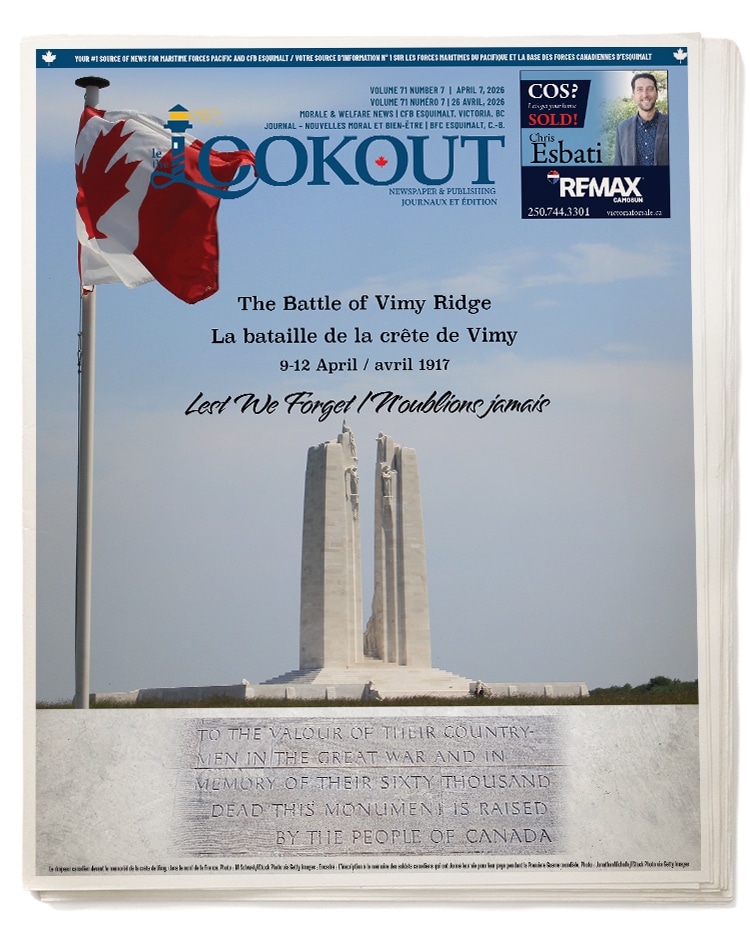
Archana Cini, Lookout Newspaper In April 1943, the first edition of what would eventually become the Lookout Newspaper rolled off the press. It was titled the Gangway, an independent, weekly publication that reported on West Coast Royal Canadian Navy (RCN) news, edited by RCN personnel prior to publication. Volume 01, Number 01 was sold for 10 cents per copy, right here in Esquimalt. The first issue of the Gangway was published entirely in black and white ink. The pages of this first edition told stories of a West Coast rescue; paid tribute to sailors who gave their lives for our country; noted a change in command; showcased heart in everyday moments of service; and provided comic relief for those in the Defence community that needed it. Over 80 years later, in 2026, the Lookout Newspaper still tells stories like these. In many ways, the final print issue of the Lookout, dated March 23, 2026, is very similar to its first 1943 issue. At the same time, it could not be more different. Created to inform and connect sailors during a time of rapid growth for the navy, the Gangway quickly became an important link between those serving and the community around them. With the 1950s came an interesting change; the Gangway had been renamed to Dockyard News, and a few sparing splashes of red ink began to appear on pages marking special occasions like Christmas and New Year’s. In addition to Defence community stories, political illustrations; local pageant results; festive comics; religious poems; and advertisements began to share space with stories of Canadian heroism, war, and memory. By 1964, Dockyard News had been renamed one final time to what it lives as today: the Lookout, a simple word that instantly reflected the vigilance and awareness required when spending time at...

Top Sailor Awarded Esteemed West Coast Naval Honours

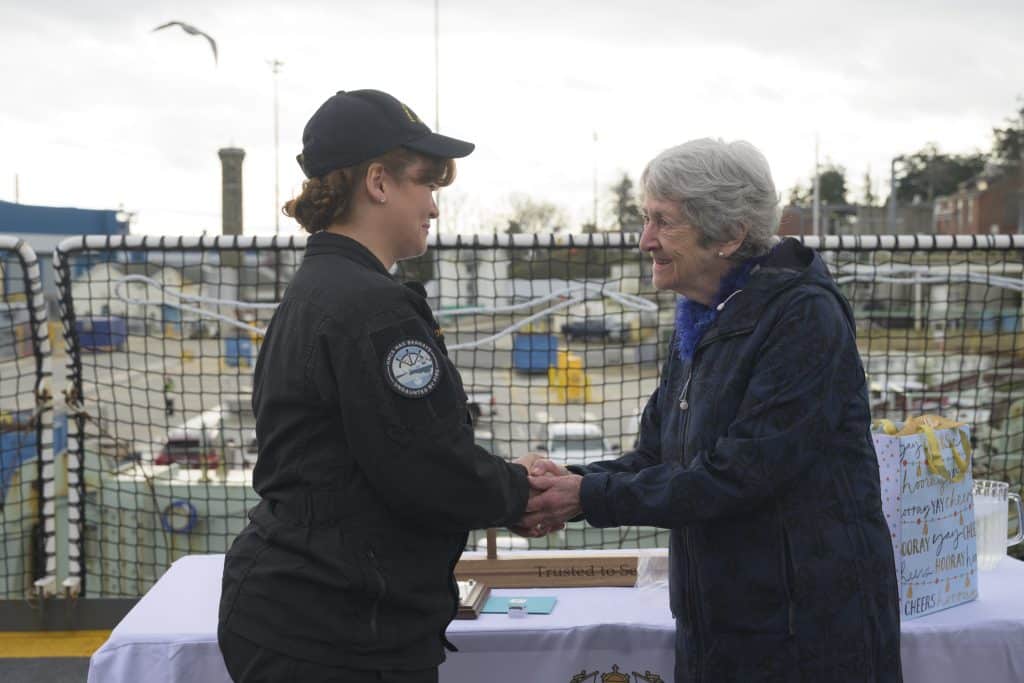
Archana Cini, Lookout Newspaper. Contributions by Rodney Venis, Base Public Affairs S1 Andree-Anne Dion-Tessier of HMCS Max Bernays was named Canadian Fleet Pacific (CANFLTPAC) Sailor of the Year for 2025. She received the Captain(Navy) Peter Hinton Memorial Award, honouring leadership, integrity, and commitment to service. S1 Dion-Tessier emphasized teamwork and peer support, highlighting the collective effort behind her recognition. - As the spring rain lifted on March 3, the company of His Majesty’s Canadian Ship Max Bernays assembled to celebrate one of their own: Sailor 1st Class (S1) Andrée-Anne Dion-Tessier, the Canadian Fleet Pacific (CANFLTPAC) 2025 Sailor of the Year. The mid-morning ceremony highlighted not only S1 Dion-Tessier’s dedication to service during the past year, but also the teamwork and camaraderie that define life aboard Max Bernays. During the event, in recognition of the CANFLTPAC honour, she was presented with the Captain(Navy) (Capt(Navy)) Peter Hinton Memorial Award for Leadership and Excellence in Service, which is typically bestowed to junior non-commissioned members who demonstrate ethical leadership, integrity and commitment to duty. The award, and accompanying sword of the same name, is presented annually by Geraldine Hinton, the wife of the late Capt(Navy) Peter Hinton, in whose memory she helped establish the award to commemorate his deep legacy of service to the Royal Canadian Navy (RCN). She was joined during this year’s ceremony by Capt(Navy) Sam Patchell, Commander CANFLTPAC, who also helped deliver notification to S1 Dion-Tessier that she would be receiving a Commander of the Royal Canadian Navy (CRCN) Commendation. When S1 Dion-Tessier first learned that she had been selected for the distinctions, her reaction was one of amazement and gratitude. “I was honoured and a little surprised,” she said. “It wasn’t something I expected. During the deployment, my focus was simply on doing my job and giving my best to...

What Stays With Us: A Moment in the Lookout Archives

The Lookout Newspaper and Creative Services Team - With more than 80 years of publishing, the Lookout has told thousands of stories, from major naval events that have defined Canada to quieter moments of service that capture the spirit of our local Defence community. As we close the final print chapter of the Lookout and move towards a digital-only publication, some members of our current team chose a piece from the past 82 years — a quote or memory that stayed long after the page was printed. Some made us laugh, others made us proud, many made us cry, and a few reminded us why history matters. Without further ado, here are some reflections from the stories that stayed with us. - ARCHANA CINI, DIGITAL MEDIA AND MARKETING COORDINATOR "I have never been a religious person, but flipping a big stack of paper open to this line did feel like fate: 'O star of wonder, star of night, star with royal beauty bright; Westward leading, still proceeding, guide us to thy perfect light.' It felt so fitting for the Lookout’s ever-changing trajectory. This poem is from a 1964 story that to me, represents precious family history, a reminder to cease worrying, and holds a little bit of magic at once." 1964: Pacific Command Lookout Volume 09, Number 22. "THE STAR STILL SHINES" by Chaplain C.F. Waite Men, for centuries have been fascinated by the stars. It is not hard to see why: by their beauty, if not by anything else; by their arrangement in patterns. The silent stars take us back to that first Christmas and the wise Matthew who studied them closely. These "wise men from the past" believed that heavenly bodies had a great deal to do with human lives. They knew the moon affected tides; that without...

Ice Cream Aboard: RCN Sailor Donates Ice Cream Money to EMFRC

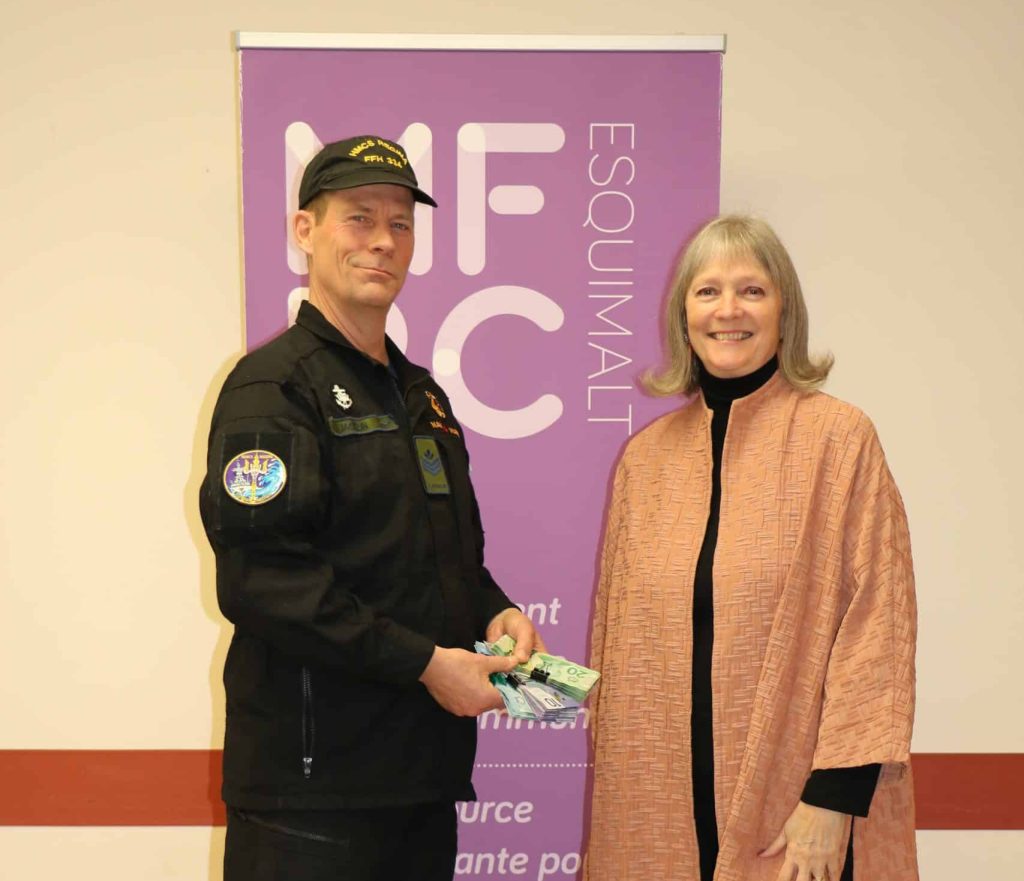
Archana Cini, Lookout Newspaper Sgt Dan Jacklin raised $2,250 for the Esquimalt Military Family Resource Centre through an onboard ice cream stand aboard HMCS Regina. The initiative, which began as a morale booster, has raised over $13,000 for various charities since 2017. The donation reflects both community generosity and personal gratitude for the EMFRC’s support to military families during deployments. - What began as a simple way to brighten a sailor’s day at sea has since turned into thousands of dollars raised for charity. On March 3 at the Colwood Pacific Activity Centre (CPAC), Sergeant (Sgt) Dan Jacklin presented a $2,250 donation to the Esquimalt Military Family Resource Centre (EMFRC) — proceeds from an ice cream stand he currently runs aboard His Majesty’s Canadian Ship (HMCS) Regina. Sgt Jacklin, the ship’s Senior Meteorological Forecaster, has spent nearly a decade scooping ice cream for his shipmates during deployments, turning a small morale booster into a now longstanding charitable tradition. Sgt Jacklin took over the effort in 2017 from Sgt Michael Foulkes who was posted off the ship later that year. Since then, over $13,000 has been raised for various causes. “I mostly do it because I enjoy it,” said Sgt Jacklin. “People onboard often really look forward to having a break from the ship’s routine, no matter how small. Sometimes getting a Häagen-Dazs or Melona ice cream can do it.” Sgt Jacklin’s military service spans nearly four decades. He first joined the Army Reserves in 1987 with the Royal Highland Fusiliers of Canada before transitioning to the Regular Force in 2007. In 2012, Sgt Jacklin later transitioned into the Royal Canadian Air Force (RCAF) as a Meteorological Technician, a role that eventually brought him back to sea in support of naval operations. Over the years, Sgt Jacklin has brought the ice...

NDWCC Raises Over $111,000 with Defence Team

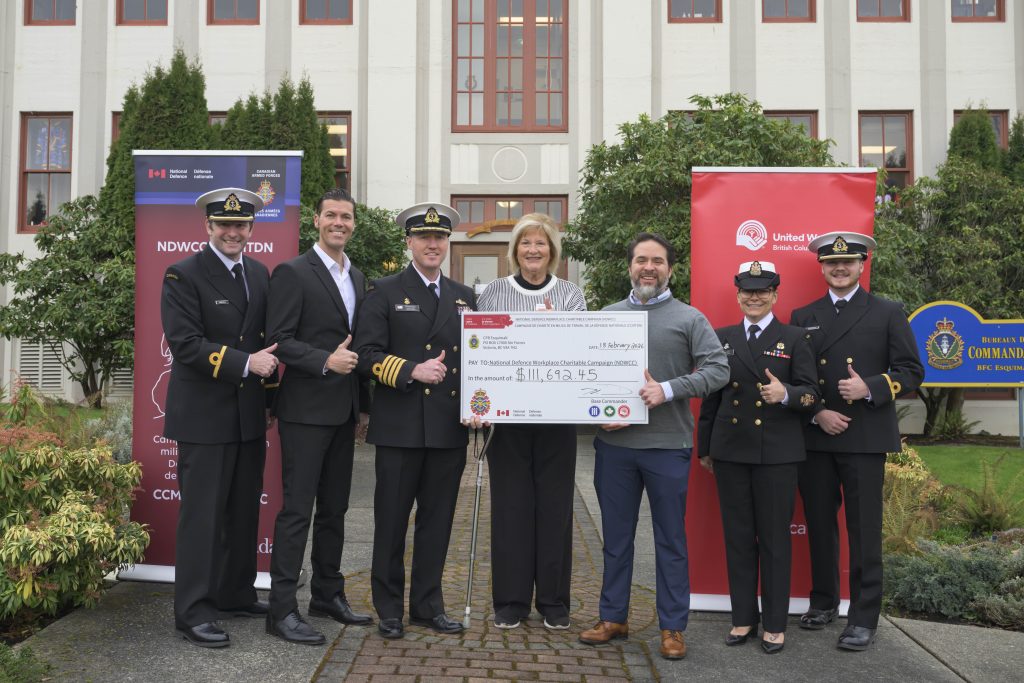
Archana Cini, Lookout Newspaper The NDWCC at CFB Esquimalt raised over $111,000 through donations and fundraising events from Sept–Dec 2025. Defence Team members participated in creative initiatives, including a Chili Cook-Off, to support local charities. Funds will remain on Vancouver Island to support programs addressing health, well-being, and community needs. - Hundreds of charitable donations from Defence team members across Canadian Forces Base (CFB) Esquimalt culminated into something powerful on Feb 17 — more than $111,000 in funds presented to community charities on Vancouver Island. The National Defence Workplace Charitable Campaign (NDWCC) is an annual opportunity for Defence team members to support causes close to their hearts. Through the NDWCC, members can donate to more than 86,000 registered charities across Canada, including organizations with strong ties to the military community. At CFB Esquimalt, the NDWCC ran from Sept 11 2025 to Dec 31 2025, with staff and volunteers across the local Defence team contributing countless hours to help plan and run associated activities. Generosity came in many forms, from individual donations to creative fundraising events organized across the base. For Matt Carlson, CFB Esquimalt’s NDWCC team leader, one word best captures the months-long charitable journey: resilience.   “Our campaign faced challenges early on as well as throughout its duration, yet our Defence team members continued to show up — giving their time, their energy, and their resources to help strengthen the community around them,” said Carlson. This year’s campaign theme, Give a little. Change a lot!, served as a reminder that meaningful change often comes from many small acts of generosity. As such, Carlson noted that coordinating a campaign of this scale often comes with its own challenges. “The toughest part of managing a campaign this large is balancing competing priorities while everyone is already carrying heavy workloads,” said Carlson....

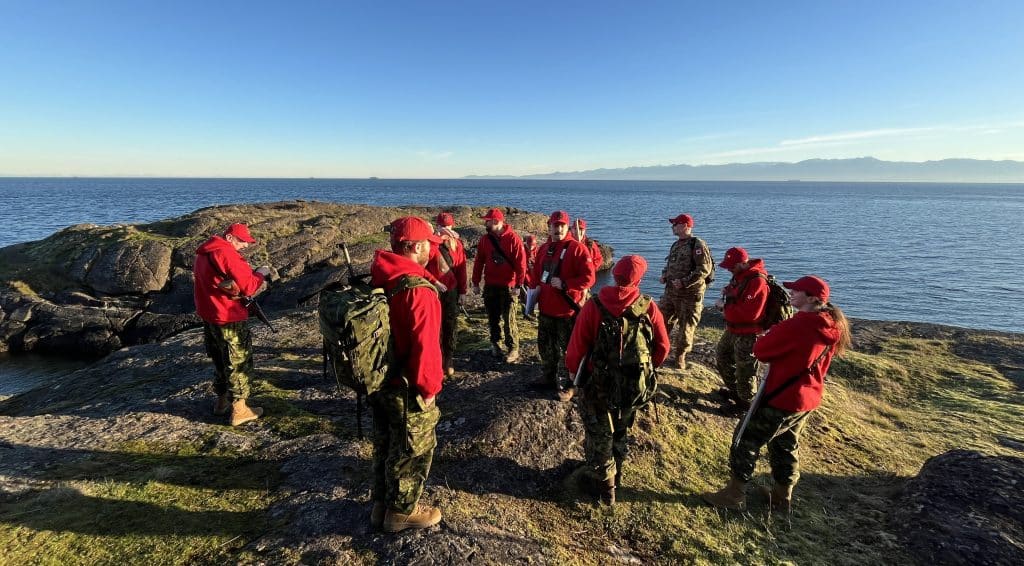
Canadian Ranger Basic Military Indoctrination (CRBMI) candidates working through a navigation exercise together as part of the CRBMI course curriculum. Photo: Canadian Ranger Master Corporal (MCpl) Joline Couture

From Strangers to Rangers: Inside the CRBMI Course

MCpl Joline Couture, 4CRPG MCpl Joline Couture reflects on the 10-day CRBMI Course and its transformative impact on candidates. Participants learn navigation, drill, first aid, and military fundamentals. The course builds resilience, leadership, and lifelong bonds, turning strangers into Rangers. - It has been three years since I was a candidate on the Canadian Ranger Basic Military Indoctrination (CRBMI) Course. The jitters of stepping into something new and well out of my comfort zone come rushing back as I watch a new group of candidates arrive through the front gates, unsure what to do next. Their eyes are wide, footing uncertain. Unbeknownst to them, they are about to meet people who will soon feel like family. These candidates will come together for the next 10 days with one common goal: to learn the basics of what it is to be a Canadian Ranger. [caption id="attachment_334444" align="alignright" width="450"] A photo of Canadian Ranger Basic Military Indoctrination (CRBMI) candidates practicing drill. Photo: Canadian Ranger Seargent (Sgt) Chris Buker.[/caption] The candidates bring a diverse range of past experiences and perspectives to the CRBMI. Some own businesses; others have requested vacation time; a few stay-at-home parents have left their families for the first time; others are retired and feel the pull to give back to their communities; a few are just stepping out into the world. They arrive in civilian clothing, but they are dressed in the red Canadian Ranger uniform just hours later. Orders are not familiar to them yet, but the coordination of the drill for the next 10 days begins immediately. The 0600 hours wake-up comes far too early as they adjust to the sounds around them: the uncomfortableness of unfamiliar beds; constant sounds in the night from adjacent bunkmates; the hum of the EXIT sign above the door. The morning...

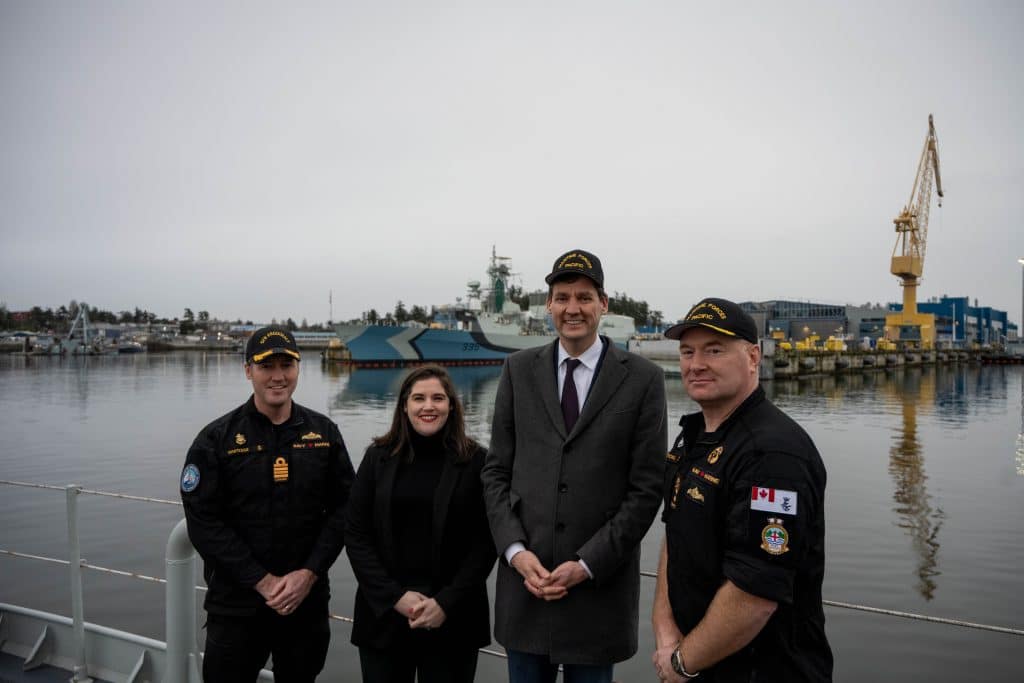
Premier David Emy during a tour of Canadian Forces Base (CFB) Esquimalt while accompanied by Rear-Admiral (R-Adm) David Patchell, Commander Maritime Forces Pacific/Joint Task Force Pacific and Captain(Navy) (Capt(Navy)) Kevin Whiteside, Commander of CFB Esquimalt, on Dec 11, 2025. Photo: Sailor 1st Class (S1) Kyle Maguire, MARPAC Imaging

Rear-Admiral Patchell Hosts Premier Eby to Highlight Strategic Importance of Canada’s West Coast Naval Hub

LCdr Linda Coleman, MARPAC Public Affairs Rear-Admiral David Patchell hosted Premier David Eby at Canadian Forces Base (CFB) Esquimalt to showcase Canada’s West Coast naval hub. Discussions highlighted fleet readiness, submarine infrastructure plans, economic impact, and skilled trades growth. Leaders emphasized environmental stewardship and collaboration with Indigenous Nations in B.C. - Rear-Admiral (RAdm) David Patchell, Commander Maritime Forces Pacific and Joint Task Force Pacific (MARPAC/JTFP), welcomed the Premier of British Columbia, David Eby, to Canadian Forces Base (CFB) Esquimalt on Dec 11, 2025, for a first official visit highlighting the strategic, economic, and environmental importance of Canada’s West Coast naval hub. The Premier was accompanied by MLA Darlene Rotchford, Parliamentary Secretary for Armed Forces Development and Veteran’s Affairs. “I was very pleased to welcome Premier Eby to Maritime Forces Pacific,” said RAdm Patchell. “This visit was an important opportunity to showcase the strategic significance of our West Coast naval hub, the work our sailors and civilians do every day, and the strong connection between the Royal Canadian Navy (RCN) and the Province of British Columbia.” During the visit, Premier Eby was taken on a sail through Esquimalt Harbour aboard an Orca-class training vessel, where he received a comprehensive tour and briefing on the RCN’s assets and operations on the West Coast. Joining the sail were Base Commander Captain (Navy) (Capt(Navy)) Kevin Whiteside, Doug Young, King’s Harbour Master, and Mike Bodman, manager of Base Safety, Environment and Indigenous Relations. While underway, Premier Eby received an overview of CFB Esquimalt, the Dockyard, and harbour operations, emphasizing the base’s central role in training, readiness, and fleet support and maintenance. It was noted that Esquimalt is an exceptional location for training sailors and highlighted the critical importance of training vessels in meeting the RCN’s future personnel demands. It was emphasized to Premier Eby that...

The Honourable David McGuinty, Minister of National Defence (MND) meets with members of Fleet Maintenance Facility (FMF) Cape Breton during a visit to Canadian Forces Base (CFB) Esquimalt on Feb 19. Photo: Sailor 1st Class (S1) Jordan Schilstra, MARPAC Imaging

Minister of National Defence Connects with Defence Community of CFB Esquimalt

LCdr Linda Coleman, MARPAC Public Affairs, with contributions from Lindsay Groves, Lookout Newspaper The Honourable Minister David J. McGuinty met with RCN members, families, and civilian staff to discuss defence investment and quality-of-life priorities. He toured Fleet Diving Unit (Pacific), Esquimalt Harbour recapitalization projects, and FMF Cape Breton facilities. The visit reinforced Canada’s growing defence investment, fleet modernization, and Pacific naval readiness. - Canadian Forces Base (CFB) Esquimalt was buzzing with energy on Feb 19 as the Minister of National Defence David J. McGuinty arrived for a full day of engagement with the Defence team. From early‑morning conversations with Royal Canadian Navy (RCN) sailors to hands‑on tours of key operational facilities, the visit underscored a moment of major renewal for Canada’s navy and the people who serve it. The day started with a town hall at the Colwood Pacific Activity Centre - Esquimalt (CPAC) to connect with members and families from His Majesty’s Canadian (HMC) Ships Ottawa, Vancouver, Calgary and Regina. “We asked Canadians: What should we do with our Armed Forces? They told us, invest in them,” said the Minister. “Yes, you’ll hear about big procurements, billions of dollars in acquisitions, but we also need to invest in you, because we can’t do this without you... I am focused on your quality of life.” The Minister spoke about the changes he wants to see in the years ahead. While acknowledging the scale of the transformation, he noted, “it’s a complicated structure” and asked members to “be patient with us” as it will be a “big turnaround.” “But here’s the best news,” Minister McGuinty added. “I couldn’t believe how easy it is to implement and execute change because of you. Members are trained to execute.” [caption id="attachment_334429" align="alignleft" width="600"] The Honourable David McGuinty, Minister of National Defence (MND) speaking during a...

A Letter from the Base Commander of CFB Esquimalt

Dear Lookout Readers and Members of the Defence Community, As many of you are aware, if you are a reader of the print version of this newspaper, you are reading one of the last editions of the Lookout that will roll off a traditional press. Effective April 6, 2026, the Lookout Navy News will transition to a predominantly digital publication from its past paper format. This decision, made in close consultation with the Lookout team and PSP Esquimalt, was not taken lightly. The final print edition on March 23, 2026 will come almost 82 years to the day that the first newspaper arrived at Canadian naval shore facilities in Victoria, decades before Canadian Forces Base (CFB) Esquimalt was formally named. While the broader circumstances driving this shift stem from the well-known challenges facing legacy media, particularly newspapers, it remains a sombre and significant moment for a storied institution woven deeply into the fabric of the Base and the lives of past and present members. We are acutely aware of the potential impacts this change may have on our loyal readers, many of whom hold the ink and feel of newsprint as fundamental to the Lookout's identity. We know many of our readers appreciate the feel of newsprint and the ritual of picking up a physical paper. That tradition has been an important part of the Lookout's identity, and we're grateful for the loyalty and connection it represents. At the same time, evolving habits in how people consume information present us with an opportunity to modernize while building on the strengths that have carried us through eight decades. This transition is about growth — not loss. In 2026, the Lookout moves toward a digital-first model that prioritizes accessible, timely, and engaging storytelling through our website, e-editions, and social media. This shift...

On Track by Leadmark: PCTU Reveals New Unit Crest

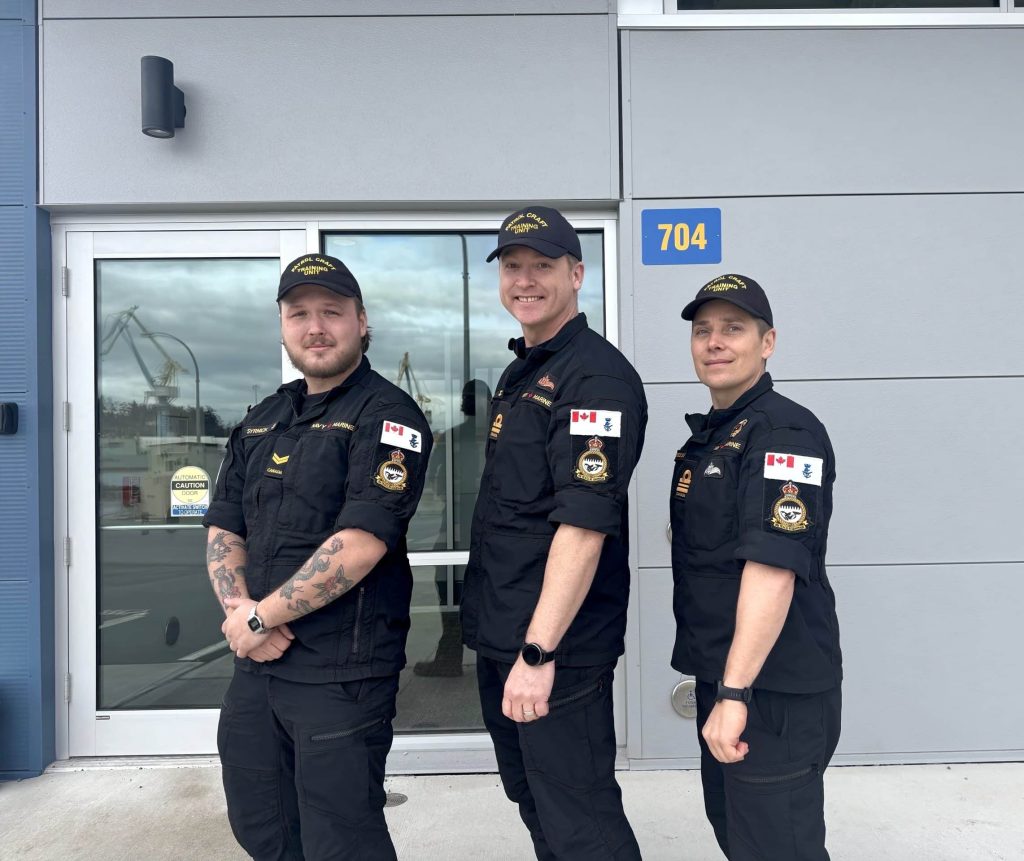
Archana Cini, Lookout Newspaper PCTU has revealed its first dedicated unit crest after decades of operating without a unique emblem, marking a new chapter in identity and recognition. Developed over nearly two years with the Directorate of History and Heritage, the crest arrives as the unit grows in size and capacity, expanding from 90 to 186 members. The crest’s symbolism highlights PCTU’s coastal training mandate, featuring an orca, Pacific elements, and the new motto: “On Track by Leadmark.” - After decades of shaping sailors behind the scenes at Canadian Forces Base (CFB) Esquimalt, the Patrol Craft Training Unit (PCTU) is stepping into a new chapter with a symbol that finally belongs to them alone: a dedicated unit crest. For Lieutenant-Commander (LCdr) Kevin Lashinski, Commanding Officer of PCIU, the new crest is much more than a visual update - it represents identity, morale, and the recognition of a unit that plays a critical role in generating skilled sailors for the Royal Canadian Navy (RCN). While the PCTU has long been an essential part of fleet readiness, it had never had a unique crest of its own. Historically, PCTU used the crest associated with Maritime Operations Group 4 (MOG 4). When MOG 4 was elim-inated, the unit defaulted to using the broader fleet crest instead. Now, that has changed. The crest took nearly two years to develop, crafted in partnership with the Directorate of History and Heritage (DHH). The timing is fitting: PCTU is not only growing in profile, but also in size and capacity. When LCdr Lashinski assumed command of the unit just over two years ago, it comprised just over 90 people. In the past year, it has expanded to 186. "Our unit has gotten significantly bigger - in fact, it's doubled," said LCdr Lashinski. "I started working on the...

A New Voice for Junior Sailors: MS Van Manen Takes the Helm as Formation Master Sailor

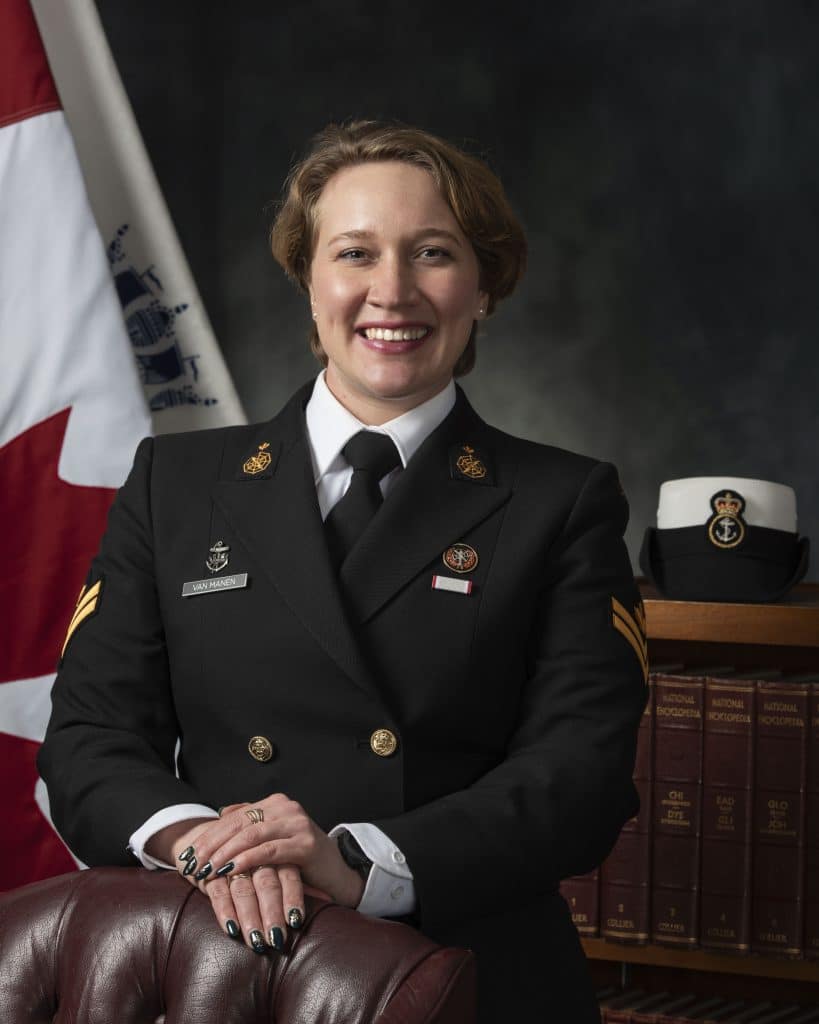
Archana Cini, Lookout Newspaper Whether new to the Royal Canadian Navy (RCN) or the base, approachability is the first thing Master Sailor (MS) Heather Van Manen wants others to notice.  “When someone meets me for the first time, I want them to feel that I’m approachable.”   Now stepping into her new role as Formation Master Sailor of Maritime Forces Pacific/Joint Task Force Pacific (MARPAC/JTFP), MS Van Manen brings more than rank and experience to the position. She brings the willingness to listen, advocate, and represent junior sailors.   MS Van Manen’s story begins in a small town in Ontario, surrounded by mud, books, and nature.   “I was definitely a tomboy,” said MS Van Manen. “I was also very much that kid that got in trouble for staying up reading books under the covers with a flashlight.”  With her mother working as a teacher, summers were often spent outdoors helping at her grandparents' family camp until MS Van Manen’s teenage years, when her family moved north full time. Before joining the RCN, MS Van Manen also thrived in another demanding environment: the professional kitchen. For five years, she worked in the professional food industry as sous chef at a small bistro in southern Ontario. Eventually, while logging hours to challenge her Red Seal, MS Van Manen hit a turning point.   “The pay, the hours, the lifestyle... it just didn’t feel very sustainable anymore,” shared MS Van Manen.   Around the same time, MS Van Manen’s best friend had joined the naval reserves, insisting that MS Van Manen would also love it. Then, while on a short trip to Cuba for her mother’s birthday, MS Van Manen met someone attempting to join the French Foreign Legion — another unexpected nudge towards the military.  After returning home, MS Van Manen applied to serve online. During the trade selection process, she chose one from each element and left it completely up to fate.   MS Van Manen was sworn into service with the RCN on Oct 30, 2019. When asked how her family and friends felt at this career shift, MS Van Manen smiled and said simply, “They were very proud.”   Despite the pace...

The Navy Canada Needs: VAdm Topshee Hosts Town Hall

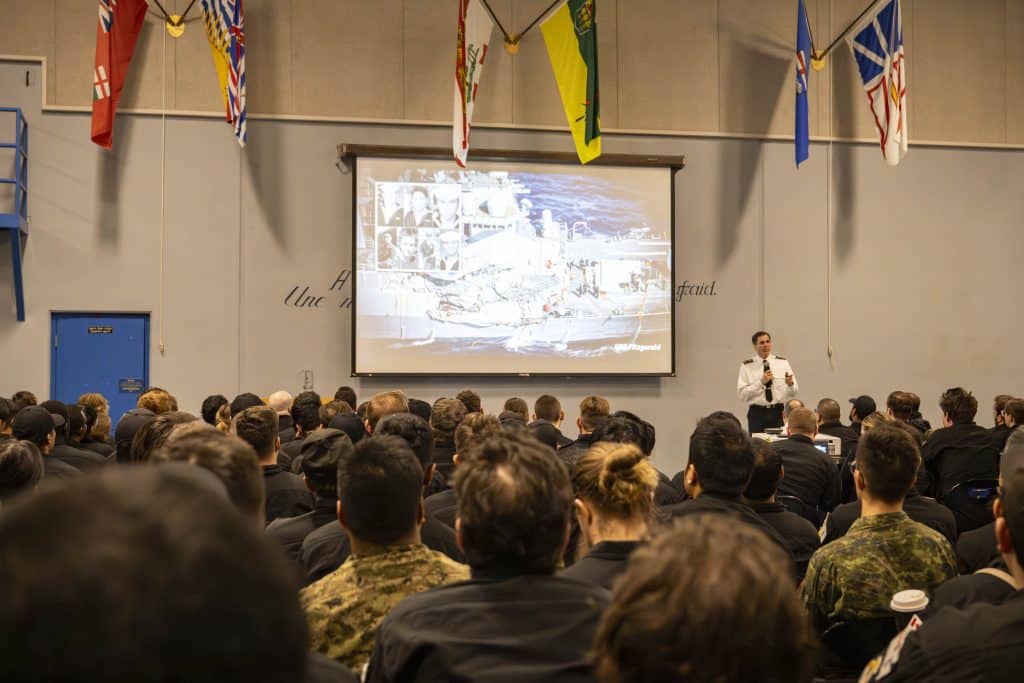
A/SLt Jamie De La Chevrotière-Martin, MARPAC Public Affairs Vice-Admiral Angus Topshee, Commander of the Royal Canadian Navy, hosted town halls across both coasts outlining a frank view of today’s security environment and what the RCN must become. He emphasized the need to strengthen maritime awareness to protect Canadian sovereignty, including building a unified maritime picture using sensors, autonomous systems, AI, and secure data-sharing. VAdm Topshee also highlighted shipbuilding and industrial capacity, modernization, and faster personnel generation. - In a series of town halls delivered on both coasts, Vice-Admiral (VAdm) Angus Topshee, Commander of the Royal Canadian Navy (CRCN), offered a frank assessment of today’s security environment and a clear vision for what Canada’s navy must become. His starting point was blunt: the global climate has hardened. While Canada’s 2017 defence policy, Strong, Secure, Engaged, emphasized a stable rules‑based international order, VAdm Topshee said today’s reality is increasingly shaped by power, interests, and competition. In that world, maritime forces matter and Canada must be able to defend its sovereignty. Despite readiness pressures and an aging fleet, VAdm Topshee noted the RCN has always maintained a strong global presence for a navy of its size. But the focus of the town halls was not on past achievements. Instead, he outlined what must happen next: improved maritime awareness; modern ships and submarines; faster and smarter personnel generation; and a culture focused relentlessly on competence, readiness, and war fighters. MARITIME AWARENESS AND CANADIAN SOVEREIGNTY Canada’s defining challenge remains geography. With the longest coastline in the world, three oceans, and vast maritime approaches, Canadians expect their navy to know what is happening on and under national waters. To close that gap, VAdm Topshee described a whole‑of‑government effort to build a single recognized maritime picture. This includes: the Coast Guard’s expanding surveillance mandate; partnerships with industry...

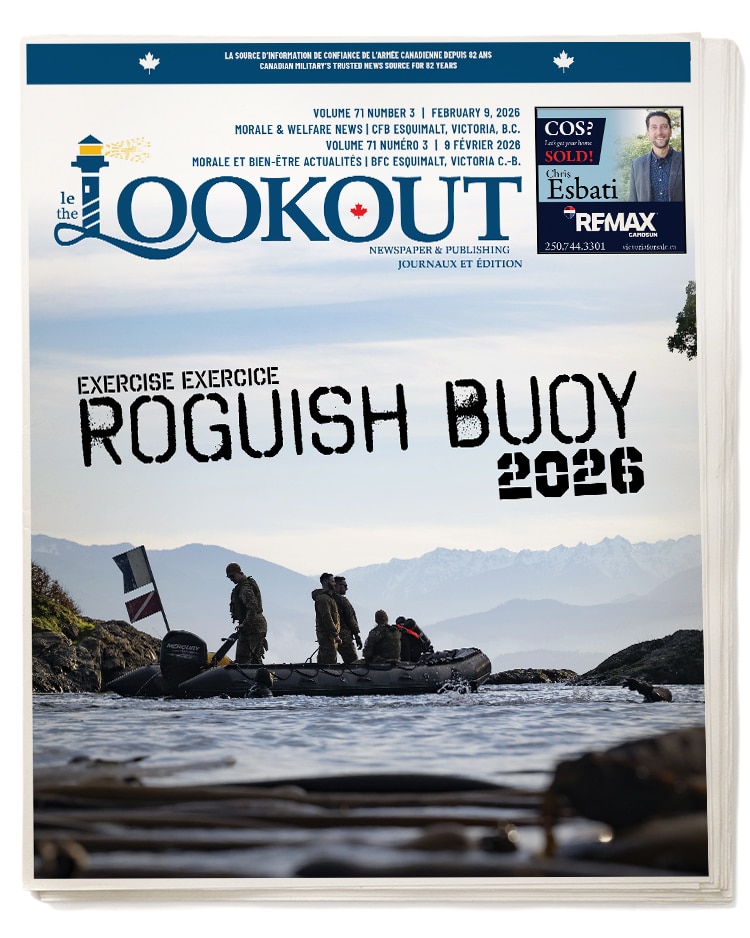
Exercise ROUGISH BUOY 2026: Demanding International Diving Exercise Returns to Vancouver Island for Third Consecutive Year

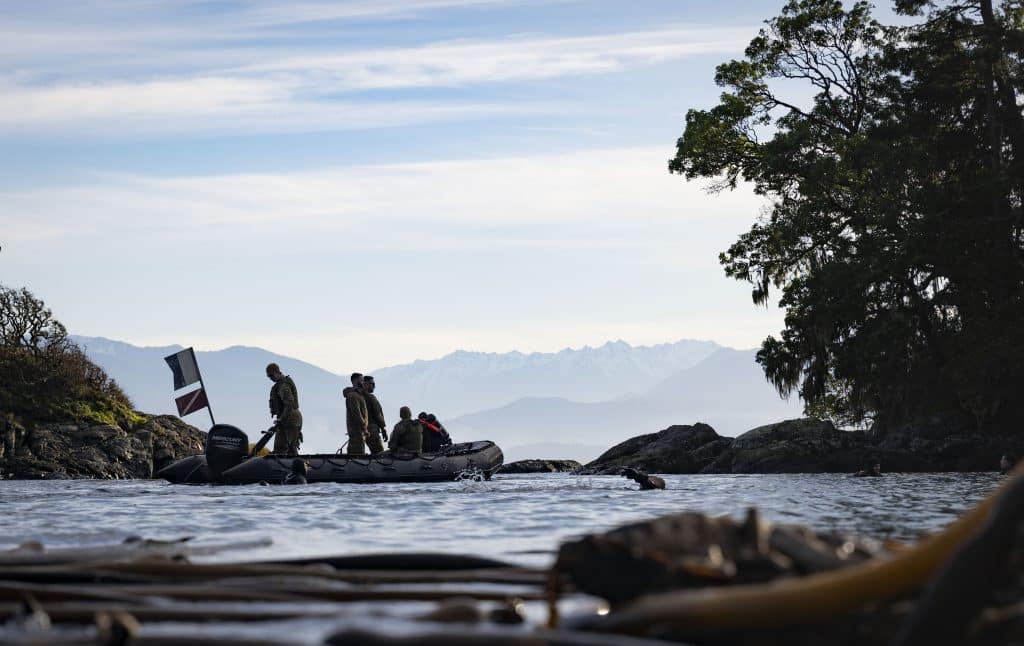
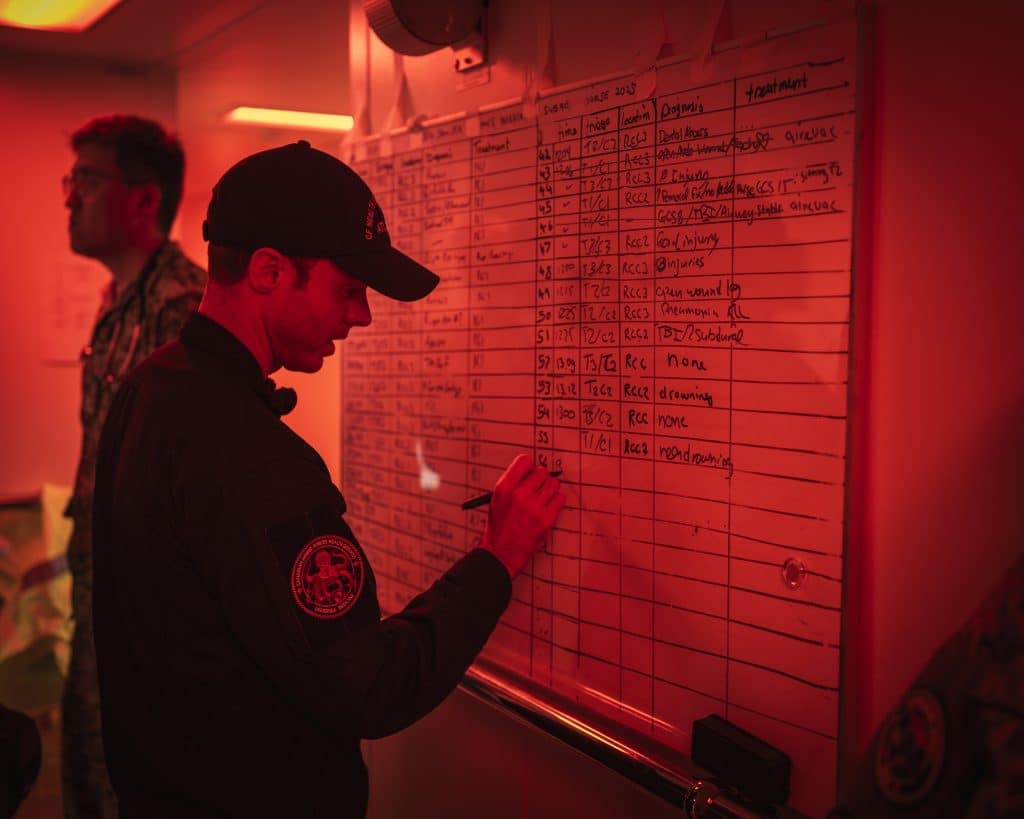
Archana Cini, Lookout Newspaper. Contributions by Capt Surbhi Matta, Combat Training Centre Exercise ROUGISH BUOY 2026 brought CAF combat divers back to Vancouver Island for the third consecutive year, training at Albert Head and Whirl Bay’s Underwater Demolition Range. First held in 1979, ROUGISH BUOY remains Canada’s only dedicated collective combat diver exercise, focused on operational readiness, recertification, and advanced underwater skills. This year’s 47th iteration included multinational participation from the United Kingdom, Latvia, Germany, and the Netherlands. - An uncommon sight greeted the Vancouver Island shoreline near Albert Head and Whirl Bay Underwater Demolition Range this January: that of Canadian Armed Forces (CAF) combat divers, suited, and sub‑ merged as they practised demanding underwater skills in the Pacific Ocean. Meet Exercise (Ex) ROUGISH BUOY 2026, Canada’s only dedicated collective training exercise that annually unites Canadian and international combat div‑ ers for diving practice, skill development, international cooperation, and dive recertification. The history of Ex ROUGISH BUOY stretches back decades in Canadian history, with its first iteration held in 1979. The exercise was initially created to ensure that combat dive teams could annually maintain oper‑ ational readiness and proficiency for tasks that might be required while deployed, including underwater demoli‑ tion, reconnaissance, and obstacle clearance. Over the years, the exercise has rotated locations and grown to include participating nations. This shift began to foster cooperative learning and technical exchange in addition to holding Canadian combat divers to high operational standards. This year’s installment saw divers return to Vancouver Island for the third consecutive year and the exercise’s 47th iteration. Once at Whirl Bay, the training was challenging. Divers worked through underwater demolition scenar‑ ios, placing charges to clear obstructions prior to deton‑ ation. The exercise also covered underwater navigation; insertion and extraction techniques; and water to land transitions from swimming...

A New Year, A New Focus on Security: Welcome to Security Awareness Week

L2 Stephen Vallis, L2 MARPAC /JTF(P) Physical and Personnel Security Officer Security Awareness Week runs Feb 9–13, 2026, with the theme 'Security starts with you,' reminding Defence Team members that protecting information, materials, and facilities is a shared responsibility. Members are encouraged to adopt a security mindset by staying proactive, learning workplace zone requirements, understanding classified materials, and knowing who to contact for guidance within their unit. Members are also reminded to track and maintain their security clearance status, and to note that the new Personnel Security Processing System (PSPS) replaced WebSCPS in Nov 2025 for all clearance requests and updates. - This year, Security Awareness Week is observed from Feb 9 to 13, with the 2026 theme being ‘Security starts with you.’ For those of us in the Defence Team, many of these changes impact our daily business: we clearly have many global rivals whose goals conflict with our own. These entities may include foreign nations and their intelligence services; foreign and transnational terrorist networks; and criminal elements. No matter your role in the Defence Team, you have access to information, materials, and facilities that will be of interest to all those entities. Collectively and individually, we have a responsibility to protect these things. Effective security requires everyone to develop a security mindset: a proactive, vigilant way of thinking that involves constantly looking for vulnerabilities and potential failures, often described as ’thinking like an attacker’ to anticipate how systems, data, or physical assets could be misused, broken, or compromised, and then taking steps to prevent that. Similarly, we need everyone to support a culture of security awareness, which is achieved when security considerations are included in all planning and day to day operations, and all Defence Team members adopt shared values in the way we think about and approach...

In Conversation with Rear-Admiral David Patchell: On Leadership, the Courage to Trust, and The Will To Fight

Lindsay Groves, Lookout Newspaper Today, leadership carries many definitions and, at times, misunderstandings. It can appear to be a lot of certainty, command, and action — necessary qualities for any leader. Yet there are foundational elements of leadership that are often less noted, such as calmness, serenity, integrity, and courage. Those are words used to describe Major (Maj) Dick Winters in the book Conversations With Major Dick Winters: Life Lessons From The Commander Of The Band Of Brothers by Cole C. Kingseed. Winters’ story was brought to life by Steven Spielberg and Tom Hanks in the HBO series Band of Brothers, which shared his experience in the Second World War and the hard-earned respect he earned as a leader. Winters, that book, and my work with the CFB Esquimalt community inspired this article — and I hope a series — because leadership is only a word until you witness it in action. When I sat down with Rear-Admiral (RAdm) David Patchell, Commander of Maritime Forces Pacific (MARPAC) and Joint Task Force Pacific ( JTFP), to learn more about his thoughts on leadership, morale, and service, he was quick to redirect the spotlight. “It’s difficult to talk about one’s own leadership,” said RAdm Patchell. “It’s much easier to talk about the amazing leadership I see around this formation.” On the bridge, across the base, at sea and at home, leadership is all around us. “I was on board [His Majesty’s Canadian Ship] HMCS Regina this week,” he continued. “The way that the command team leads — absolutely impressive. The Commanding Officer (CO) Darren Sleen inspires his team by talking about the importance of things as simple as drills and writing them out. Everyone can go and read the CO’s philosophy and understand, in detail, why what they’re doing is important.” RAdm...

Bell Let’s Talk Day Yoga Supports Mental Wellness at CFB Esquimalt

Archana Cini, Lookout Newspaper Defence Team members at CFB Esquimalt gathered at Work Point’s Nixon Gym on Jan 21 for a free guided yoga practice in recognition of Bell Let’s Talk Day 2026. Hosted by MARPAC’s Mental and Social Wellness Working Group, the session encouraged DND staff to 'take a moment for mental health'. PSP instructor Allison Jones shared how yoga supports resilience, stress management, and community, while mental health resources were available on site to reinforce ongoing support. - On Jan 21, Defence Team members at Canadian Forces Base (CFB) Esquimalt were invited to pause, breathe, and reconnect during a free guided yoga practice held in recognition of Bell’s annual Let’s Talk Day. Hosted by MARPAC’s Mental and Social Wellness Working Group, the midday session took place at Work Point’s Nixon Gym and welcomed both civilian and uniformed Department of National Defence (DND) staff to ‘take a moment for mental health,’ the theme of Bell Let’s Talk Day 2026. Participants stepped away from their workday and into a calm, supportive space focused on movement and mindfulness. With yoga equipment provided on site, attendees enjoyed a welcoming guided practice led by Personnel Support Program’s (PSP) Allison Jones. The practice emphasized gentle stretches, mind-body-muscle connection, and breathwork designed to help support overall wellbeing. “Mindfulness and yoga can support the mental health and wellness of Defence team members by helping them stay present and focused, even in busy or demanding environments. Through movement and breath, yoga encourages mindfulness — paying attention to purpose in the moment,” said Jones. “It also helps build a sense of community and gives people tools to reset, manage stress, and feel more grounded, both individually and as a team.” Bell Let’s Talk Day is dedicated to opening conversations about mental health and reducing stigma across Canada. This...

School of Diving Surges Training

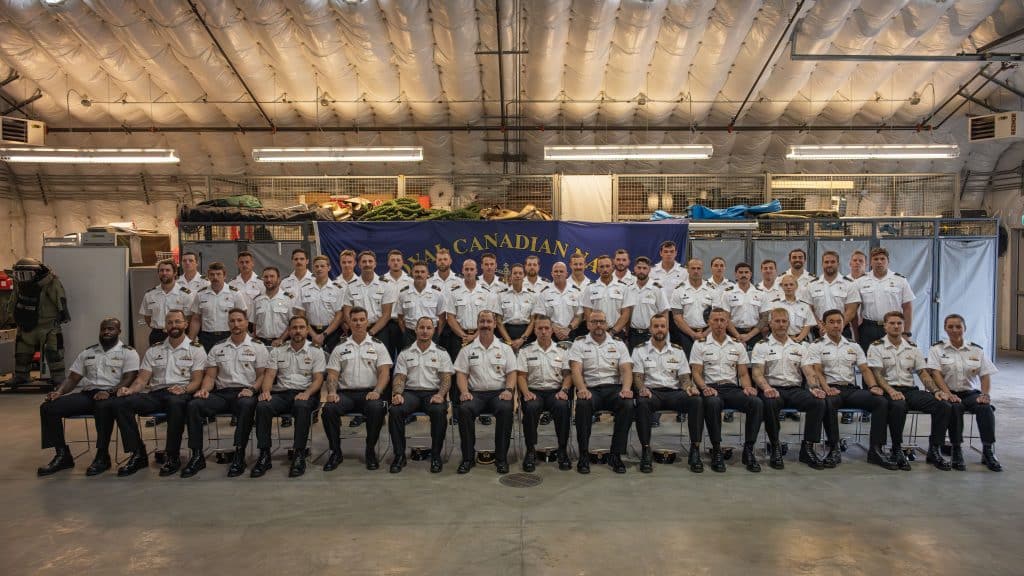
Lt(Navy) Michael Cormie, Fleet Diving Unit (Pacific) Fleet Diving Unit (Pacific) is currently training two concurrent classes of RQS1 Clearance Divers, with a record of 19 students currently enrolled. The 13-month course prepares divers for complex, real-world operations through intensive training in diving systems, fleet support skills, and more. Despite infrastructure challenges and ongoing reconstitution, the School of Diving is adapting to rebuild capacity and deliver highly trained clearance divers. - Petty Officer 2nd Class (PO2) Paul Paquette has his work cut out for him. He is the course instructor for one of two classes of RQS1 Clearance Divers being run concurrently at the School of Diving at Fleet Diving Unit (Pacific) (FDU(P)) this year. A record-high number of 19 students started their training in October 2025, aiming to graduate the high-intensity, thirteenmonth course in late October 2026. PO2 Paquette will help them get there. Shortly after the courses began, students were on parade for the graduation of 2025’s class of divers. “The training is very much a marathon,” said Paquette. “So I hope being on parade helped them visualize what they are working towards when they graduate next year.” Over the duration of the course, the students will learn to dive with various types of diving equipment including the Compressed Air Breathing Apparatus, Surface Supplied Diving, and the two types of rebreather. In addition to the diving itself, students will learn other vital skills including rigging, driving various vehicles and boats, and operating recompression chambers. They will also cover introductory skills in Explosive Ordnance Disposal (EOD) at the Canadian Forces School of Military Engineering in Gagetown. Students will also be introduced to methods of searching for, identifying, destroying, and/ or recovering naval mines that have been rendered safe. They will also learn how to provide engineering support to the...

The Importance of Conduct After Capture (CAC) Training and Becoming a CAC Instructor

Bordie Lawrence, CAC Training Centre Conduct After Capture (CAC) training equips CAF members with the skills needed to survive captivity, resist exploitation, and deny adversaries critical intelligence. Rooted in real-world case studies and modern conflict realities, CAC training has evolved to meet today’s complex and unpredictable battlespace. CAC Instructors (CACIs) play a vital role in delivering this training, strengthening international partnerships, and preparing peers for the most extreme operational scenarios. - Following the events of Sept 11, 2001, and the commencement of the Global War on Terror, it became clear that Canada’s Tier 1 Unit, Joint Task Force 2 (JTF 2), needed new specialized training for personnel deploying overseas. This training would ensure survivability in captivity, deny the enemy valuable military intelligence, and minimize the exploitation of isolated personnel.   As such, JTF 2 members began Resistance to Interrogation (R2I) training to meet this critical need, with support from the British military. By 2005, the first Canadian R2I Instructor Course had been conducted, staffed by British R2I instructors, to fully qualify a pool of Canadian Armed Forces (CAF) members to hold the R2I qualification.   This enabled Canada to begin delivering R2I training independently. The first Canadian-run R2I course was held in 2006, staffed entirely by Canadian instructors. The title of instructor was then officially renamed Conduct After Capture Instructor (CACI). In 2008, the Conduct After Capture Training Centre (CAC TC) was formally established in Kingston, ON, under the Canadian Defence Academy. The program continued to evolve, and in 2019, a comprehensive review led to changes designed to adapt training to the modern global climate, taking into account events such as the annexation of Crimea and the increasingly complex battlespace. The updated program went live in 2021 and continues to adapt to today’s challenges, including the invasion of Ukraine in 2022 and Canada’s ongoing commitments to NATO missions.  Canadian CAC training has always been informed by real-world events and case studies of personnel being held in captivity....

Reunited After Decades: Korean War Shipmates Reconnect in Retirement

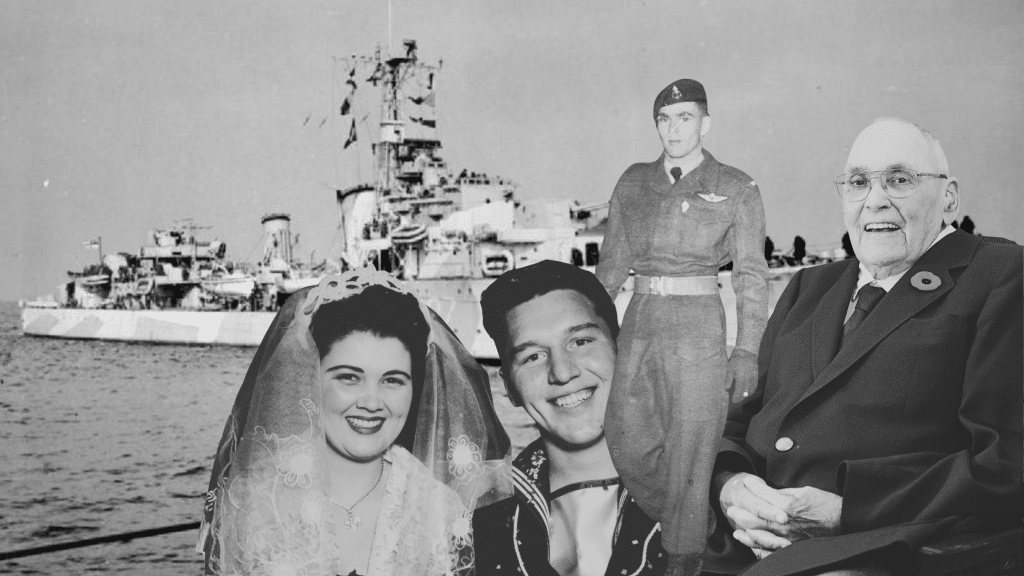
Archana Cini, Lookout Newspaper Three former Royal Canadian Navy (RCN) sailors who served together as teens during the Korean War reunited unexpectedly in their 90s at the Veterans' Lodge, a Broadmead Care home. The men shared memories of life aboard His Majesty's Canadian Ship (HMCS) Athabaskan II, from demanding boiler room work to long months at sea. Their reunion offered a powerful reminder of service, sacrifice, and the lasting bonds formed at sea. - For Roy Mackay, Gil Russell, and Don Russell, life in the Royal Canadian Navy (RCN) as teens meant hard work and discipline. Almost eight decades later, life would give them an unexpected gift — a sudden reunion of shipmates now in their nineties. Now 92, 95, and 94 respectively, (Gil and Don are unrelated, and Don passed away shortly before being interviewed) the three reunited at Victoria’s Broadmead Care Society for the first time in decades. The last time they saw each other was when they were only 16, 18, and 19, serving aboard His Majesty’s Canadian Ship (HMCS) Athabaskan during the Korean War, a vessel often nicknamed ‘Athabaskan II’ or ‘Athabee’. A Tribal-class destroyer, Athabaskan II deployed on three wartime tours starting in 1950 with duties ranging from antisubmarine patrols to troop transport, evacuations, and bombardments. The vessel was in service to Canada from 1948 to 1966. Gil, Roy, and Don all deployed together during its third wartime tour, working as stokers in the boiler room. “I was glad to get out of the army and into the navy, you know,” said Roy. “The navy actually helped me find a job during my return to civilian life, and that was really important to me.” Roy shared details of his work once aboard Athabaskan II for his first deployment with the RCN. “It was freezing down...

1 2 3 219

Explore More

Categories

Featured News

E-Editions Archive

News Stories Archive