Global Commitment to Local Impact: The Honourable Jill McKnight Details Defence Investments at CFB Esquimalt
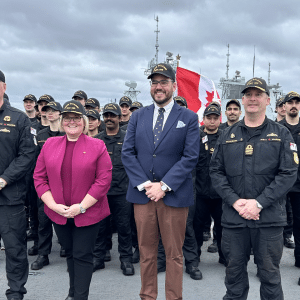
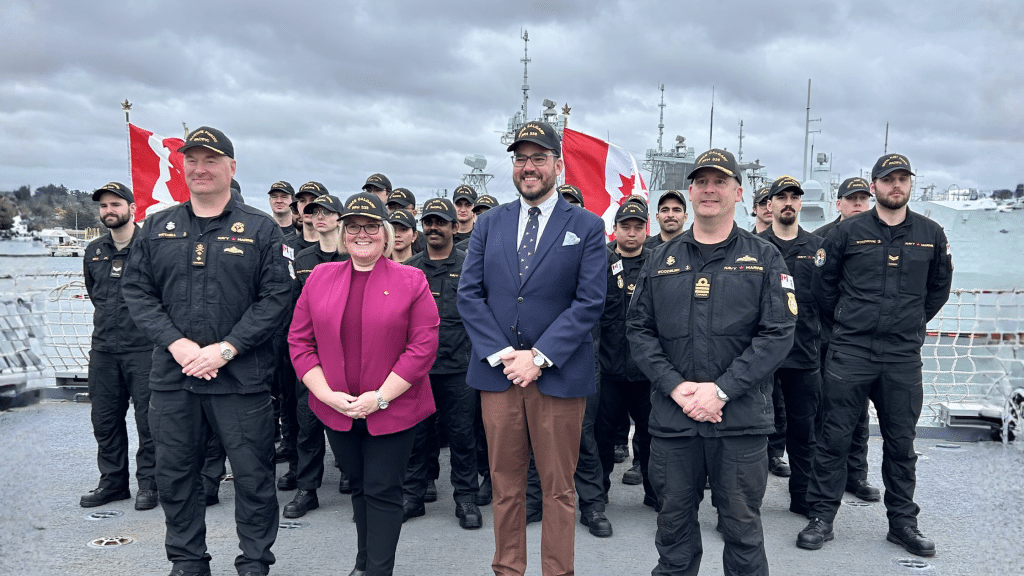
Archana Cini, Lookout Newspaper; with files from the Government of Canada Minister of Veterans Affair Jill McKnight visited CFB Esquimalt following Canada reaching NATO’s 2% defence spending target. Major ongoing and upcoming investments include jetty replacement, military housing expansion, and improved CAF compensation and benefits. Funding will continue to support long-term fleet readiness, modernization, and operations across the Pacific region. - For those serving on the West Coast, the future of defence is already under construction. On April 1, the Honourable Jill McKnight, Minister of Veterans Affairs and Associate Minister of National Defence, visited Canadian Forces Base (CFB) Esquimalt to deliver remarks on the flight deck of His Majesty’s Canadian Ship (HMCS) Calgary. Joined by Victoria Member of Parliament Will Greaves and Rear-Admiral (RAdm) David Patchell, Commander of Maritime Forces Pacific/Joint Task Force Pacific (MARPAC/JTFP), McKnight spoke to Defence team members and media representatives gathered at B Jetty. The visit followed Prime Minister Mark Carney’s announcement that Canada has now reached NATO’s two per cent defence spending target in the 2025-26 fiscal year, marking a significant milestone in Canada’s approach to national defence and collective security. For the Defence community of Vancouver Island, the announcement carries direct and visible implications. As such, McKnight’s visit turned this nationwide milestone into a clear explanation on how this national investment will be felt locally — through infrastructure; Defence personnel and community support; and operational readiness. “Here on the west coast, readiness is essential,” said McKnight. “As such, following Prime Minister Mark Carney’s historic announcement, we’re making targeted investments in personnel. This includes key capabilities and infrastructure that underpin operations in the Pacific.” One of the most significant local investments is the $1.1 billion investment to replace the aging A and B jetties at CFB Esquimalt, supporting Royal Canadian Navy (RCN) operations and future fleet requirements. With B Jetty commissioned in early 2025 and now fully...
In Memoriam: Honouring the Legacy of Retired VAdm Nigel Brodeur
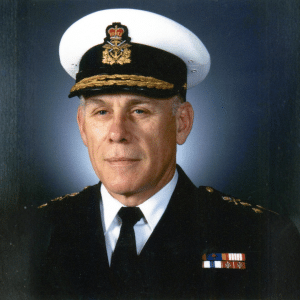
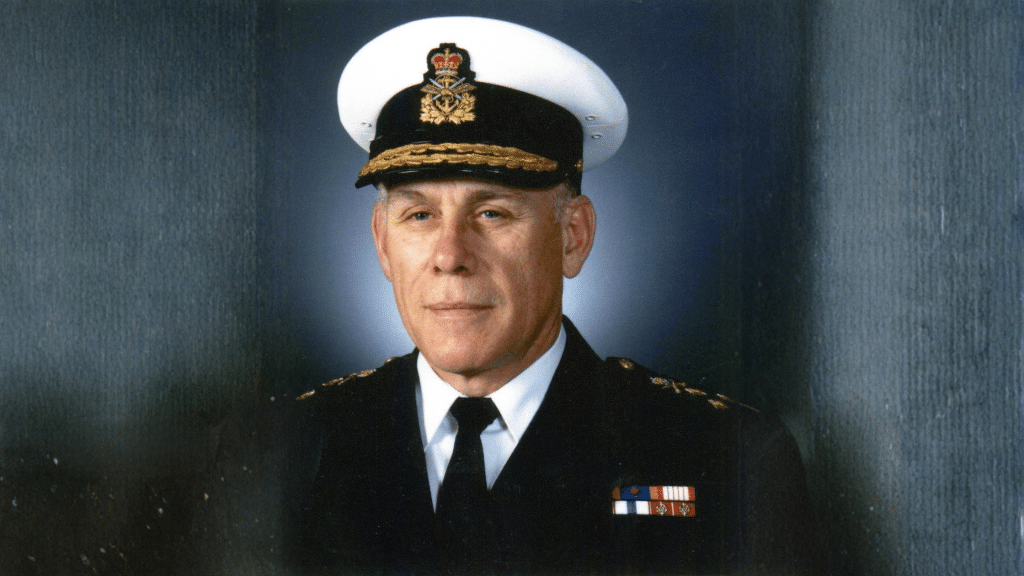
Consolidated with files by the CFB Esquimalt Naval Military Museum and Dignity Memorial The Esquimalt and Royal Canadian Navy (RCN) community mourns the loss of Vice-Admiral (VAdm) (ret’d) Nigel David Brodeur, a leader and lifelong advocate for Canada’s military whose legacy spans generations of service. He was a member of the Brodeur family, with a long and distinguished history that stretches back to the creation of the RCN itself. Brodeur passed away peacefully at the age of 93 on March 30, 2026, with family by his side. Nigel Brodeur was born in Victoria on June 18, 1932, to Victor Gabriel Brodeur (d. 1976) and Doris Brodeur (nee Fages) (d. 1936). Both Nigel Brodeur’s grandfather, Louis Philippe Brodeur, and father, Victor Gabriel Brodeur, held long and respected ties to the RCN. Louis Philippe was quite literally the ‘Father of the RCN,’ well-known for his service as Prime Minister Wilfrid Laurier’s first Minister of the Naval Service; Victor Gabriel was in the very first cadre of naval cadets to join the service in 1909, and then served at sea and ashore through the two World Wars, rising to become the first Franco-Canadian to make flag rank. Nigel’s own service spanned the entirety of the Cold War, in addition to his influence helping set up the Canadian Patrol Frigate project that remains the backbone of the Canadian fleet today. Nigel’s father was serving as Commanding Officer of His Majesty’s Canadian Ship (HMCS) Naden at the time of his birth. In 1950 Nigel entered the Canadian Services College Royal Roads, joining the RCN upon graduation as a midshipman in 1952. Throughout the 1950s and 1960s, Brodeur held a range of operational and leadership roles with the RCN, including service aboard HMCS Sussexvale, HMCS Beacon Hill, and as Weapons Officer aboard HMCS Kootenay during the Cuban Missile...
RCN NWOs Serve Differently on B.C. Waters
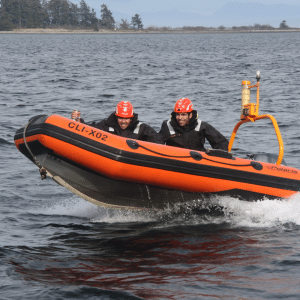
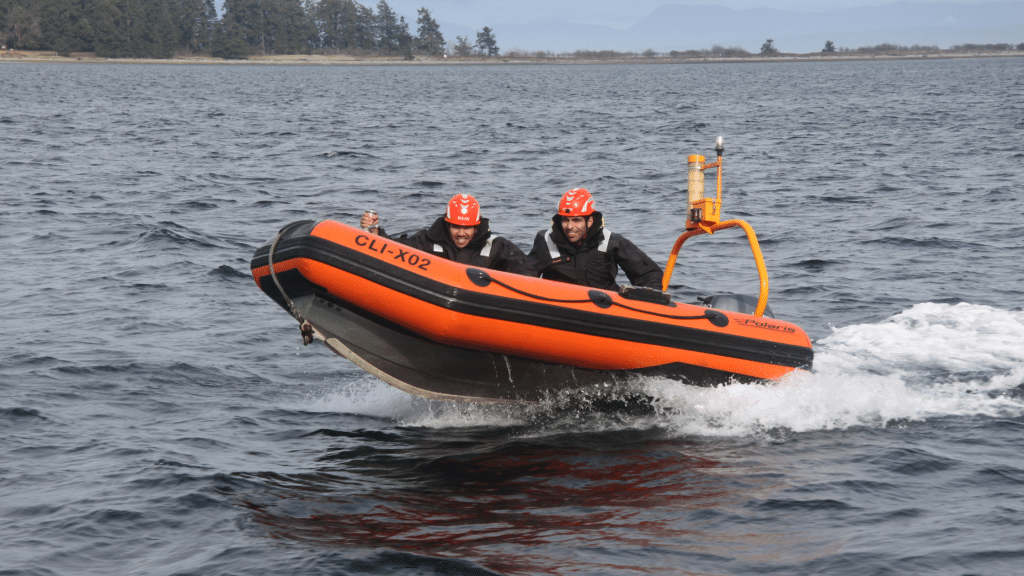
Lt(Navy) Kayvan Aflaki, Lt(Navy) Raymark Bancolita, and SLt Francesco Dinatale, Royal Canadian Navy RCN Naval Warfare Officers joined the Canadian Lifeboat Institution during the Pacific herring spawn to support SAR operations. Crews responded to real-world emergencies, including a high-risk nighttime medical evacuation at sea. Experience reinforced shared values of leadership, teamwork, and service across military and civilian mariners. - As Naval Warfare Officers serving aboard His Majesty’s Canadian (HMC) Ships Calgary and Vancouver, our careers have largely involved sailing Canada’s territorial waters in support of maritime security and sovereignty. For the first two weeks of March, our post would be aboard a different vessel and in a different role; we joined the Canadian Lifeboat Institution (CLI) as part of a crew assigned to provide search and rescue (SAR) support during the annual Pacific herring spawn. Our platform was the Delta Lifeboat, operating under the command of John M. Horton, O.B.C., C.S.M.A. Mr. Horton, a British-born Canadian mariner and Royal Navy veteran, has been nationally recognized for his decades of volunteer rescue work with Royal Canadian Marine Search and Rescue and the CLI. His work as an artist has similarly documented Canada’s maritime heritage. Under Horton’s leadership, the Delta has assisted countless mariners across the Southern Gulf Islands and Sunshine Coast. Each spring, however, the Pacific herring spawn brings a particularly intense operational tempo. Female Pacific herring deposit millions of eggs on eelgrass and kelp while males release milt to fertilize them, turning the water a distinctive turquoise. The spawn triggers one of the coast’s most important ecological events as seabirds, sea lions, and other marine life converge to feed. First Nations have relied on and managed the spawn for generations using sustainable practices to preserve the stock. With the arrival of commercial fishing fleets, the spawn has morphed into a far busier and more volatile scene, making a dedicated SAR presence increasingly important. We were welcomed by the...
Celebrating 30 Years of FMF: A Look Back at Dockyard History
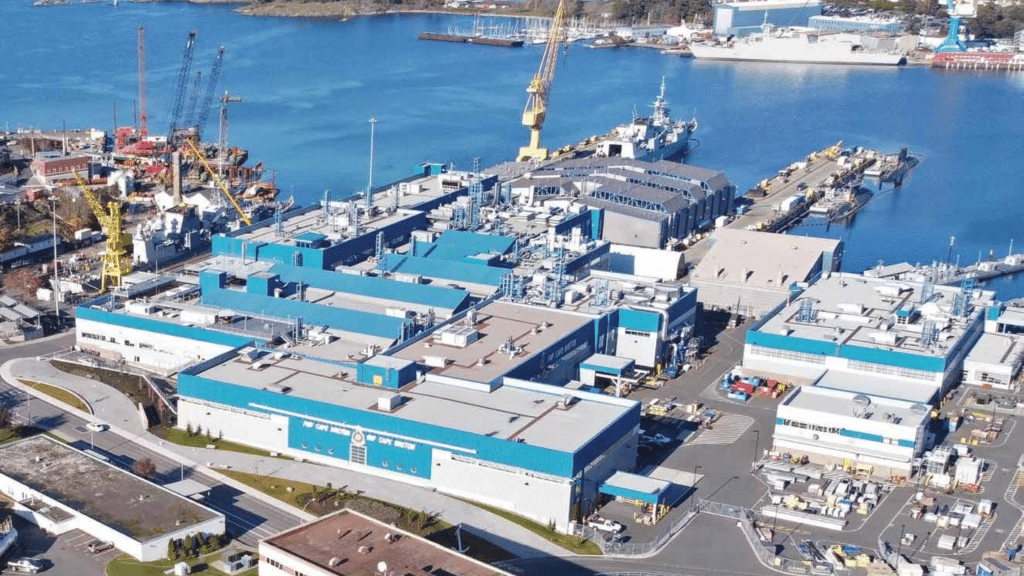
Rory Theriault, Fleet Maintenance Facility Cape Breton FMF Cape Breton marks 30 years, highlighting the people behind West Coast naval maintenance and engineering. A modern facility completed in 2019, transformed operations, improving RCN efficiency and collaboration. The dockyard’s roots trace back to the 1800s, shaping today’s Pacific Fleet support system. - Editor’s Note: The following story is a shortened adaptation of the original publication found within Volume 8, Issue 03 of The Cape Crusader, Cape Breton Fleet Maintenance Facility’s monthly newsletter. The Fleet Maintenance Facilities (FMF) were first established on April 4, 1996. Fleet Maintenance Facility Cape Breton (FMFCB) on the Canadian West Coast emerged through an amalgamation of the Ship Repair Unit (Pacific), Naval Engineering Unit (Pacific), and Fleet Maintenance Group (Pacific). Today, FMFCB is organized into seven departments: Production Management; Engineering Management; Operations Management; Supply Chain Management; Unit Support Management; Financial Management; and Strategy Management. As FMFCB marks its 30th anniversary in 2026, the focus of this milestone is the people who have shaped it since its formation. Every stage of its development has been carried by the individuals who show up every day to support the fleet. Though FMFCB’s facility has changed – with its capabilities expanded, and the organization having grown into a unified team of more than a thousand civilian employees and one hundred military members – its strength remains within its workforce. This includes not only those who came before and whose skills established the foundation of maintenance and engineering on the West Coast, but also the current employees and apprentices who continue to develop their craft and contribute to the reliability of the Pacific Fleet. While FMFCB is a strategic asset to the Royal Canadian Navy (RCN), its true value lies in the collective effort of the people who keep ships ready, operations moving, and technical expertise advancing. This anniversary is a recognition...

MARPAC Health & Wellness – Weekly Water Fun
April 22, 2026

Community Musical Jam
April 22, 2026
MARPAC Health & Wellness – Weekly Water Fun
April 29, 2026
CFB Esquimalt: A Historic Naval Base Anchoring Canada’s West Coast
Located just west of Victoria, British Columbia, CFB Esquimalt is a historic naval base and home to Canada’s Pacific Fleet. As one of the largest military installations in Canada, it plays a vital role in supporting maritime operations, fostering economic growth, and serving the community with a range of services and facilities.
Contact the Lookout Newspaper
"*" indicates required fields
Share Your Navy Story
Do you have a story about life at CFB Esquimalt or experiences with Canada’s Navy? We’d love to hear from you! Share your unique perspective and contribute to preserving the legacy of our naval community.