

Lookout Newspaper Logo

Latest News

A Surprise Sighting for a Dedicated Commissionaire

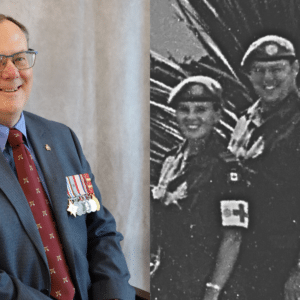
Lt(Navy) Wilson Ho CFB Esquimalt Public Affairs Officer Commissionaire Robert (Bob) Crosman, with 25 years of service, marked his 80th birthday at CFB Esquimalt. On the same day, Bob spotted a rare Cooper’s Hawk perched near the Y-Jetty Guard House. - For those passing through Y-Jetty at Canadian Forces Base (CFB) Esquimalt during the week, Commissionaire Robert (Bob) Crosman can be seen sitting in the Guard House with his trusty sidekick, his dog Teddy, resting close by. Last month, a special visitor was spotted by ‘eagle-eyed’ Bob. It was a Cooper’s Hawk. The winged visitor had landed on the fence line by the Guard House, eyeing Defence Team members intently as they left work for the day. Cooper’s Hawks are summertime visitors to southern Vancouver Island, breeding in the area during the warmer months before migrating south for the winter. To understand general guidelines of safely spotting hawks and other birds of prey around CFB Esquimalt without disrupting their natural environment, Robyn Pirie, Base Safety, Environment, and Indigenous Relations Environment Officer, shares that they should be viewed from a distance. Keep an eye out during birding season, as fledglings will be learning to survive outside of the nest for the first time. Coincidentally, the sighting of the Cooper’s Hawk was not the only special thing to occur on that day — it was also Bob’s 80th birthday. Now in his 25th year as a Commissionaire, Bob is one of the many dedicated Defence Team members that keep CFB Esquimalt safe and smoothly running. With no plans to retire soon, Bob intends to continue working to help guard and control security at CFB Esquimalt. “Being a commissionaire is the best job I’ve ever had,” said Bob. When asked about any life lessons he had learned along the way, Bob offered, “In...

Strengthening Morale and Wellness: MHWS Culture Evaluation Tool Launches Across MARPAC

Archana Cini Lookout Newspaper MARPAC launches the Health and Wellness Strategy’s Culture Evaluation Tool & Process (CET&P) across all units this fall. Developed over two years, CET&P helps units assess and improve health and wellness culture. Piloted in five units, the CET&P has already led to tangible improvements like hydration access, rest quality, and family engagement. - This fall, units across Maritime Forces Pacific (MARPAC) will have the opportunity to take a closer look at health and wellness within their ranks with the official launch of the MARPAC Health and Wellness Strategy’s (MHWS) Culture Evaluation Tool & Process (CET&P). Developed and tested over the last two years especially for MARPAC, the CET&P is designed to give units a structured way to assess and improve their organizational health culture. To do this, the CET&P examines the physical environment, governance, and subjective unit member experiences of health and wellness across MARPAC units through five key health and wellness categories: Active Living and Injury Prevention, AddictionsFree Living, Healthy Nutrition, Mental and Social Wellness, and Organizational Wellness. Utilization of the CET&P includes a physical walkthrough of the participating unit, an assessment of its policies around the five priority categories, and individual questionnaires intended to incorporate a qualitative element to the data. Results then identify both strengths and challenges within the participating unit, therefore guiding targeted actions intended to boost health and wellness. “On a broader scale, the CET&P also promotes shared responsibility for health and wellness by highlighting opportunities to improve environments, policies, and leadership approaches to better support members,” said Vicy Doucette, Health Promotion Specialist. “Health and wellness will no longer be seen solely as an individual responsibility, but also as an organizational outcome.” The benefits of a tool like MHWS’s CET&P are clear. According to the most recent Health and Lifestyle Information...

Canadian Rangers Train with NORFORCE in Australia

Captain Keun Woo Kang 4CRPG Public Affairs Officer Canadian Rangers trained with NORFORCE during Exercise SOUTHERN CROSS 2025 in Australia. Training included survival skills, wildlife safety, Indigenous cultural exchanges, and tactical comparisons. The exercise deepened Canada-Australia military ties, with the next exchange in 2026, Exercise NORTHERN LIGHTS. - From July 8-28, the 4th Canadian Ranger Patrol Group (4CRPG) and Australia’s North-West Mobile Force (NORFORCE) conducted Exercise SOUTHERN CROSS 2025 (Ex SC25) in Australia. This Small Unit Exchange (SUE), which began in 2011, alternates bi-annually between the two allied units. Since its founding, the exchange has offered opportunities for participants to enhance interoperability and camaraderie while also introducing them to unique traditions and cultures. This year, NORFORCE hosted three staff members and 12 Canadian Rangers from 4CRPG. The exercise began in Darwin, Northern Territory, at NORFORCE’s Darwin Squadron Headquarters. Here, Canadian Rangers received various forms of training to prepare for the Australian wilderness and learn skills essential to NORFORCE’s operations. Rangers trained with the F89 Minimi and HK416 assault rifles and engaged in water safety training that included 100-meter uniformed swims, treading water exercises, and capsized vessel drills. Wildlife safety briefings also covered hazards such as crocodiles and jellyfish. The group then moved to Shoal Bay for survival training, which included friction fire lighting, night navigation using the Southern Cross constellation, and plant identification. Following the Darwin phase, the group flew to Broome, Western Australia, to train at Kimberley Squadron’s Forward Operating Base, Robert Knox. Canadian Rangers were divided into two smaller groups for concurrent training. One group conducted amphibious operations at Ngamakoon in King Sound and Cone Bay, while the other trained at Neem Campground and Beagle Bay. Activities included shoreline surveillance and covert observation posts via capsized vessel and Regional Patrol Vessel, as well as medicinal plant identification. Rangers...

Hard Work and Heavy Seas: RCN Welcomes New Clearance Divers

Lt(Navy) Michael Cormie Fleet Diving Unit(Pacific) Twelve new clearance divers graduated Oct 10 from Fleet Diving Unit (Pacific) after completing the RQS1 course Divers are trained in deep-sea mine disposal, underwater repairs, salvage operations, and explosive ordnance disposal across Canada and abroad. The RCN is encouraging motivated members to challenge the Clearance Diver Assessment Centre (CDAC) and pursue one of the Navy’s most exciting careers. - After 13 months of training above and beneath ocean waves, 12 new clearance divers are surfacing with pride. On Oct 10 at Fleet Diving Unit (Pacific) (FDU(P)), students from the 2025 Clearance Diver Rank Qualification Sailor First Class (RQS1) course will officially graduate. These graduates are set to receive official clearance diver dolphin pins as a symbol of their accomplishment. Among the graduating class is Sailor Third Class (S3) Thomas Fournier, who joined the Royal Canadian Navy (RCN) through the 2023 Naval Experience Program (NEP). S3 Fournier, originally from Muskoka, Ontario, then challenged the Clearance Diver Assessment Centre (CDAC) in Feb 2024. The CDAC manages the screening, evaluation, and selection for those looking to join the Clearance Diver RQS1 course. “My experience on the clearance diver course was the best year of my life. I had an amazing time. There were lots of opportunities for self development, professional-development, and team cohesion,” said S3 Fournier. “Everyone I worked with was very helpful and supportive of working through challenges. Overall, my experience was very positive. I have developed as a person in many, many ways, and I am ready to add to wherever I go as a clearance diver.” Clearance divers are the Canadian Armed Forces’ (CAF) deep-sea mine disposal specialists. As such, they dive with various equipment including the Compressed Air Breathing Apparatus (CABA), the Rebreather, and the Surface Supplied Breathing Apparatus (SSBA) to carry...

RCN Decommissions HMC Ships Brandon, Whitehorse, and Saskatoon

Archana Cini Lookout Newspaper Contributions by A/SLt Kim Wachockier The Royal Canadian Navy decommissioned HMCS Brandon, Whitehorse, and Saskatoon in a Sept 29 ceremony at CFB Esquimalt. The event, attended by sailors, families, and community members, featured naval traditions, prayers, and addresses from senior leaders. The ceremony honoured the ships’ service while marking modernization toward a future fleet. - After decades of carrying sailors through storm, sea, and service, three Royal Canadian Navy (RCN) vessels are His Majesty’s Canadian (HMC) Ships no more. On Monday, Sept 29, the Royal Canadian Navy (RCN) formally paid off His Majesty’s Canadian Ships (HMCS) Saskatoon, Whitehorse, and Brandon in a ceremony at Canadian Forces Base (CFB) Esquimalt. Hundreds of serving and former sailors, families, and Defence community members gathered at CFB Esquimalt’s Bravo ‘B’ Jetty to honour the vessels and the thousands of Canadians who served in them. The ceremony was presided over by ViceAdmiral (VAdm) Angus Topshee, Commander of the RCN. “The weather today reflects much of what a paying off ceremony is — bittersweet in nature,” said VAdm Topshee. “But there is light, and we wait for it to show itself through the clouds.” Named after the Canadian cities of Whitehorse in Yukon, Saskatoon in Saskatchewan, and Brandon in Manitoba, the ships are part of a fleet of 12 Kingston-class Maritime Coastal Defence Vessels (MCDVs) commissioned into the RCN in the late 1990s. All Kingston-class vessels are scheduled to be retired by 2028 as part of the RCN’s modernization plan to shift resources toward the future fleet. Now, Brandon, Whitehorse, and Saskatoon have been formally decommissioned at the very place they once joined Canada’s naval fleet — their home, Esquimalt, British Columbia (B.C.). The ceremony was both a proud and emotional moment for the RCN. While it signified the end of active...

The Naden Band of the Royal Canadian Navy marching group in 2025.

Naden Band Marks 85 Years of Music and Morale

Archana Cini Lookout Newspaper For 85 years, the Naden Band has uplifted spirits at home and internationally through concerts, parades, tours, and more.  Explore insights from Naden Band members on service, musicianship, and the legacy of the band  - Music has long been a cornerstone of morale in the Canadian Armed Forces (CAF), offering comfort, inspiration, and a sense of shared purpose. At Canadian Forces Base (CFB) Esquimalt, this role sits in the hands of 35 professional full-time musicians — the Naden Band. This year, the Naden Band celebrates an incredible 85 years of service to the nation. For Petty Officer 1st Class (PO1) Steve Donagan, Operations Manager and Trumpet player, the band’s impact runs deep. “Music has a way of cutting through the noise and reminding us of what connects us,” said PO1 Donagan. “Every note is a potential reminder that even in the face of all the hardship in today’s world, there can still be hope, pride, and harmony. The Naden Band may not be able to change the world, but it can impact how our audiences move through it.” Through free community concerts, musical collaborations with educational institutions, ceremonial event support, and more, the Naden Band has done just that. “Locally, it’s about community concerts, parades, and ceremonies. Internationally, music crosses language barriers, creating goodwill that words alone can’t,” said PO1 Donagan. “Nationally, bands and the music they play are an outward manifestation of our shared traditions and history — it’s a reminder of who we are and what we stand for, both as members of the RCN and as Canadians. In every setting, it’s about using music to bring people closer together.” Today, these connections reach beyond Canada as international musicians join the Naden Band seasonally, like Petty Officer Musician (POMUS) Fraser Robertson from the Royal...

The Ship’s Company of His Majesty’s Canadian Ship (HMCS) Max Bernays celebrate reaching the highest northern point of any Royal Canadian Navy (RCN) ship on Aug 29, 2025. Photo: Sailor 1st Class Jordan Schilstra, Canadian Armed Forces

HMCS Max Bernays Pushes the RCN’s Northern Edge

S1 Maxime Vandal On Aug 29, HMCS Max Bernays reached 81°12′ N in the Arctic, the farthest north ever sailed by a Royal Canadian Navy vessel.  The crew overcame extreme Arctic challenges, from drifting sea ice to system strain, relying on every department to succeed.  This record strengthens Canada’s Arctic presence, expands naval operational confidence, and supports continental defence priorities.  - On Aug 29, His Majesty’s Canadian Ship (HMCS) Max Bernays set a new Royal Canadian Navy (RCN) record when the vessel and its crew reached 81°12.044’ N, 155°38.512’ W – farther north than any RCN ship in history. Currently participating in Operation (Op) LATITUDE in the Western Arctic and its approaches, Max Bernays departed Esquimalt Harbour on Aug 13 for a multi-operational deployment. The vessel is set to return home on Dec 19, following later participation in both Op HORIZON in the Indo-Pacific region and NEON in support of United Nations sanctions enforcement. For over a decade, HMCS Shawinigan held the record for sailing to the highest northern point with its Aug 14, 2014 touch at 80°28’ N. While other vessels have since operated in the Arctic, none have surpassed that mark — until now. Reaching 81°12.044’ N required every department pulling in the same direction. As such, bridge teams and lookouts had to adjust to the midnight sun and the visual illusions caused by drifting sea ice. Engineers also worked non-stop to prevent water and heating systems from cracking under the pressure of Arctic conditions, while the deck department kept upper deck equipment prepared for any rescue mission and minding lines that stiffened within minutes. Specialists analyzed imagery and weather, while an embarked Ice Service Specialist from Environment Canada advised on ice composition and movement. The crew encountered and overcame challenges that only revealed themselves at the furthest...

Locals engage with a member of the Royal Canadian Navy at one of many outdoor displays during Defence on the Dock 2023. Photo: Corporal Tristan Walach, Canadian Armed Forces

Defence on the Dock Invites Public to Explore Naval Life

Archana Cini Lookout Newspaper Defence on the Dock returns Oct. 5, 2025, at Ogden Point, offering the public a free, up-close look at naval and Defence life.  New this year: a Sports Zone with athletes and demonstrations, plus the Marine Careers Exposition connecting Canadians with marine industry opportunities.  - On Sunday, Oct 5, the Victoria waterfront will once again draw crowds as Defence on the Dock (DotD) returns to Ogden Point from 10 a.m. to 3 p.m. DotD is a biennial event that offers the public an up-close look at life in the Canadian Armed Forces (CAF), Royal Canadian Navy (RCN), and the Defence team of Canadian Forces Base (CFB) Esquimalt. By showcasing the Defence team’s vessels, equipment, related organizations, and its people, DotD provides the public with free opportunities to explore and engage with naval life in a welcoming environment. In addition to returning favourites such as ship tours and interactive displays, DotD is introducing several new engagements this year that showcase RCN talent and community. For the first time, the event will debut a Sports Zone with professional, semi-professional, and Canadian Armed Forces (CAF) athletes; sports activities; fitness demonstrations; and more. The Marine Careers Exposition will also be on site to showcase nantionwide career opportunities and connect government organizations, industry employers, and institutions with local communities. “To me, Defence on the Dock really solidifies CFB Esquimalt’s ‘Support for All’ motto and showcases our community to the public,” said Matt Carlson, Base Public Affairs Projects Officer. “The Marine Career Expo and Sports Zone are going to make this year’s edition a really special day.” Attendees can also expect musical performances by the Naden Band of the RCN. Food and drink options will be available for purchase, including food trucks and a BBQ hosted by the Esquimalt Military and Family...

A child receives a hand-twisted balloon crown during Formation Fun Day on Sept 7. Photo: Lindsay Groves

Hundreds Gather at CFB Esquimalt for Formation Fun Day

Archana Cini Lookout Newspaper Hundreds of Defence Team members, families, and community partners celebrated Formation Fun Day 2025 at CFB Esquimalt.  Highlights included performances, a vendor marketplace, RHIB rides, an obstacle course, and engaging booths.   The event showcased the spirit of connection, creativity, and community.  - Laughter, music, and the buzz of family fun filled Canadian Forces Base (CFB) Esquimalt on Sept 6 as the local Defence community gathered to celebrate Formation Fun Day 2025. An annual event held at the Naden Athletic Centre and surrounding grounds, Formation Fun Day drew hundreds of Defence Team members, families, and community partners for a day of carnival-style games, food, and entertainment. “Formation Fun Day was full of life,” said Leah Pokocky, Personnel Support Programs (PSP) Special Event Coordinator. “It really highlighted the strong community spirit we have here at CFB Esquimalt — you could literally feel the energy and creativity of our volunteers, staff, and vendors fuelling the day.” In addition to housing interactive exhibits and displays by local organizations, the event also included well-loved performances by STAGES dance, Mister Mojo, and a story time conducted by the Greater Victoria Public Library. Children enjoyed the event scavenger hunt, as well as taking photos with stilt walkers from the Rising Circus, superheroes and Disney princesses from Enchanted Fables Princess Party Professionals, and the Royal Canadian Navy’s (RCN) mascot, SONAR. Some adult attendees also enjoyed challenging themselves with a hot sauce competition and testing their strength against a rock-climbing wall. At the heart of the fun, families refuelled with hot dogs provided by the Esquimalt Military Family Resource Center (EMFRC) at a outdoor BBQ booth. Other family-friendly highlights included guided rigid-hulled-inflatable-boat (RHIB) rides, a 100-foot obstacle course, and a bubble show by That Bubble Guy. Indoors, a marketplace with over 40 local vendors brought...

Remembrance in Victoria, Honour in Halifax: RCN Accepts HMCS Robert Hampton Gray

Archana Cini, Lookout Newspaper Contributions by Gerald Pash and the Naval Association of Canada, Vancouver Island Branch HMCS Robert Hampton Gray is the sixth and final Harry DeWolf-class Arctic and Offshore Patrol Vessel. Named after Lt Robert Hampton Gray, the last Canadian awarded the Victoria Cross.  Simultaneous ceremonies were held in Halifax, Victoria, and Japan, on Aug 9.  Commissioning will take place in 2026 at CFB Esquimalt, when the vessel joins the Pacific Fleet.  - On Aug 21, the Royal Canadian Navy (RCN) officially accepted His Majesty’s Canadian Ship (HMCS) Robert Hampton Gray. The vessel is the sixth and final in a new fleet of Harry DeWolf-class Arctic and Offshore Patrol Vessel (AOPV). Built under the National Shipbuilding Strategy, Robert Hampton Gray will safeguard Canadian waters, strengthen Arctic sovereignty, and deploy abroad. Notably, the AOPV is capable of operating in first-year ice of 120-centimetre thickness, allowing the RCN unescorted access to previously inaccessible areas of the Arctic. However, Robert Hampton Gray’s acceptance carries weight far beyond steel and ceremony — its name is an act of remembrance for Lieutenant (Lt) Robert Hampton Gray, the last Canadian to be awarded the Victoria Cross. On Aug 9, 1945, Lt Gray climbed into the cockpit of his Corsair fighter from the aircraft carrier His Majesty’s Ship Formidable, leading an attack on Japanese ships in Onagawa Bay. Despite flying straight into concentrated anti-aircraft fire and taking a hit, he continued with his attack by releasing a bomb on the destroyer Amakusa while flying very low to ensure a successful hit. Struck by his bomb, the vessel capsized and sank. Lt Gray’s flaming aircraft then crashed into the sea. Only 27 years old when he passed, Lt Gray’s body was never recovered. Exactly 80 years after his passing, on Aug 9, 2025, HMCS Robert Hampton...

RAVEN Program Returns to CFB Esquimalt

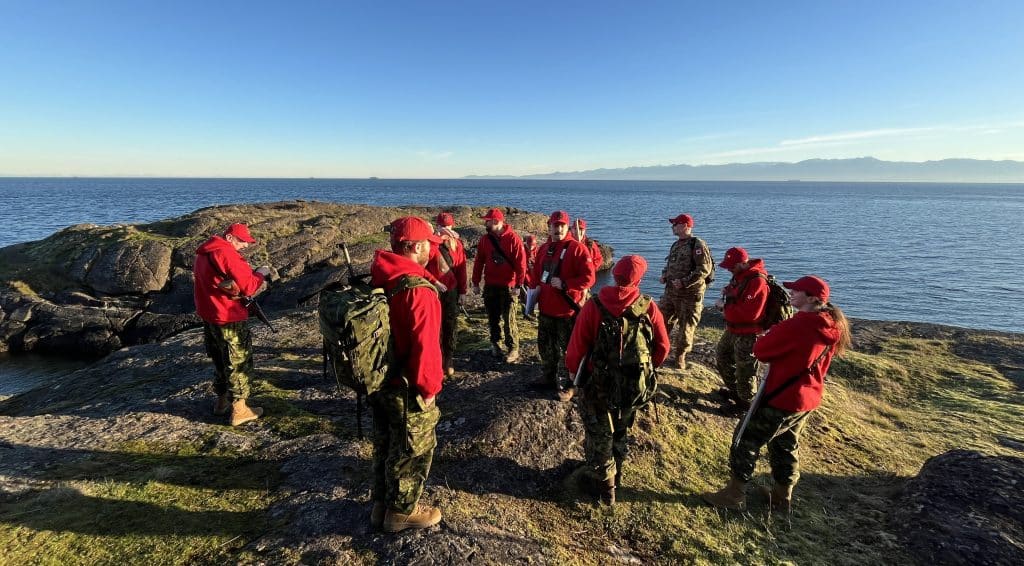
Archana Cini Lookout Newspaper The Raven Program returned to CFB Esquimalt this summer, blending Indigenous cultural teachings with naval-focused Basic Military Qualification (BMQ)M training.  Highlights included a Confidence Course at Camp Albert Head, a live-fire range day in Nanaimo, and a formal graduation ceremony at HMCS Venture.  Beyond skills, Raven fostered lasting meaning, offering participants cultural enrichment and graduates with potential pathways to CAF careers.  - The Raven Program is one of five Indigenous summer programs offered annually by the Canadian Armed Forces (CAF). A six-week summer Basic Military Qualification (BMQ) course designed specifically for Indigenous participants from across Canada, Raven blends Indigenous cultural teachings with naval-focused military training. The 2025 iteration of the Raven Indigenous Summer Program included a Confidence Course. Held at Camp Albert Head, Canadian Forces Base (CFB) Esquimalt on July 31, the outdoor course challenged program participants to successfully scale walls, navigate rope bridges, complete net climbs, and more. Notably, Raven is not designated as a youth program — rather, it is open to Indigenous people of all ages eligible to join the CAF (16- 57). This year, Raven saw participants learning and connecting with traditional Indigenous values and teachings; learning defence skills during the BMQ course; and spending a day aboard a Royal Canadian Navy (RCN) vessel to boost military knowledge and experience life at sea. Students were also taught weapons handling, navigation, first-aid, flood containment, firefighting, and more. To Master Sailor (MS) Henry McDavid, Naval Combat Information Operator and Raven instructor, the program also provides participants with a wealth of valuable insights beyond military skills. “Everyone has that little voice in the back of their head filled with fears of ‘what if,’” said McDavid. “But you will learn on this course that your fear of failure is stopping you before you even begin, and...

Step Right Up: Formation Fun Day Returns with New Attractions

Archana Cini Lookout Newspaper Formation Fun Day returns to CFB Esquimalt on Sept 6, offering a free afternoon of food, entertainment, games, and family activities. New attractions debut this year, including a toddler-friendly soft play zone. The event fosters connection and belonging within the Defence Community by welcoming both newcomers and longtime residents. Thank you to our event sponsors, Seaspan, Babcock, the Esquimalt Military Family Resource Centre (EMFRC), the Bank of Montreal (BMO), and Canadian Forces Base (CFB) Esquimalt Base Fund. - The countdown is officially on for one of the most anticipated Defence community events of the year: Formation Fun Day. On Saturday, Sept 6 from 12 p.m. to 4 p.m., Formation Fun Day will take over the Naden Athletic Centre at Canadian Forces Base (CFB) Esquimalt. The event will unite military members, veterans, base employees, and their families for a free fair-style afternoon of food, entertainment, games, activities, and more. This year’s event promises to be a little different — in the best way. For Leah Pokocky, Personnel Support Programs (PSP) Special Event Coordinator, creating the 2025 Formation Fun Day experience meant listening first. “When in the initial planning stages, it was really important to me to reach out to our local Defence community to see what was enjoyed in the past, what might have been missing, and what they would be sad to not see again,” she says. As a result, the 2025 event is set to include new activities for the youngest children, along with more opportunities for older attendees to build meaningful community memories. Families with toddlers will find plenty to love this year, with Tiny Toes Soft Play Rentals introducing a fenced, concierge-supervised play space designed for children five and under. As Pokocky, a mother of an active two-year-old herself, puts it: “To find someone that safely...

Meet the Huber PO1s: Service Runs in the Family

Archana Cini, Contributions from Lt(Navy) Jonathan Lacasse and PO1 Brendan Huber Meet the Huber family: Brendan (52), Patrick (15), and Matthias (10), all serving as PO1s in RCN, Sea Cadets, and Navy League programs. Their shared naval involvement strengthens family bonds and instills leadership, seamanship, and citizenship values in the next generation. - What started as a father’s way of helping his children through the separations of service has since turned into a family of Petty Officers, 1st Class (PO1) at the youth and Royal Canadian Navy level. Meet the Huber family, united by both blood and a shared love of the navy. Among the Hubers are three PO1s: Brendan (52), his son Patrick (15), and son Matthias (10), serving in the Royal Canadian Navy (RCN), Lanark Royal Canadian Sea Cadet Corps Program (RCSCC LANARK), and the Carlplace Navy League Cadet Corps Program (NLCC Carlplace) respectively. At the helm of the Huber family stands Patrick and Matthias’s mother Kathryn Huber, an active member of the Navy League board. The Sea Cadets are a Canadian Armed Forces (CAF) supported program focused on leadership, fitness, and citizenship for children aged 12-19. The Navy Cadet Corps, delivered by the Navy League of Canada, teaches children aged 9-12 seamanship, leadership, and RCN traditions. To PO1 Brendan Huber, having his children join these organizations was not only a way to help them understand what he was doing away from home, but also a way to cope with his deployments. Now, his son Patrick has taken to his role of PO1 with enthusiasm and pride, with highlights including taking a Fitness and Sports Instructor Course and winning a RCSCC LANARK sportsman award. His son Matthais also won the Navy League Seamanship Award from NLCC Carlplace. When asked if his children might consider pursuing military careers, PO1...

Cadboro Bay’s Jemmy Jones Island: The Mariner Behind the Name

Lt(Navy) Mike Makow  Jemmy Jones (1830–1882), a Welsh-born sea captain, left his mark on B.C.’s coast with an island off Cadboro Bay named after Jones accidentally grounding his ship there. Known for fearless seamanship, Jones once navigated the deadly Columbia River Bar from memory and famously escaped jail in disguise to reclaim his seized schooner, Jenny Jones. - Just off the coast of Cadboro Bay, Victoria, lies an islet jutting out of the sea — Jemmy Jones Island, an oftenoverlooked place carrying the legacy of one of British Columbia’s most audacious mariners. James ( Jemmy) Jones (1830–1882) was a Welsh-born sea captain whose life was filled with daring West Coast escapes and shipwrecks. The island is named not in honor of a great victory, but because Jones once ran his ship aground on it. And that, as history would have it, is what stuck. The incident was minor, with no lives lost or shipwreck — but it did leave a mark. The islet was soon dubbed Jemmy Jones Island, a name that endures on nautical charts and local maps to this day. After spending his youth searching for his father, adventuring, and mining, Jones first made his way to the coastlines of B.C. around 1854. Here, he quickly earned a reputation as a fearless and resourceful mariner, captaining schooners through treacherous waters and running freight between Puget Sound and Victoria for over a decade. Though illiterate, Jones also possessed a photographic memory and an uncanny sense of navigation. A striking example of this came in 1864, when Jones daringly navigated a ship through the Columbia River Bar, a stretch of water so deadly it’s known as ‘the Graveyard of the Pacific.’ When the bar pilot refused to guide the ship through dangerous conditions, Jones took the helm of his schooner...

Exercise Goldrush 2025 Builds Skills and Partnerships in the Pacific Northwest

A/SLt Kim Wachockier  MARPAC Public Affairs Three Orca-class vessels (Cougar 61, Raven 56, Grizzly 60) took part in Exercise Gold Rush 2025. Training included towing drills, tidal narrows navigation, search and rescue exercises, and more. Memorable moments included a humpback whale encounter, partnerships with the U.S. Coast Guard, and stops in Ketchikan and Glacier Bay. - Three Royal Canadian Navy (RCN) Orcaclass vessels (Cougar 61, Raven 56, and Grizzly 60) recently spent the past weeks engaged in Exercise Goldrush 2025 (EXGR2025), a coastal training exercise conducted amidst the scenic and challenging waterways of B.C. and Alaska. The exercise united junior officers, sailors, Naval Reservists, Royal Military College (RMC) students, and Naval Experience Program participants for a dynamic, hands-on experience. Effectively operating together, EXGR2025 participants navigated narrow channels, conducted complex mariner deck evolutions, and honed real-world maritime skills to boost operability. In addition to providing opportunities for participants to engage in towing drills, tidal narrows navigation, person-overboard and search and rescue exercises, Goldrush 2025 also supported the new Naval Warfare Officer Professional Qualification (NWOPQ). As a result, Junior Bridge Watchkeepers can log up to 150 hours towards the 600-hour qualification requirement, in addition to the practical experience gained in challenging waterways. EXGR2025 was a voyage of many memorable encounters. In Ketchikan, Alaska, crews were welcomed by the United States (U.S.) Coast Guard with an invitation to the allranks mess, The Crow’s Nest. Glacier Bay saw each Canadian vessel joined by two U.S. National Park Rangers who shared their knowledge of the region’s history, ecology, and wildlife alongside RCN crews. Finally, a humpback whale stole the spotlight in the waters of the Pacific Northwest when it lingered alongside Cougar 61 for nearly two hours. The crew stopped both engines and followed marine wildlife safety protocols as the whale surfaced repeatedly, even rubbing...

CFB Esquimalt Bids Farewell to Base Administration Commanding Officer

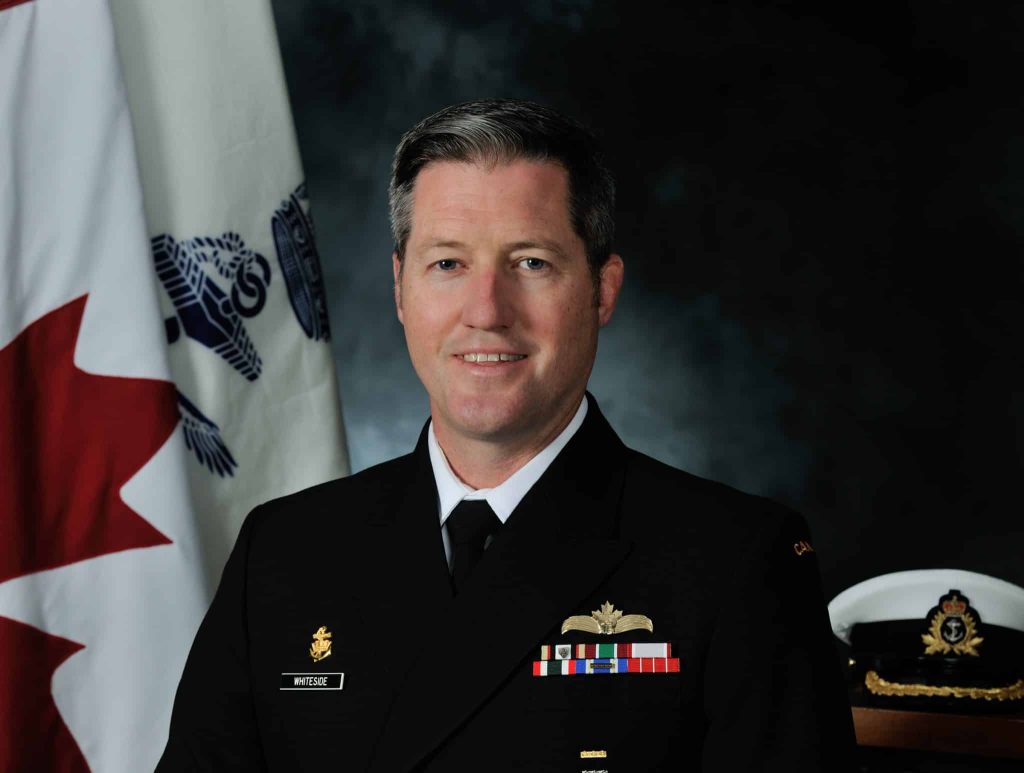
Archana Cini Lookout Newspaper On July 23, Commander (Cdr) Donna Crosman succeeded Cdr Nicolas Bruzzone as Commanding Officer of Base Administration (BAdm).  Cdr Bruzzone’s tenure emphasized people-first leadership, logistical excellence, and modernization of key base services.  Cdr Crosman, a lifelong military member, expressed gratitude for the opportunity to lead.  - From a poetry reading to lighthearted memories, Canadian Forces Base (CFB) Esquimalt’s Change of Command (CoC) ceremony for the Commanding Officer (CO) of the Base Administration (BAdm) Branch was one to remember. The CoC was held on July 23 at Work Point’s Nixon Gym. Presided over by Captain(Navy) Kevin Whiteside, Commander (Cdr) of CFB Esquimalt Base, command was passed from outgoing CO, Cdr Nicolas Bruzzone, to incoming CO, Cdr Donna Crosman. The ceremony united military and civilian members of the Defence Team, along with family, to both honour Cdr Bruzzone’s service and celebrate Cdr Crosman’s arrival. Cdr Bruzzone’s career reflects both global reach and local leadership, with time served in Canada, Chile, and at sea. A logistician, he has supported Canadian naval operations and base functions for nearly two decades. “Over my tenure, I laughed with many of you, got to know some of you, and cried with a few of you,” said Cdr Bruzzone during his speech. “What we have in this country really is worth fighting for.” During the ceremony a poem composed by Cdr Bruzzone, Through Every Storm (featured below), was recited, and illustrated his sentiment on his branch’s solemn commitment to duty and service. To Cdr Bruzzone, some of his most noteworthy accomplishments during his time as BAdm CO includes: implementing a genuine, people-first mindset; reopening the Wardroom galley for meals; and modernizing the Lookout Newspaper and Creative Services. When asked what he would like to leave with Esquimalt’s BAdm Branch as he passes command, Cdr...

Naval Reservists Take on West Coast Waters in NWO Training

Archana Cini Lookout Newspaper NAVRES sailors completed a challenging two-week Naval Warfare Officer training phase in the Gulf and San Juan Islands, navigating tight channels and complex waters.  This year’s sea phase was staffed entirely by reservists, providing opportunities for leadership development and real-world navigation training.  - Strategically complex waterways, tight channels, and high-traffic zones create challenging navigation — and important training conditions for members of the Canadian Naval Reserve (NAVRES). In July, the Gulf and San Juan Islands functioned as a classroom for NAVRES sailors to develop their skills during a Naval Warfare Officer (NWO) Basic Pilotage Sea Phase. Offered by the Royal Canadian Navy (RCN), this course gives students critical exposure to demanding pilotage challenges. It blends academic instruction with hands-on training to prepare students for the realities of naval operations at sea. Lieutenant-Commander (LCdr) Evan Park, OIC, was inspired by the crew’s enthusiasm and dedication to teamwork. “Every student sailor showed a real eagerness to learn, contribute, and grow together as a crew over the two-week sea phase,” he said. “I was genuinely impressed.” Petty Officer Second Class (PO2) Benjamin Lenner echoed Park’s feelings. “Having the opportunity to lead, support, and develop junior leaders was a privilege. The students and support staff alike worked to ensure an excellent training environment. Great memories and friends were made.” This year’s sea phase was unique as it was staffed entirely by NAVRES personnel. Notably, it provided opportunities for the crew to work through training packages while also supporting Bridge Watchkeepers. A major highlight was the Formation Navigation exercise, which took training vessels from Bedwell Harbour through Plumper Sound, Navy Channel, and Active Pass. Normally reserved for senior Fleet Navigating Officer candidates, this scenario pushed students to apply advanced navigation skills under pressure. The sail also included an overnight nested anchorage...

HMCS Nanaimo Returns to Namesake City for Canada Day

A/SLt Kim Wachockier MARPAC Public Affairs HMCS Nanaimo visited its namesake city for Canada Day, offering public ship tours and participating in local celebrations.  The event marked the vessel’s final stop in Nanaimo before transferring to the East Coast.  Sailors connected with the community through ceremonies, speeches, and shared stories of service aboard the ship.  - His Majesty’s Canadian Ship (HMCS) Nanaimo spent the Canada Day long weekend alongside in the city of Nanaimo, offering public tours and participating in community events. Notably, the visit marked the ship’s last port call to its namesake city before an upcoming transfer to Canada’s East Coast. It also represented an opportunity for the RCN to strengthen community ties, share stories, and honour a longstanding connection between ship and city. The visit officially began with a private ship tour for the Nanaimo Member of the Legislative Assembly (MLA), the Honourable Sheila Malcolmson. Public tours took place from 10 a.m. to 3 p.m., during which Nanaimo’s senior leadership took part in the City of Nanaimo’s Canada Day ceremony at Maffeo Sutton Park. The event featured a blessing by a Snuneymuxw Nation Elder, local performances, and cultural showcases. Lieutenant-Commander (LCdr) Tyson Babcock, the vessel’s Commanding Officer (CO) also gave a brief address on stage, inviting members of the public to tour the ship and celebrate with its crew. The July 1 program concluded with a reception for the Friends of Nanaimo, a civic group with longstanding ties to the ship. The reception featured Canadian cuisine, an informal awards presentation, and speeches from LCdr Babcock, Member of Parliament (MP) Tamara Kronis, and Mayor Leonard Krog. The public tours welcomed curious visitors. For many visitors, it was their first time stepping aboard a Canadian warship. Children climbed ladders, asked questions about naval equipment, and posed for photos. Sailors...

Maritime Forces Pacific and Joint Task Force Pacific Welcome New Leadership

A/SLt Do Hyun Kim HMCS Regina Rear-Admiral (RAdm) David Patchell assumes command of Maritime Forces Pacific and Joint Task Force Pacific from RAdm Christopher Robinson.  RAdm Robinson led key domestic and international missions, including COVID-19 response and deployments across multiple naval operations.  RAdm Patchell brings global experience and a vision for continued investment in the Royal Canadian Navy’s future fleet.  - Maritime Forces Pacific (MARPAC) held a Change of Command Ceremony (CoC) on August 5 at Canadian Forces Base (CFB) Esquimalt’s Duntze Head, marking the transfer of leadership from Rear-Admiral (RAdm) Christopher Robinson to RAdm David Patchell. The ceremony included a land acknowledgement from Mary Ann Thomas on behalf of the Defence Aboriginal Advisory Group (DAAG), music by the Naden Band of the Royal Canadian Navy (RCN), and a speech from Lieutenant-Colonel (LCol) James McCorriston, Formation Chaplain. Additionally, Vice-Admiral Angus Topshee, commander of the RCN, RAdm Robinson, and RAdm Patchell each gave formal addresses to the audience. RAdm Robinson became the commander of MARPAC and Joint Task Force Pacific ( JTFP) in May 2022. His leadership through the challenges of the COVID-19 pandemic sustained critical domestic and international operations. He oversaw Operation (Op) LENTUS along with the Canadian Armed Forces’ (CAF) nationwide natural disaster relief efforts. Internationally, RAdm Robinson directed deployments across Ops PROJECTION, NEON, HORIZON, RENDER SAFE, CARIBBE, and LIMPID. Under his command, HMCS Max Bernays was commissioned and integrated into the Canadian Pacific Fleet as the first Harry DeWolf-class vessel on the West Coast. HMCS Protecteur was also integrated to enhance fleet support. “As I pass the watch, I do so with immense pride in what we have accomplished together,” said RAdm Robinson in his farewell message. “Thank you for your service, your sacrifice, and your steadfast commitment to Canada and each other.” Following his address to the...

HMCS Calgary Marks 30 Years of Service with Weekend Celebrations

A/SLt Andrew Dagg HMCS Calgary HMCS Calgary marked 30 years of service with a weekend of events, including golf, base tours, and a community celebration at the Dockyard.  Highlights included a White Hat Ceremony, Stampede-style pancake breakfast, and RHIB rides in Victoria Harbour.  The festivities honoured the ship’s legacy and strengthened bonds between the Royal Canadian Navy, crew families, and the ship’s namesake city.  - Celebrating 30 years of service is no small feat for a vessel. As such, the crew of His Majesty’s Canadian Ship (HMCS) Calgary hosted a series of events to unite local communities. This year has been monumental for HMCS Calgary, with its return from refit at the end of May and its 30th anniversary festivities in June. Calgary and its crew celebrated the ship’s history, strengthened community relationships in Esquimalt, and acknowledged their own hard work in supporting the ship’s return from refit. To begin the exciting weekend was the Paris Sahlen Memorial Golf Tournament, in honour of Paris Sahlen as the Honourary Coxswain of HMCS Calgary for the relationship he was able to both build and foster between the ship and its namesake city. Members of Sahlen’s family attended and participated in the tournament, alongside members of the ship’s crew, City of Calgary delegates, and community members. Following the tournament was a tour of Canadian Forces Base (CFB) Esquimalt’s Dockyard for guests and volunteers. This tour showcased HMCS Max Bernays, Patrol Craft Training Unit (Pacfic) training vessels, Fleet Maintenance Facility (Cape Breton), and the CFB Esquimalt Naval and Military Museum. Through their time at Dockyard, guests gained a greater appreciation for the employment and training opportunities available to the Pacific Team members. They also experienced the hard work of those in engineering, maintenance, and other supporting roles. Additionally, the tour at the CFB Esquimalt...

The crew of HMCS Calgary returns to the home port of Esquimalt after deployed 7 months at sea on Operation ARTEMIS and Operation PROJECTION at Canadian Forces Base Esquimalt, British Columbia on Aug 30, 2021.

How to be a Strong Financial Role Model for Kids

SISIP Financial  Esquimalt Team Children of all ages notice how you manage money, so take this as an opportunity to teach financial literacy and smart money habits.  Start early by teaching age-appropriate financial habits, lead by example, and use real-life experiences to help children build long-term money management skills.   - Whether it’s how you handle stress, treat others, or react when the bill arrives, children notice everything — including how you manage money. Here’s how to set a great financial example for kids. Teach a Five Year Old Children don’t read stock market reports, but they do understand cause and effect. Teach basic money habits by: Explaining: Children can think money is endless if they only see a card tap. Try to narrate as you pay with “I’m using my card, but I have to pay this money back soon.” Allowing choice: If a child wants a toy at the store, allow them to buy it or save for something better in the future. This teaches children about avoiding impulse purchases. Talk to an 18-Year Old At this age, things get real with your child’s first job, first car, and possibly their first taste of credit card debt. Teach smart money tips by: Having the credit card talk: Explain how a strong credit score can help rent apartments and secure loans, but paying minimum balances can quickly lead to financial stress. Reiterating the concept of interest: If they charge $500 on a credit card with 20 per cent interest and make minimum payments, it will take over nine years and $584 in interest to pay off. Encourage investing and saving: Help open a Tax-Free Saving Account (TFSA) and support them in starting to consistently invest a small amount. Have Open Conversations Children can sometimes grow up thinking finances are a...

A bird's eye view of Canadian Forces Base Esquimalt in 2025.

CFB Esquimalt Then and Now: 1970s RCN Events

Archana Cini Lookout Newspaper A historical look at significant Royal Canadian Navy events at CFB Esquimalt during the 1970s  Highlights include NATO-led antisubmarine warfare exercises, an international Naden Band tour, the commissioning of HMCS Huron, and the founding of the base’s Naval and Military Museum.  - Curious what life was like at Canadian Forces Base (CFB) Esquimalt 50 years ago? From local modernization projects to multinational exercises, the 1970s were a time of tradition and transformation for CFB Esquimalt and the Royal Canadian Navy (RCN). As national priorities evolved, community focus deepened, and defence technology advanced, the base played a critical role in shaping Canada’s naval readiness. Here’s a look back at some key local naval moments from five decades past: 1975-1980 saw several destroyers and frigates (including HMCS Algonquin) from CFB Esquimalt’s Pacific Fleet participating in critical North Atlantic Treaty Organization (NATO)-led anti-submarine warfare (ASW) exercises. A countermeasure against submarine activity in the Pacific Rim, these exercises reaffirmed the RCN’s naval readiness and strengthened Canadian alliances. A society was formed in the late 1970s to plan and build what would eventually become CFB Esquimalt’s Naval and Military Museum. Until this point, the entire museum’s “collection” was housed in a two-door metal cupboard at the back of the base’s library. École Victor G Brodeur is built in 1973 to teach French-speaking children from military families. Nicknamed “la petite école rouge” or “little red schoolhouse,” the building housed up to 80 elementary students at a time until 1985, when the school moved to a larger building off base. HMCS Huron is commissioned at CFB Esquimalt in 1972. This Tribal class destroyer became a key RCN asset, deployed on several anti-terrorism operations throughout the Pacific Ocean, Persian Gulf, and Arabian Sea. Eventually, Huron was decommissioned and sunk 100 kilometres west of Vancouver...

A Salute to Service from Rear-Admiral Christopher Robinson

Rear-Admiral Christopher Robinson, OMM, CD Maritime Forces Pacific As I pass over command of Maritime Forces Pacific (MARPAC) and Joint Task Force Pacific ( JTFP) to Rear-Admiral David Patchell, I want to express my deepest gratitude to the extraordinary team that has stood watch with me during these past three and a half years. With your unwavering support and dedication, MARPAC has stood strong as Canada’s leading presence on the Pacific Coast. Through challenging times, your resilience, agility, and professionalism has ensured that we not only met our operational commitments but also advanced efforts to reconstitute and strengthen our force. Together, we navigated a global pandemic while continuing to support overseas operations, domestic disaster response through Operation (Op) LENTUS, and vital regional search and rescue missions. Our ships — His Majesty’s Canadian Ship (HMCS) Winnipeg, Vancouver, and Ottawa — deployed to the Indo-Pacific under Ops PROJECTION, NEON, and HORIZON, reinforcing Canada’s Indo-Pacific Strategy. Meanwhile, HMCS Saskatoon, Yellowknife, and Edmonton deployed in support of Op CARIBBE, interdicting thousands of kilograms of illicit narcotics into North America. In 2024, clearance divers from Fleet Diving Unit (Pacific) deployed to the Solomon Islands under Op RENDER SAFE, continuing their vital mission to remove explosive remnants of war from the world’s oceans. Closer to home, they responded on short notice to assist in the recovery of a Royal Canadian Air Force CH-147F Chinook helicopter that had tragically crashed in the Ottawa River. Their expertise and professionalism under challenging conditions were instrumental in the safe, successful recovery of the aircraft. At home, our Canadian Armed Forces (CAF) team supported British Columbia’s 2023 record-breaking wildfire season by responding to countless search and rescue callouts — each one a testament to courage and commitment. We also saw the arrival and return of several key capabilities that will shape...

Cdr Benjamin Seaby, incoming CO, CPO1 David Bliss, Formation CWO Cadets and Junior Canadian Ranger Group, BGen Dominique Brais, Commander of Cadets and Junior Canadian Ranger Groupp, CWO David Shultz, RCSU (Pacific) CWO and Cdr Paula McHale, outgoing CO signing the Change of Command paperwork on July 7 2025

RCSU Pacific Welcomes New Commanding Officer

A/Slt Melanie Mallet Assistant to Public Affairs RCSU Pacific welcomed Cdr Benjamin Seaby as its new Commanding Officer following a Change of Command ceremony presided over by BGen Dominique Brais.  Cdr Paula McHale concluded her tenure as Commanding Officer of RCSU Pacific, having led the unit since July 2022. She will transition to command the CAF Transition Unit BC later this month.  RCSU Pacific oversees British Columbia’s Cadet Program, supporting 5,500 cadets  with guidance from over 1,000 dedicated COATS members  - The Regional Cadet Support Unit (RCSU) Pacific recently observed a Change of Command (CoC) ceremony presided over by Brigadier-General Dominique Brais, Commander of the Cadets and Junior Canadian Rangers Group. RCSU Pacific, responsible for the British Columbia Cadet Program, transitioned command from outgoing Commanding Officer (CO) Commander (Cdr) Paula McHale to incoming CO Cdr Benjamin Seaby. Cdr Seaby will now assume regional leadership of one of Canada’s top youth development programs. Born in Ottawa and raised in Aylmer, Quebec, Cdr Seaby graduated with a Mechanical Engineering degree from the Royal Military College of Canada. After completing his Naval Warfare Officer Training, Cdr Seaby joined His Majesty’s Canadian Ship (HMCS) Halifax as a Bridge Watchkeeper. Cdr Seaby has also participated in several international deployments during Operation (Op) SEXTANT in 2007, Op SAIPH in 2009, and Op NEON in 2023. Additionally, Cdr Seaby has also held several key staff positions including Recruit Division Commander at the Canadian Forces Leadership and Recruit School, N31-1 MARLANT Fleet Scheduler, Military Assistant to the Minister of National Defence, Career Manager, Commanding Officer of the Personnel Coordination Center (Pacific), and, most recently, Deputy Commander Submarine Sustainment. Cdr McHale served as Commanding Officer for RCSU Pacific from July 12, 2022 to July 7, 2025, and will assume command of the Canadian Armed Forces (CAF) Transition Unit BC...

The Japanese Ship HYŪGA, His Majesty's Canadian Ship (HMCS) OTTAWA, and Motor Vessel (MV) ASTERIX sail together in the blue waters of the Indo-Pacific Ocean on 26 August 2023.

Nine Important Things to Know Before an Indo-Pacific Deployment

Commander Tyson Bergmann, former CO HMCS Vancouver, and Brett Witthoeft, Maritime Forces Pacific There’s a lot to know before deploying to the Indo-Pacific, a dynamic maritime region central to trade, security, and Canada’s future.   RCN crews must prepare for regional complexities—from strategic tensions to unpredictable weather and operational risks at sea.  Success depends on adaptability, cultural awareness, and learning from Indo-Pacific navies experienced in operating in contested waters.  - Every year, Royal Canadian Navy (RCN) ships from both coasts deploy to the Indo-Pacific region (IPR) in support of Canadian policy. It is important for Defence community members to understand the dynamics of this region from a Canadian perspective. The summary below is based on an article originally published for free in the Canadian Naval Review (Volume 21, No. 1 2025). The IPR is home to two-thirds of the human population who currently generate approximately 45 per cent global wealth and are on track to possess half of worldwide Gross Domestic Product (GDP) by 2040. The RCN’s involvement in the IPR now is an investment in our future success. The IPR is primarily a maritime theatre with many of its countries dependent on seaborne trade and either connected or separated by water. In fact, 33 per cent of all global trade sails through the South China Sea, while China, South Korea, and Japan build over 90 per cent of all new ships every year. This makes maritime power vital in the IPR, with the region home to some of the world’s largest navies and coast guards. The IPR is busy 24/7 with maritime traffic especially high near the Malacca and Taiwan Straits. Potential challenges include dhows making sudden course changes, lasers being directed at the bridge, and fishers not following best practices. As such, RCN crews need to be hypervigilant to...

Mental Fitness Practices for the Defence Community with Health Promotion

Archana Cini Lookout Newspaper Military service often demands more than physical strength—it also requires the mental fitness needed to navigate pressure, trauma, and unpredictability. This summer, the Health Promotion (HP) Mental Fitness and Suicide Awareness (MFSA) course has been equipping Defence Team members with essential skills to boost resilience and support others in mental distress. MFSA is one of several seasonal offerings open to Defence Team members at CFB Esquimalt, including Canadian Armed Forces (CAF) personnel, civilian employees, veterans, and more. The course introduces powerful tools like grounding, mindfulness, and tactical breathing techniques that can be leveraged in all situations—from operational deployments to daily life. MFSA also explores ways to recognize and respond to distress in others, making it a critical resource in suicide prevention. Designed with the realities of Defence Team life in mind, MFSA focuses on techniques participants can access in the moment, whether on ship, on base, or at home. Here are some of the strategies taught in MFSA, designed to be practiced regularly for lasting mental fitness. Tactical/Abdominal Breathing: Also known as box breathing, this technique involves inhaling for four seconds, holding for four, exhaling for four, and pausing for another four. Practising this activates the parasympathetic nervous system, which helps calm stress responses. This is especially useful in high-pressure situations where Defence Team members need to quickly regain composure or sharpen focus. Grounding Techniques: Grounding helps bring attention to the present during overwhelming moments. One common technique is the “5-4-3-2-1” method: identifying five things that can be seen, four that can be touched, and so forth with hearing, smell and taste. Another technique involves counting backwards in increments of seven or eight—anything that requires focus. These strategies can help regain clarity or manage panic. Mindfulness Practice: To be mindful is to intentionally pay attention to...

More Than a Mission: Collaboration with Toquaht Nation Powers CAF for Exercise TRIDENT FURY 25

A/Slt Christopher Hofing Canadian Armed Forces (CAF) personnel were met by more than the beauty of the West Coast while establishing a Forward Operating Base (FOB) for Exercise TRIDENT FURY 2025 (Ex TF25). They were also greeted by the generosity and support of Secret Beach’s local British Columbia Indigenous community—the Toquaht Nation. Months before boots hit the ground, the Ex TF25 planning team, which included representatives from Base Safety, Environment & Indigenous Relations, proactively engaged 21 Coast Salish and Nuu-chah-nulth Indigenous communities regarding the upcoming multinational maritime exercise. This early engagement also helped enable a strong working relationship between the CAF and Toquaht Nation leadership, with Lieutenant (Navy) (Lt (N)) Dakota Nelson, FOB Officer-in-Charge, and Lieutenant-Commander (LCdr) Justin Lam, Mine Countermeasures Lead Planner, coordinating with Noah Plonka, Business Manager and elected member of the Toquaht Nation Executive Council. This collaboration helped ensure military operations were both effective and respectful of local land and culture. “Noah was incredibly accommodating,” said Lt(N) Nelson. “He offered us access to whatever land was needed, and even advanced construction projects to support our camp setup. His willingness to work with us was instrumental.” To LCdr Lam, the collaboration meant everything. “The Nation helped us train where it counts, and build the relationships needed to safeguard the Pacific approaches together,” he said. The Toquaht Nation provided the CAF with key infrastructure like potable water, portable toilets, moorage, and an on-site cookhouse. This gave members of the FOB a warm and dry place to gather, eat, and conduct briefings. The Nation also granted permission to conduct training on both Toquaht land and in Barkley Sound. Local businesses also helped meet logistical needs, with the Ucluelet Rent-It Center supplying washroom and garbage facilities, Wet Again Water delivering fresh water, and Cedar and Salt Restaurant providing catering. These contributions...

HMCS Max Bernays Sailors Lend a Hand at Easter Seals Camp Shawnigan

A/Slt Kim Wachockier MARPAC Public Affairs A select group of Royal Canadian Navy (RCN) sailors recently swapped uniformed drills at sea for a day of paint cans and yard tools among the trees. On May 1, 28 members of HMCS Max Bernays’ crew spent the day volunteering at Easter Seals Camp Shawnigan as a part of the vessel’s community outreach. Founded in 1947, Easter Seals offers accessible summer programs for B.C. and Yukon children, youth, and adults living with disabilities. While Camp Shawnigan is located on Vancouver, it is one of several locations operating under the Easter Seals organization. On site, sailors engaged in a variety of activities from power-washing sidewalks and painting rooms to sanding wood and cleaning roofing. Coordination for the crew’s day of community involvement was also spearheaded by Robbie Levin, Easter Seals Camp Shawnigan’s maintenance supervisor. With both Max Bernays’ namesake sponsor Shannon Bernays and coxswain Chief Petty Officer 1st Class (CPO1) Mike Umbach involved with Easter Seals across generations, the crew’s decision to support Camp Shawnigan was deeply purposeful. “Camp Shawnigan was described as a magical place,” shared CPO1 Umbach, “…and honestly, after spending time there, I really get what that means.” To many of Max Bernays’ crew, the day spent among the trees engaged in community service was a reminder of why they joined the Royal Canadian Navy (RCN). Though the vessel will be unable to return this summer to engage with the camp once again, there are plans to greatly increase the charitable outreach efforts its company continues to engage in. The Nunavut Kitikmeot Food Bank also continues to stand as HMCS Max Bernays’ second official ship’s charity.

Legislature Ceremony Unites Victoria in Remembrance of the Battle of the Atlantic

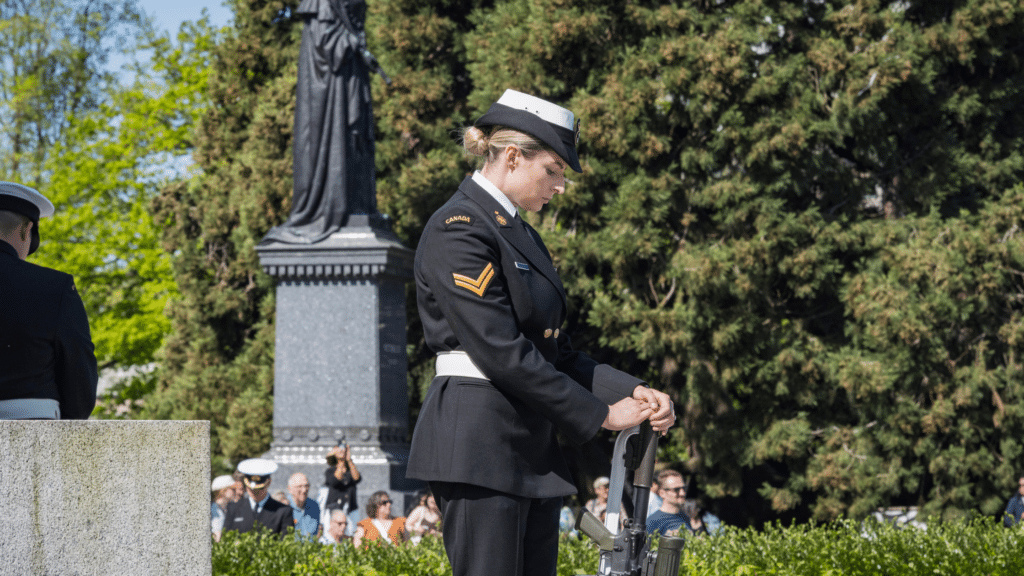
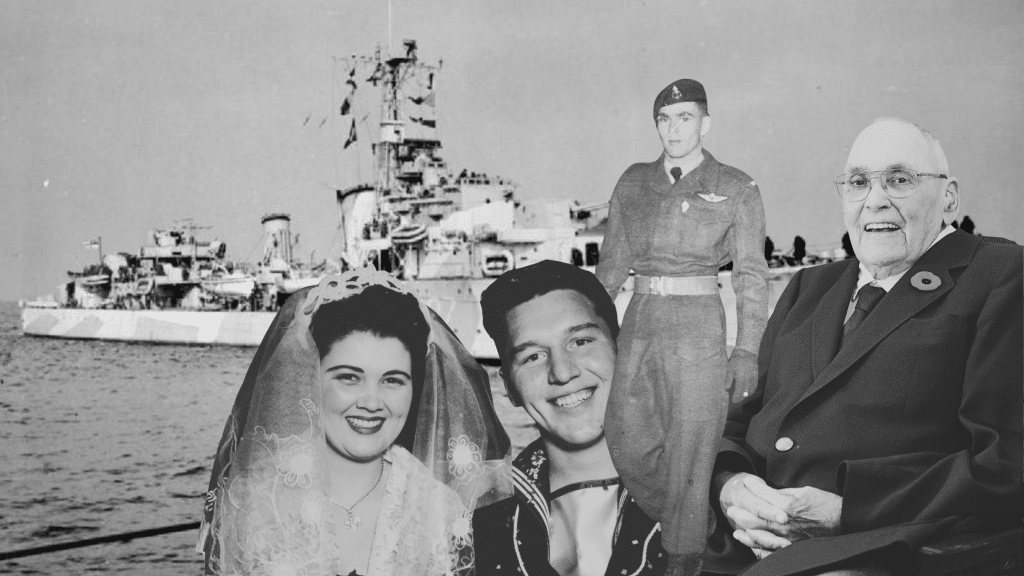
Archana Cini Lookout Newspaper The sea remembers, and so do we. On May 4, Victorians gathered at the lawns of the Legislative Assembly of British Columbia for Battle of the Atlantic Sunday, an annual day of remembrance of the Second World War’s longest campaign. The 1100hrs service drew representatives of the Naval Association of Canada, members and veterans of the Royal Canadian Navy (RCN) and Canadian Armed Forces (CAF), the media, and local community members in observance of those who served in the battle. Of the nearly 100,000 Canadians who served, over 4,600 hundred lost their lives. The 2025 event marked eight decades since the tide turned in the Atlantic and coincided with the RCN’s 115th anniversary, weaving remembrance, historical pride, and present-day service into a commemoration of unity. The sacrifices of Canada’s Navy, Air Force, and Merchant Mariners were formally honoured at the cenotaph, where silence was observed, wreaths laid, and moving tributes shared. The Battle of the Atlantic began for Canada even before war was officially declared, when HMCS Fraser and St. Laurent departed the Pacific Coast in August 1939 to escort the first Allied convoys across the Atlantic. By the war’s end in 1945, the RCN had escorted nearly half of all Allied convoys across the Atlantic, destroyed 33 German U-boats, and scuttled 42 enemy surface ships. The RCN also suffered heavy losses with over 2,000 naval fatalities and 30 vessels lost. To Captain(N) Kevin Whiteside, Commander of CFB Esquimalt, the event was equally an occasion to commemorate the past as an opportunity to reflect on the challenges ahead. “The accomplishments of those who served before inform and inspire those of us in uniform today. It is right that we remember their service, but equally important that the lessons of the past are never forgotten. As we...

Explore More

Categories

Featured News

E-Editions Archive

News Stories Archive